Socratea rostrata
| Socratea (sohc-rah-TEH-ah) rostrata (roh-STRAH-tah) | |||||||
|---|---|---|---|---|---|---|---|
 Mt. Warning Caldera Nth NSW Australia. Photo by Pete. | |||||||
| Scientific Classification | |||||||
| |||||||
| Synonyms | |||||||
|
| |||||||
| Native Continent | |||||||
 | |||||||
| Morphology | |||||||
| |||||||
| Culture | |||||||
|
| |||||||
| Survivability index | |||||||
|
| |||||||
| Common names | |||||||
|
| |||||||
Contents
Habitat and Distribution
Colombia, Ecuador, and Peru. Premontane forest on both sides of the Andes in Colombia and Ecuador.
Description
Socratea rostrata is a single-stemmed, evergreen palm growing up to 25 metres tall. The unbranched stem can be up to 13cm in diameter; it is supported at the base bu an open cone of 15 - 26 stilt roots; and topped by a crown of 4 - 7 long leaves. (Field Guide to the Palms of the Americas by Dr's Henderson A.; Galeano G.; Bernal R.)
Plants from the two sides of the Andes and from different elevations have been considered to belong to separate species, based on differences in the structure and size of pinnae and inflorescence branches. (Borchsenius F., Borgtoft-Pedersen H. and Baslev H. 1998. Manual to the Palms of Ecuador. AAU Reports 37. Department of Systematic Botany, University of Aarhus, Denmark in collaboration with Pontificia Universidad Catalica del Ecuador) Editing by edric.
Plants from the two sides of the Andes and from different elevations have been considered to belong to separate species, based on differences in the structure and size of pinnae and inflorescence branches. (Borchsenius F., Borgtoft-Pedersen H. and Baslev H. 1998. Manual to the Palms of Ecuador. AAU Reports 37. Department of Systematic Botany, University of Aarhus, Denmark in collaboration with Pontificia Universidad Catalica del Ecuador)
Culture
Cold Hardiness Zone: 10a
Comments and Curiosities
Uses: Palm heart edible. Wood used for house construction. Spiny stilt roots used as kitchen tool to grade manioc and plantain. Seeds are eaten when young and soft. Stems are used for posts and floors and the spiny stilt roots serve as grinders for plantains.
The tallest of the Socratea, this elegant species can reach a height of 25 m (82 ft.). The slender, smooth trunk is supported by a cone of strong stilt roots and carries a magnificent,long, bluish-gray crownshaft which holds a few, lushly plumose, spreading, dark green leaves. The large leaflets are up to 90 cm (35 in.) long and divided into several broad, wedge-shaped segments with jagged tips. It is native to montane rainforests between 1000 and 1400 m (3300 and 4600 ft.) in the Amazonian foothills of the Andes in Ecuador and Colombia. In cultivation it will do best in a humid, mild tropical climate. (RPS.com)
- IMAGE GALLERY

Mt. Warning Caldera Nth NSW Australia. Photo by Pete.

Mt. Warning Caldera Nth NSW Australia. Photo by Pete.

Mt. Warning Caldera Nth NSW Australia. Photo by Pete.

Mt. Warning Caldera Nth NSW Australia. Photo by Pete.

Mt. Warning Caldera Nth NSW Australia. Photo by Pete.

Mt. Warning Caldera Nth NSW Australia. Photo by Pete.

Mt. Warning Caldera Nth NSW Australia. Photo by Pete.
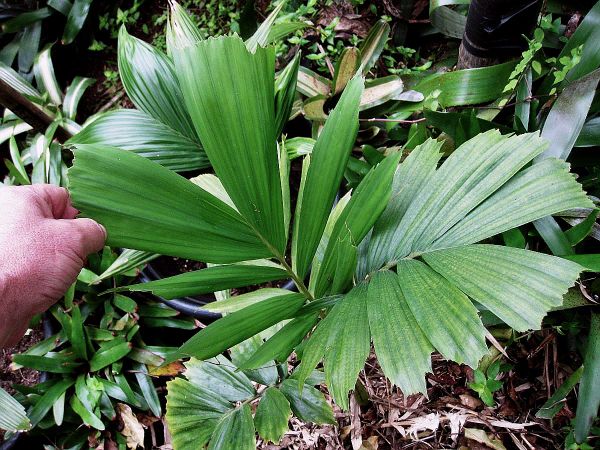
Mt. Warning Caldera Nth NSW Australia. Photo by Pete.

Photo: Rare Palm Seeds.com

Photo: Rare Palm Seeds.com

Mt. Warning Caldera Nth NSW Australia. Photo by Pete.

Photo by Dr. A. Gentry.

Las Marías, PR. Photo by Cindy Adair.

Las Marías, PR. Photo by Cindy Adair.

Las Marías, PR. Photo by Cindy Adair.

Las Marías, PR. Photo by Cindy Adair.

Las Marías, PR. Photo by Cindy Adair.

Las Marías, PR. Photo by Cindy Adair.


External Links
References
Phonetic spelling of Latin names by edric.
Special thanks to Geoff Stein, (Palmbob) for his hundreds of photos.
Special thanks to Palmweb.org, Dr. John Dransfield, Dr. Bill Baker & team, for their volumes of information and photos.
Glossary of Palm Terms; Based on the glossary in Dransfield, J., N.W. Uhl, C.B. Asmussen-Lange, W.J. Baker, M.M. Harley & C.E. Lewis. 2008. Genera Palmarum - Evolution and Classification of the Palms. Royal Botanic Gardens, Kew. All images copyright of the artists and photographers (see images for credits).
Borchsenius F., Borgtoft-Pedersen H. and Baslev H. 1998. Manual to the Palms of Ecuador. AAU Reports 37. Department of Systematic Botany, University of Aarhus, Denmark in collaboration with Pontificia Universidad Catalica del Ecuador
Field Guide to the Palms of the Americas by Dr's Henderson A.; Galeano G.; Bernal R.
Many Special Thanks to Ed Vaile for his long hours of tireless editing and numerous contributions.