Difference between revisions of "Vonitra utilis"
Geoff Stein - Author & Editor
| Line 4: | Line 4: | ||
</center> | </center> | ||
'''''Dypsis utilis''''' is another of the 'hairy' branching Dypsis that have been grown successfully in California for many decades now, though it is still not an overly common or popular palm. This is one of the larger hairy Dypsis and so far has proven fairly easy to grow, but suffers in full inland sun (partial sun near the coast might be tolerated). | '''''Dypsis utilis''''' is another of the 'hairy' branching Dypsis that have been grown successfully in California for many decades now, though it is still not an overly common or popular palm. This is one of the larger hairy Dypsis and so far has proven fairly easy to grow, but suffers in full inland sun (partial sun near the coast might be tolerated). | ||
| − | + | <center> | |
{| colspan="2" style="background: #FCFCFC; border: 1px solid black; vertical-align: top;" | | {| colspan="2" style="background: #FCFCFC; border: 1px solid black; vertical-align: top;" | | ||
| style="width: 50%; background: #f8e8df; border: 1px solid black; vertical-align: top;" | | | style="width: 50%; background: #f8e8df; border: 1px solid black; vertical-align: top;" | | ||
| Line 37: | Line 37: | ||
*'''Availability''': rare | *'''Availability''': rare | ||
|} | |} | ||
| + | {{#Widget:AdResBan}} | ||
<gallery> | <gallery> | ||
File:Dypsis utilis Leucadia.jpg|Orange county, California | File:Dypsis utilis Leucadia.jpg|Orange county, California | ||
Revision as of 19:45, 1 August 2015
Common Name: Vonitra Palm
Dypsis utilis is another of the 'hairy' branching Dypsis that have been grown successfully in California for many decades now, though it is still not an overly common or popular palm. This is one of the larger hairy Dypsis and so far has proven fairly easy to grow, but suffers in full inland sun (partial sun near the coast might be tolerated).
|
Appearance and Biology
|
Horticultural Characteristics
|

Orange county, California
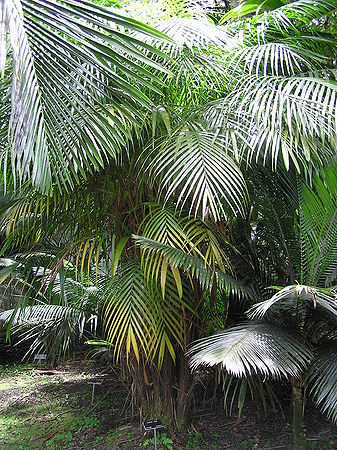
Hawaii
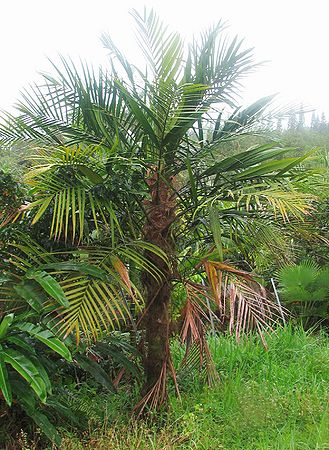
Hawaii
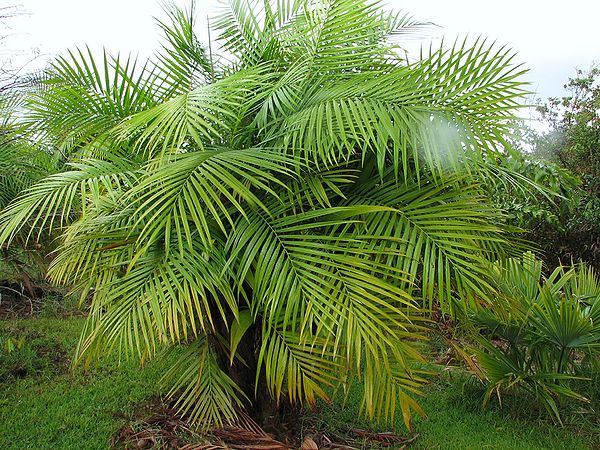
Hawaii

Hawaii, garden of Bill Austin
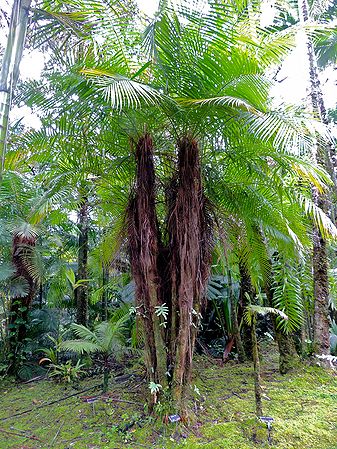
Lundkvist Estate, Hawaii

Lundkvist garden, Hawaii

Lundvists collection, Hawaii

Floribunda Palms, Hawaii
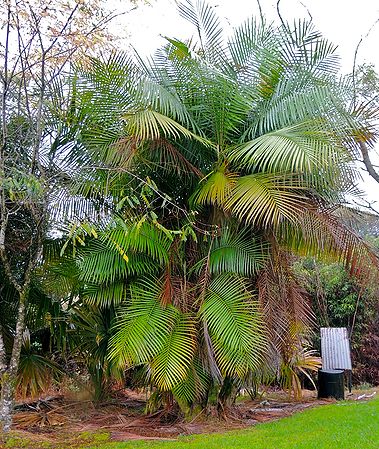
Hawaii, estate of Pauleen Sullivan

southern Florida

400px]]
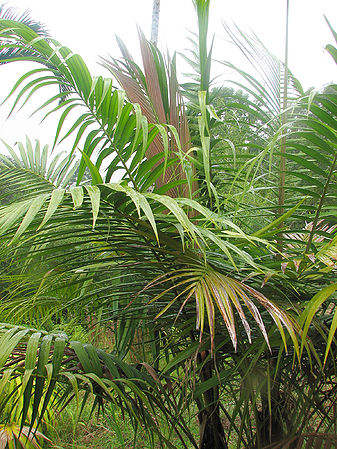
new leaves

Hawaii
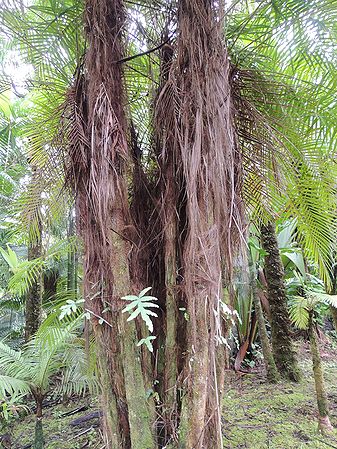
Hawaii, Lundkvist collection


splitting stems, Hawaii
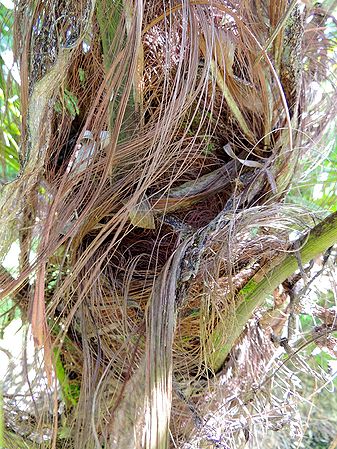

color of cleaned stem in California

flower, Hawaii

closer shot of Hawaiian palm flower

.JPG)


_JM.jpg)