Pronunciation: uh-rain-ee-OP-siss ap-pun-dick-yoo-LAH-tuh
Common Name:
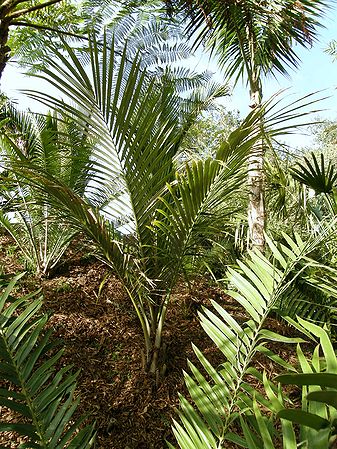
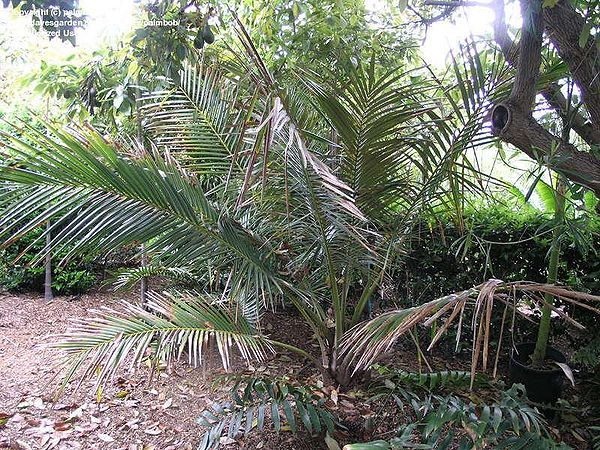
Oraniopsis appendiculata is an Australian species fairly well suited to much of our Mediterranean climate and many have success with this palm despite it being incredibly slow growing. It comes from high mountains so not surprisingly it has some good cold tolerance. Related to Ravenea and Ceroxylon species.
|
Appearance and Biology
- Habit: Solitary with a crown of 16-20 leaves
- Height: 10' estimated (very few trunking palms in southern California so far); trunk formation about 254-30 years in California
- Trunk: single; 5"-8" thick; very closely ringed; clean; brown
- Crownshaft: none
- Spread: 10'-14'
- Leaf Description: pinnate; flat; 10' long; bright green above and coppery below; leaves in shuttlecock formation to rarely horizontal; some dead leaves may hand down below on mature palms, but then fall off
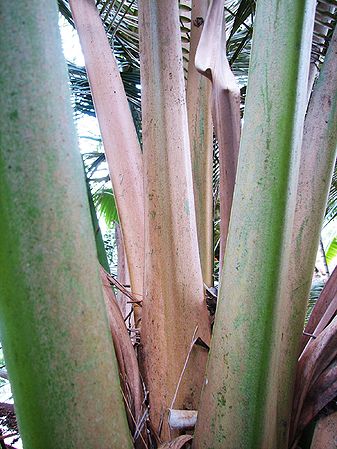
- Petiole/Leaf bases: 12"-16" long; fine coppery tomentum on all surfaces; unsplit leaf bases
- Reproduction: dioecious
- Inflorescence: 2' long, pendulous, covered with thick coppery fuzz; white flowers
- Fruit: 1" spherical yellow-orange when ripe
- Seed: can take over a year to germinate (most tend to have a poor germination rate with this palm)
|
Horticultural Characteristics
- Minimum Temp: 27F
- Drought Tolerance: poor
- Dry Heat Tolerance: poor
- Wind Tolerance: poor
- Salt Tolerance: poor
- Growth Rate: very slow
- Soil Preference: moist and rich; well draining
- Light Requirement: partial sun to filtered light
- Human Hazards: none
- Disease or Horticultural Problems: takes decades to grow to any appreciable size
- Transplants?: unknown
- Indoor?: poor choice
- Availability: very rare, mostly due to lack of enthusiasm for growing a palm this slow
|