Vonitra utilis

Geoff Stein - Author & Editor

(Redirected from Dypsis utilis)
Pronunciation: Vonitra YOU-till-iss


Common Name: Vonitra Palm

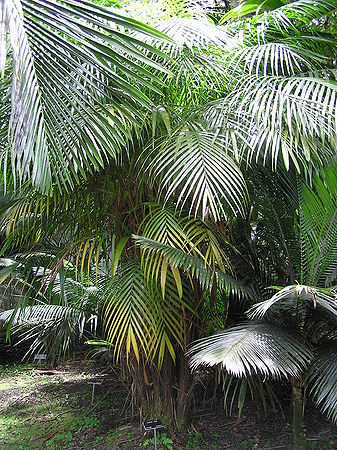
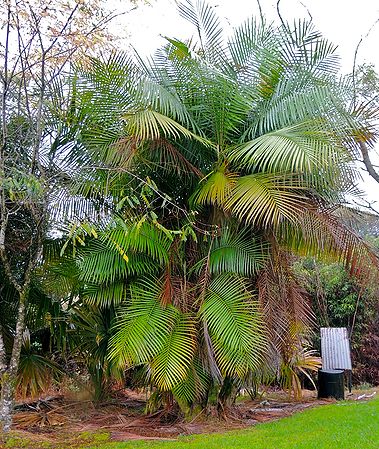
Vonitra utilis is another of the 'hairy' branching Vonitra that have been grown successfully in California for many decades now, though it is still not an overly common or popular palm. This is one of the larger hairy Vonitras and so far has proven fairly easy to grow, but suffers in full inland sun (partial sun near the coast might be tolerated).

Appearance and Biology
  • Habit: solitary, eventually branching once (though seems less likely in California) with a crown of 8-10 feather leaves per branch
  • Height: 20' estimate
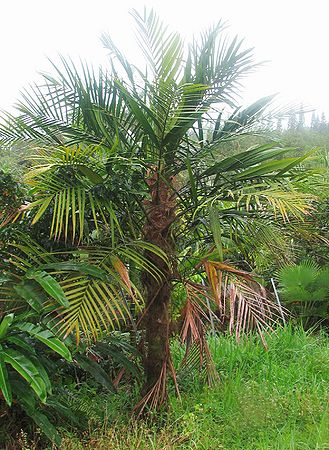
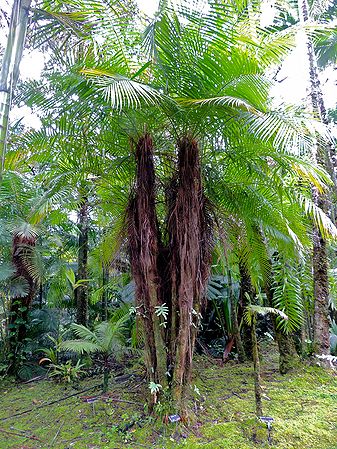
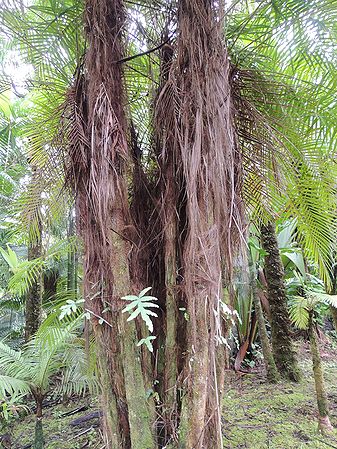
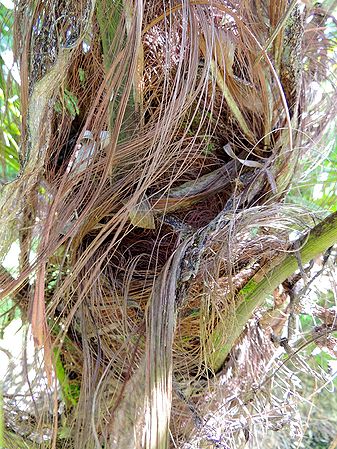
  • Trunk: single; branching dichotomously eventually (usually once over 10' tall) with branches barely separated by than a few inches; covered with dense layers of drooping, long, brown fibers; bottom of trunk may be clean (or cleaned manually) of fibers and faintly ringed, sometimes with a good deal of red coloration on newly exposed trunk
  • Crownshaft: none
  • Spread: 8'-12'
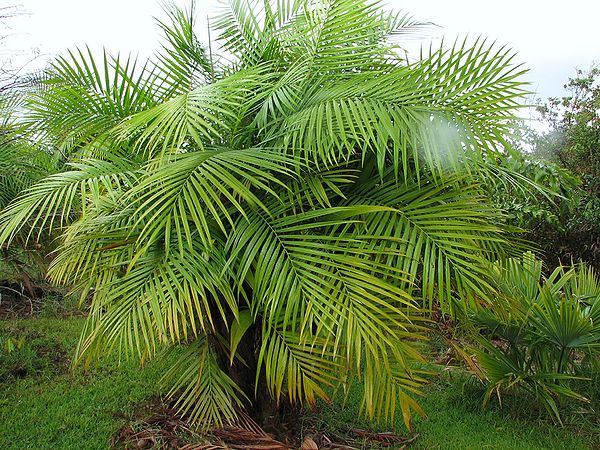
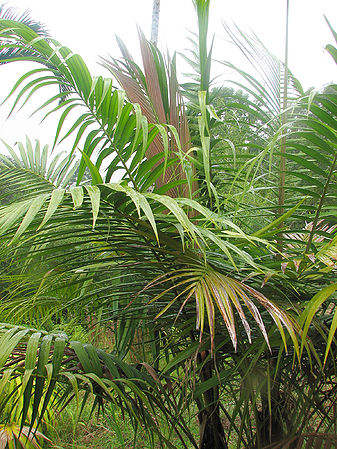
  • Leaf Description: pinnate; flat; upright to nearly horizontal; deep green; new leaves reddish to orange-red
  • Petiole/Leaf bases: 1' long; unarmed; un-split leaf base
  • Reproduction: monoecious
  • Inflorescence: among or below leaves
  • Fruit: spherical; 1" diameter; purplish black when ripe
Horticultural Characteristics
  • Minimum Temp: 28F
  • Drought Tolerance: low
  • Dry Heat Tolerance: low to moderate
  • Cool Tolerance: low to moderate
  • Wind Tolerance: low
  • Salt Tolerance: unknown
  • Growth Rate: very slow to slow
  • Soil Preference: adaptable
  • Light Requirement: filtered light to partial sun near coast
  • Human Hazards: none
  • Disease or Horticultural Problems: none
  • Transplants?: unknown
  • Indoor?: unknown
  • Availability: rare


Retrieved from "https://www.palmpedia.net/palmsforcal/index.php5?title=Vonitra_utilis&oldid=9144"