Pronunciation: FEE-nix reck-lin-AH-tuh x row-buh-LEAN-ee-eye
Common Name: none
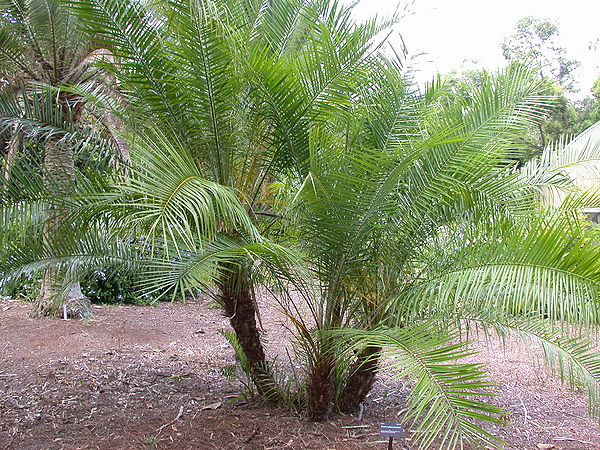
Phoenix reclinata x roebelenii is probably a much more commonly grown palm than advertised since there are so many of each parent in California, and Phoenix 'love to hybridize'. Most of these hybrids are suckering palms with smaller-than normal overall size for a Phoenix reclinata, and often less plumose leaves than Phoenix reclinata, but still more robust with more larger leaflets than a Phoenix roebelenii.
|
Appearance and Biology
- Habit: clustering with a crown of 15-25 feather leaves
- Height: 20'
- Trunk: multiple; 6"-8" thick; covered with leaf scars or un-split retained leaf bases
- Crownshaft: none
- Spread: 20'+
- Leaf Description: pinnate; flat or mildly plumose; arching; 10' long; dark to bright green; leafiets stiff and 1/2" or more in width
- Petiole/Leaf bases: 12"-18" covered with modified leaves that function as spines; un-split leaf bases often retained on trunk for years
- Reproduction: dioecious
- Inflorescence:
- Fruit:
|
Horticultural Characteristics
- Minimum Temp: 23F
- Drought Tolerance: good
- Dry Heat Tolerance: very good
- Cool Tolerance: good
- Wind Tolerance: good
- Salt Tolerance: unknown
- Growth Rate: slow to moderate with age
- Soil Preference: adaptable
- Light Requirement: partial to full sun
- Human Hazards: very spiny leaf bases
- Disease or Horticultural Problems: none
- Transplants?: moderately tolerable
- Indoor?: unknown
- Availability: rare to very rare
|
northern California garden of Jim Denz
Palm Desert showing a variation in leaflets
Leu Gardens, Orlando, Florida




_DN.jpg)

