Pronunciation: FEE-nix loo-RAY-roy/ loo-RAY-row-eye
Common Name: Mountain Date Palm; Dwarf Date Palm
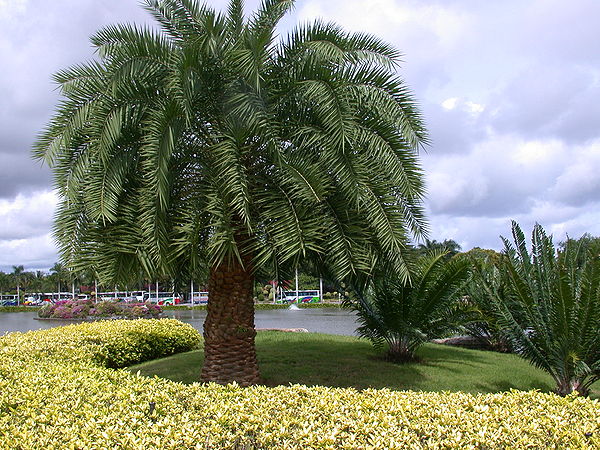
Phoenix loureiroi is easily the most difficult Phoenix species to spell correctly, and there are many books and on line sites that spell it differently. This is a stocky, gnarly-trunked species with stiff, spiny leaves and a relatively squat stature. However, a well grown plant is still quite ornamental. Though fairly well represented in botanical gardens, these do not often show up on availability lists. Two forms are recognized, though exactly how they differ is unclear: Phoenix loureiroi var loureiroi and var. pedunculata.
Synonyms: Phoenix hanceana; Phoenix loureiroi var. hanceana (= Phoenix loureiroi var. loureiroi); Phoenix loureiroi var. humilis (= Phoenix loureiroi var. pedunculata)
|
Appearance and Biology
- Habit: solitary, or sometimes clustering with a crown of 30-40 plumose leaves
- Height: 18' overall, with trunk about 12' maximum
- Trunk: single, or multiple less often; 10" diameter; deeply and somewhat irregularly patterned with leaf scars; grey
- Crownshaft: none
- Spread: 10'-14'
- Leaf Description: pinnate; plumose; leaflets in two planes only barely offset; medium green to yellowy green; skirt of dead leaves often present; 5'-6' long; arching; well armed near leaf base with very spiny, stiff, modified leaves (into long thorns)
- Petiole/Leaf bases: 6" long; mildly channeled; un-split leaf bases; some smaller thorns in clusters along petiole
- Reproduction: Dioecious
- Inflorescence: 2-3' long; pale yellow-green stalks about 18" long; orange, branched ends; cream-colored flowers
- Fruit: ovoid; 1/2" long; green to yellow to red to red brown to blue-black finally when ripe
|
Horticultural Characteristics
- Minimum Temp: 23F
- Drought Tolerance: high
- Dry Heat Tolerance: high
- Cool Tolerance: high
- Wind Tolerance: high
- Salt Tolerance: low to moderate
- Growth Rate: slow to moderate with age
- Soil Preference: adaptable
- Light Requirement: full sun
- Human Hazards: very sharp spines near leaf bases, and even leaflets are spiny
- Disease or Horticultural Problems: none
- Transplants?: moderately tolerant
- Indoor?: unknown
- Availability: rare to very rare
|
Los Angeles arboretum, Arcadia, California
Huntington gardens near Pasadena, Calfornia
Nong Nooch Tropical gardens, Thailand