Difference between revisions of "Pinanga maculata"
| Line 1: | Line 1: | ||
__noeditsection__ | __noeditsection__ | ||
| − | |||
| − | |||
{{Palmbox | {{Palmbox | ||
| − | |image= | + | |image= |
| − | |image_caption= | + | |image_caption= |
|genus=Pinanga (pih-NAHN-gah) | |genus=Pinanga (pih-NAHN-gah) | ||
| − | |species=maculata (mak-oo-LAH-tah) | + | |species=<br>maculata (mak-oo-LAH-tah) |
|subspecies= | |subspecies= | ||
|cultivar= | |cultivar= | ||
| Line 21: | Line 19: | ||
|common_names=Tiger Palm. Philippines; mottled abiki. | |common_names=Tiger Palm. Philippines; mottled abiki. | ||
}} | }} | ||
| − | |||
==Habitat and Distribution== | ==Habitat and Distribution== | ||
Philippines. Endemic to the Philippines; in primary lowland forests. | Philippines. Endemic to the Philippines; in primary lowland forests. | ||
| + | [[ | ||
==Description== | ==Description== | ||
Solitary medium-sized palm growing to 4-5 m tall. The smooth green trunk has prominent leaf scar. The leaves are large, with regularly arranged leaflets. Leaflets are green, dissected once or twice at the apex. Young leaves mottled with dark green or reddish green on the upper surface. Fruit is ovoid, red to black, with one seed. | Solitary medium-sized palm growing to 4-5 m tall. The smooth green trunk has prominent leaf scar. The leaves are large, with regularly arranged leaflets. Leaflets are green, dissected once or twice at the apex. Young leaves mottled with dark green or reddish green on the upper surface. Fruit is ovoid, red to black, with one seed. | ||
| Line 45: | Line 43: | ||
Phonetic spelling of Latin names by edric. | Phonetic spelling of Latin names by edric. | ||
| − | Special thanks to Geoff Stein, (Palmbob) for his hundreds of photos | + | Special thanks to Geoff Stein, (Palmbob) for his hundreds of photos. |
| − | Special thanks to [http://palmweb.org/?q=node/2 Palmweb.org], Dr. John Dransfield, Dr. Bill Baker & team, for their volumes of information and photos | + | Special thanks to [http://palmweb.org/?q=node/2 Palmweb.org], Dr. John Dransfield, Dr. Bill Baker & team, for their volumes of information and photos. |
Glossary of Palm Terms; Based on the glossary in Dransfield, J., N.W. Uhl, C.B. Asmussen-Lange, W.J. Baker, M.M. Harley & C.E. Lewis. 2008. Genera Palmarum - Evolution and Classification of the Palms. Royal Botanic Gardens, Kew. All images copyright of the artists and photographers (see images for credits). | Glossary of Palm Terms; Based on the glossary in Dransfield, J., N.W. Uhl, C.B. Asmussen-Lange, W.J. Baker, M.M. Harley & C.E. Lewis. 2008. Genera Palmarum - Evolution and Classification of the Palms. Royal Botanic Gardens, Kew. All images copyright of the artists and photographers (see images for credits). | ||
| Line 53: | Line 51: | ||
Madulid D. A . 2000. Pictorial cyclopedia of Philippine ornamental plant. Second edtion. Bookmark,Inc.;292-293. | Madulid D. A . 2000. Pictorial cyclopedia of Philippine ornamental plant. Second edtion. Bookmark,Inc.;292-293. | ||
| − | <center><gallery caption="IMAGE GALLERY" perrow=" | + | <center><gallery caption="IMAGE GALLERY" perrow="" widths="" heights=""> |
Image:P6070740.JPG|new leaf opening with some brown/purple coloration emanating from the rachis. | Image:P6070740.JPG|new leaf opening with some brown/purple coloration emanating from the rachis. | ||
Image:June 4 2008 (28).JPG|Philippines. | Image:June 4 2008 (28).JPG|Philippines. | ||
Revision as of 02:47, 10 July 2014
| Pinanga (pih-NAHN-gah) maculata (mak-oo-LAH-tah) | |||||||
|---|---|---|---|---|---|---|---|
|
Help to make this reference box better by uploading a representative photo of this palm. | |||||||
| Scientific Classification | |||||||
| |||||||
| Synonyms | |||||||
|
| |||||||
| Native Continent | |||||||
|
| |||||||
| Morphology | |||||||
| |||||||
| Culture | |||||||
|
| |||||||
| Survivability index | |||||||
|
| |||||||
| Common names | |||||||
|
| |||||||
Contents
Habitat and Distribution
Philippines. Endemic to the Philippines; in primary lowland forests. [[
Description
Solitary medium-sized palm growing to 4-5 m tall. The smooth green trunk has prominent leaf scar. The leaves are large, with regularly arranged leaflets. Leaflets are green, dissected once or twice at the apex. Young leaves mottled with dark green or reddish green on the upper surface. Fruit is ovoid, red to black, with one seed.
Solitary palm 5 m tall with purplish/brown crownshaft. Leaves up to 2 m long, with irregularly spaced leaflets, dark green above with large irregular areas of lighter green ("Tiger" stripes). Flowers borne below the leaves, in branching axis, and green. Fruits ovoid, red to black, with one seed. (Madulid D. A. 2000.) Editing by edric.
Culture
Warm, sheltered, and moist, altho it can take night-time temps down to 5°C. Cold Hardiness Zone: 10a
Comments and Curiosities
This red leaf form is not typical. I have observed the the new leaves of my other seedlings and most open plain mottled green with no signs of reddish coloration at all. A few open with brownish/olive coloration but are not as attactive as the red form.
It needs to be observed if this red feature is carried over as the palm matures.
It is also unknown if this is a genetic trait or caused by cultural conditions.
Conservation: This is an attractive endemic palm found in primary forests in the Philippines. The juvenile plant is attractive because of its mottled leaves and the mature plant is also elegant in form. It is occasionally planted in local gardens but is not widely cultivated. It is readily propagated by seeds. Habitat destruction, and kaingin are threats to the plant.
External Links
References
Phonetic spelling of Latin names by edric.
Special thanks to Geoff Stein, (Palmbob) for his hundreds of photos.
Special thanks to Palmweb.org, Dr. John Dransfield, Dr. Bill Baker & team, for their volumes of information and photos.
Glossary of Palm Terms; Based on the glossary in Dransfield, J., N.W. Uhl, C.B. Asmussen-Lange, W.J. Baker, M.M. Harley & C.E. Lewis. 2008. Genera Palmarum - Evolution and Classification of the Palms. Royal Botanic Gardens, Kew. All images copyright of the artists and photographers (see images for credits).
Madulid D. A . 2000. Pictorial cyclopedia of Philippine ornamental plant. Second edtion. Bookmark,Inc.;292-293.
- IMAGE GALLERY

new leaf opening with some brown/purple coloration emanating from the rachis.

Philippines.

Philippines. Photo by Gene Brace, edric.

Redder Than Most. Philippines. Photo by Gene Brace, edric.
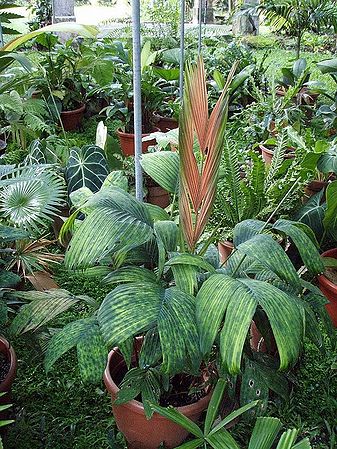
Philippines. Photo by Gene Brace, edric.
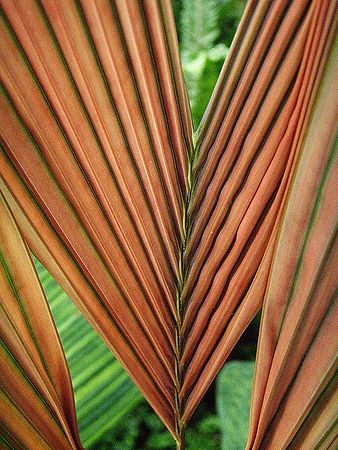
Philippines. Photo by Gene Brace, edric.
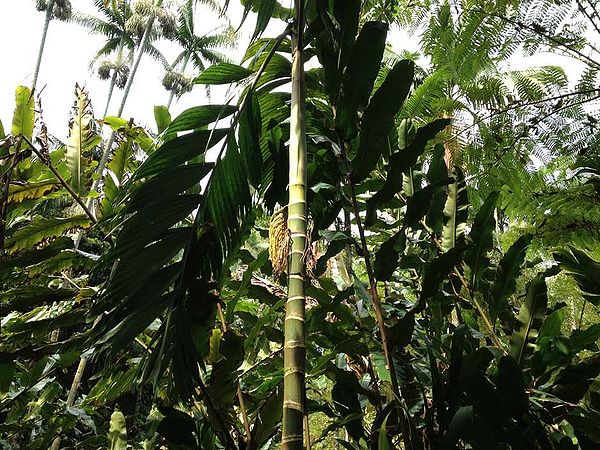
Hawaiian Tropical Botanical Garden, edric.

Hawaii. Photo by Kim, edric.

Tampa Bay, FL. P. copelandii on left, P. maculata on right. Photo by Jon, edric.

Tampa Bay, FL. P. copelandii on left, P. maculata on right. Photo by Jon, edric.

Kuliouou Valley, Oahu, Hawaii. Photo by Colin Peters, edric.

Kuliouou Valley, Oahu, Hawaii. Photo by Colin Peters, edric.
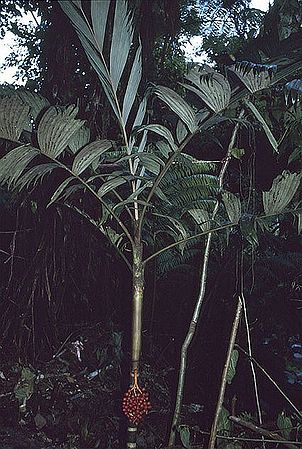
Mindoro, Philippines. Photo by Dr. M. Coode, Royal Botanic Gardens, Kew/Palmweb.
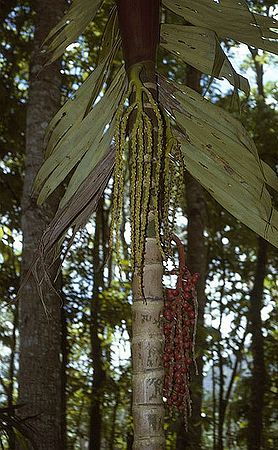
Mt Banahao, Luzon, Philippines. Photo by Dr. John Dransfield, Royal Botanic Gardens, Kew/Palmweb.

Hawaii. Photo by Dr. John Dransfield, Royal Botanic Gardens, Kew/Palmweb.
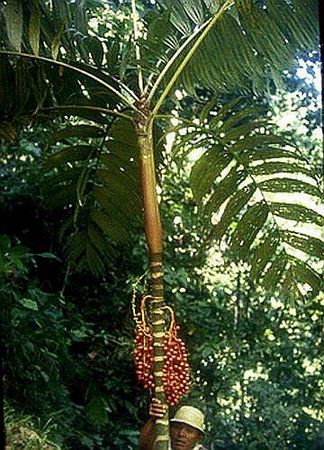
Philippines. Photo by Dr. A. Madulid, edric.

Hawaii. Photo by BGL, edric.

Kailua Kona, Hawaii. Photo by Lee Tracy, edric.

Kailua Kona, Hawaii. Photo by Lee Tracy, edric.
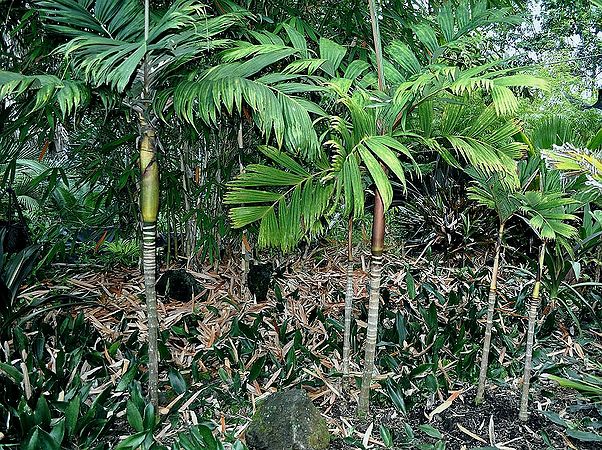
Kailua Kona, Hawaii. Photo by Lee Tracy, edric.

Flecker Botan1c Gardens, Cairns. Photo by Peter Richardson, edric.

Flecker Botan1c Gardens, Cairns. Photo by Peter Richardson, edric.

Flecker Botan1c Gardens, Cairns. Photo by Peter Richardson, edric.

Hawaii. Photo by Colin Wilson, edric.

Hawaii. Photo by Colin Wilson, edric.

Lyon Arboretum, University of Hawaii-Manoa, Honolulu, Oahu, Hawaii. Photo by Geoff Stein, edric.

Lyon Arboretum, University of Hawaii-Manoa, Honolulu, Oahu, Hawaii. Photo by Geoff Stein, edric.

Hawaii. Photo by Geoff Stein, edric.

Hawaii. Photo by Geoff Stein, edric.

Hawaii. Photo by Geoff Stein, edric.
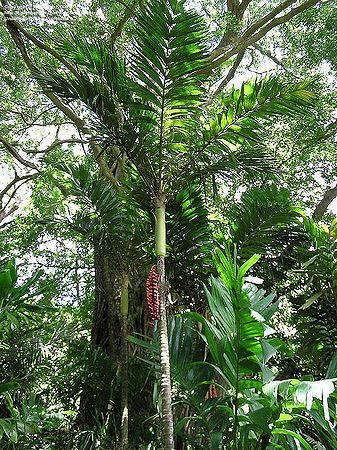
Hawaii. Photo by Geoff Stein, edric.

Lundkvist garden, Hawaii. Photo by Geoff Stein, edric.
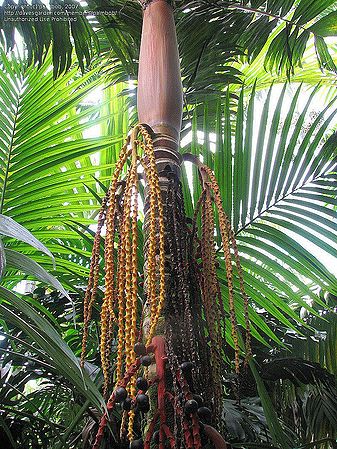
Lundkvist garden, Hawaii. Photo by Geoff Stein, edric.

Lundkvist garden, Hawaii. Photo by Geoff Stein, edric.

Andersen garden, Puna, Hawaii. Photo by Geoff Stein, edric.
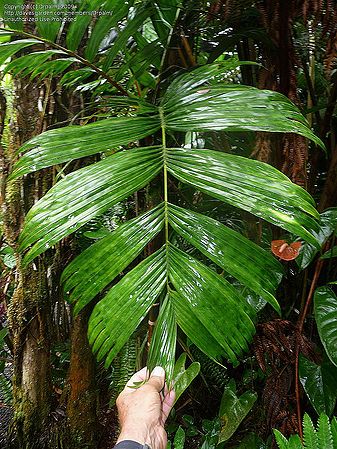
Andersen garden, Puna, Hawaii. Photo by Geoff Stein, edric.

Andersen garden, Puna, Hawaii. Photo by Geoff Stein, edric.

PHILIPPINES: Panay: Antique prov. San Remegio Municipality, Brgy Aningalan; coordinates of general area 10 48 56.00 N, 122 10 53.70 E. Photo by Drs. P.B. Pelser & J.F. Barcelona, edric.
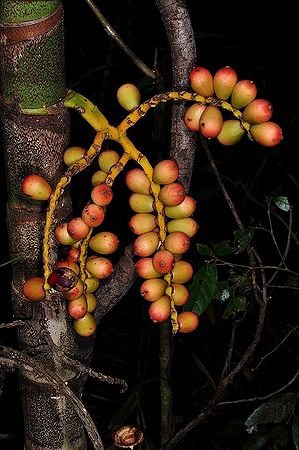
PHILIPPINES: Panay: Antique prov. San Remegio Municipality, Brgy Aningalan; coordinates of general area 10 48 56.00 N, 122 10 53.70 E. Photo by Drs. P.B. Pelser & J.F. Barcelona, edric.

PHILIPPINES: Luzon: Laguna prov. Pangil; coordinates of general area 14 24 11.00 N, 121 27 58.00 E. Photo by Dr. Wally Suarez, edric.

PHILIPPINES: Luzon: Isabela prov. Northern Sierra Madre Natural Park, Palanan municipality; coordinates of general area 17 3 32.00 N, 122 25 48.01 E. Photo by Dr. Leonardo L., edric.

San Diego, CA. Photo by catkim, edric.
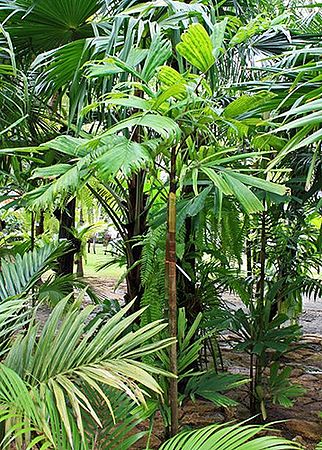
Photo by Paul Craft, edric.

Photo by Paul Craft, edric.

Photo by Paul Craft, edric.

Hawaii. Photo by Bill Austin, edric.

Flecker Botanic Garden, Cairns, QLD., Ausrralia. Photo by Russell Cumming, edric.

Flecker Botanic Garden, Cairns, QLD., Ausrralia. Photo by Russell Cumming, edric.

Flecker Botanic Garden, Cairns, QLD., Ausrralia. Photo by Russell Cumming, edric.


.JPG)

.JPG)


Many Special Thanks to Ed Vaile for his long hours of tireless editing and numerous contributions.