Difference between revisions of "Copernicia fallaensis"
| Line 41: | Line 41: | ||
Image:14523209 692796904218777 5509340019082063798 n.jpg|Copernicia fallaensis, Ciego de Ávila, Cuba. Photo by Duanny Suárez | Image:14523209 692796904218777 5509340019082063798 n.jpg|Copernicia fallaensis, Ciego de Ávila, Cuba. Photo by Duanny Suárez | ||
Image:Copernicia fallaensis1.jpg|Sonia González and Leonel Mera provide scale for this colossal and spectacular specimen of Copernicia fallaensis in the Jardín Botánico Nacional in Habana, Cuba. It was transplanted to this site from the wild (D. R. Hodel). | Image:Copernicia fallaensis1.jpg|Sonia González and Leonel Mera provide scale for this colossal and spectacular specimen of Copernicia fallaensis in the Jardín Botánico Nacional in Habana, Cuba. It was transplanted to this site from the wild (D. R. Hodel). | ||
| − | Image:Copernicia fallaensis2.jpg|Duanny Suárez provides scale for this Copernicia fallaensis, a remnant of a once more extensive grove near the type locality in Ranchuelo, Falla, Ciego de Ávila, Cuba. This species typically has a large, straight trunk to 20 m tall topped with leaves nearly four m long and a canopy that can spread for more than eight m across | + | Image:Copernicia fallaensis2.jpg|Duanny Suárez provides scale for this Copernicia fallaensis, a remnant of a once more extensive grove near the type locality in Ranchuelo, Falla, Ciego de Ávila, Cuba. This species typically has a large, straight trunk to 20 m tall topped with leaves nearly four m long and a canopy that can spread for more than eight m across. |
| − | Image:Copernicia fallaensis3.jpg|The canopy of Copernicia fallaensis typically holds 30 to 40, stiffly ascending to spreading to drooping, waxy grayish, stunning leaves. Jardín Botánico Nacional in Habana | + | Image:Copernicia fallaensis3.jpg|The canopy of Copernicia fallaensis typically holds 30 to 40, stiffly ascending to spreading to drooping, waxy grayish, stunning leaves. Jardín Botánico Nacional in Habana. |
| − | Image:Copernicia fallaensis4.jpg|Petiole margins of Copernicia fallaensis are coarsely but sharply toothed. Near the type locality in Ranchuelo, Falla, Ciego de Ávila, Cuba | + | Image:Copernicia fallaensis4.jpg|Petiole margins of Copernicia fallaensis are coarsely but sharply toothed. Near the type locality in Ranchuelo, Falla, Ciego de Ávila, Cuba. |
| − | Image:Copernicia fallaensis5.jpg|The expansive, mostly flat, ovate-orbicular blades of Copernicia fallaensis are to two m long. Near the type locality in Ranchuelo, Falla, Ciego de Ávila, Cuba | + | Image:Copernicia fallaensis5.jpg|The expansive, mostly flat, ovate-orbicular blades of Copernicia fallaensis are to two m long. Near the type locality in Ranchuelo, Falla, Ciego de Ávila, Cuba. |
| − | Image:Copernicia fallaensis6.jpg|Leaf blades of Copernicia fallaensis are divided about one-third to the base into about 120, stiff segments. Near the type locality in Ranchuelo, Falla, Ciego de Ávila, Cuba | + | Image:Copernicia fallaensis6.jpg|Leaf blades of Copernicia fallaensis are divided about one-third to the base into about 120, stiff segments. Near the type locality in Ranchuelo, Falla, Ciego de Ávila, Cuba. |
| − | Image:Copernicia fallaensis7.jpg|Adaxially the hastula of Copernicia fallaensis is nine cm long. Near the type locality in Ranchuelo, Falla, Ciego de Ávila, Cuba | + | Image:Copernicia fallaensis7.jpg|Adaxially the hastula of Copernicia fallaensis is nine cm long. Near the type locality in Ranchuelo, Falla, Ciego de Ávila, Cuba. |
| − | Image:Copernicia fallaensis8.jpg|Inflorescences of Copernicia fallaensis emerge erect but eventually droop on to subtending leaves. Near the type locality in Ranchuelo, Falla, Ciego de Ávila, Cuba | + | Image:Copernicia fallaensis8.jpg|Inflorescences of Copernicia fallaensis emerge erect but eventually droop on to subtending leaves. Near the type locality in Ranchuelo, Falla, Ciego de Ávila, Cuba. |
| − | Image:Copernicia fallaensis9.jpg|Inflorescences of Copernicia fallaensis are from 3.5 to 4 m long and about equal or slightly exceed the leaves in length. Near the type locality in Ranchuelo, Falla, Ciego de Ávila, Cuba | + | Image:Copernicia fallaensis9.jpg|Inflorescences of Copernicia fallaensis are from 3.5 to 4 m long and about equal or slightly exceed the leaves in length. Near the type locality in Ranchuelo, Falla, Ciego de Ávila, Cuba. |
| − | Image:Copernicia fallaensis10.jpg|Inflorescences of Copernicia fallaensis typically have 10 or more first-order branches, the most proximal ones originating from near the base. Near the type locality in Ranchuelo, Falla, Ciego de Ávila, | + | Image:Copernicia fallaensis10.jpg|Inflorescences of Copernicia fallaensis typically have 10 or more first-order branches, the most proximal ones originating from near the base. Near the type locality in Ranchuelo, Falla, Ciego de Ávila,. |
| − | Image:Copernicia fallaensis11.jpg|Flower-bearing rachillae of Copernicia fallaensis are to five cm long, four mm in diameter, stiff, and with close-set flowers. Near the type locality in Ranchuelo, Falla, Ciego de Ávila, Cuba | + | Image:Copernicia fallaensis11.jpg|Flower-bearing rachillae of Copernicia fallaensis are to five cm long, four mm in diameter, stiff, and with close-set flowers. Near the type locality in Ranchuelo, Falla, Ciego de Ávila, Cuba. |
| − | Image:Copernicia fallaensis12.jpg|The best, largest, and healthiest population of Copernicia fallaensis is near or at the type locality at Ranchuelo near Falla in Ciego de Ávila | + | Image:Copernicia fallaensis12.jpg|The best, largest, and healthiest population of Copernicia fallaensis is near or at the type locality at Ranchuelo near Falla in Ciego de Ávila. |
| − | Image:Copernicia fallaensis13.jpg|At this large population of Copernicia fallaensis 84 adult trees and 187 juveniles exist in a highly disturbed, secondary forest with a few scattered plants nearby in savanna and cleared pasture. Note that some individuals have had leaves harvested. Near or at the type locality in Ranchuelo, Falla, Ciego de Ávila, Cuba | + | Image:Copernicia fallaensis13.jpg|At this large population of Copernicia fallaensis 84 adult trees and 187 juveniles exist in a highly disturbed, secondary forest with a few scattered plants nearby in savanna and cleared pasture. Note that some individuals have had leaves harvested. Near or at the type locality in Ranchuelo, Falla, Ciego de Ávila, Cuba. |
| − | Image:Copernicia fallaensis14.jpg|Because of their large size and durability, leaves of Copernicia fallaensis are much prized and are harvested for a variety of products. Note the remnant petioles and leaf bases from which leaves were harvested. Near the type locality in Ranchuelo, Falla, Ciego de Ávila, Cuba | + | Image:Copernicia fallaensis14.jpg|Because of their large size and durability, leaves of Copernicia fallaensis are much prized and are harvested for a variety of products. Note the remnant petioles and leaf bases from which leaves were harvested. Near the type locality in Ranchuelo, Falla, Ciego de Ávila, Cuba. |
| − | Image:Copernicia fallaensis15.jpg|Even at the best population of Copernicia fallaensis some of the palms have evidence of leaf harvesting. Near or at the type locality in Ranchuelo, Falla, Ciego de Ávila, Cuba | + | Image:Copernicia fallaensis15.jpg|Even at the best population of Copernicia fallaensis some of the palms have evidence of leaf harvesting. Near or at the type locality in Ranchuelo, Falla, Ciego de Ávila, Cuba. |
Image:IMG 3386.JPG|Miami FL. | Image:IMG 3386.JPG|Miami FL. | ||
File:post-858-0-90377200-1403667559.jpg|Miami. Photo by Scott Cohen. | File:post-858-0-90377200-1403667559.jpg|Miami. Photo by Scott Cohen. | ||
Revision as of 08:16, 15 September 2017
| Copernicia (koh-pehr-nee-SEE-ah) fallaensis (fall-EHN-sis) | |||||||
|---|---|---|---|---|---|---|---|
 Cuba. | |||||||
| Scientific Classification | |||||||
| |||||||
| Synonyms | |||||||
|
| |||||||
| Native Continent | |||||||
 | |||||||
| Morphology | |||||||
| |||||||
| Culture | |||||||
|
| |||||||
| Survivability index | |||||||
|
| |||||||
| Common names | |||||||
|
| |||||||
Contents
Habitat and Distribution
Copernicia fallaensis is endemic species of the central part of Cuba. Though Cuba's most
Description
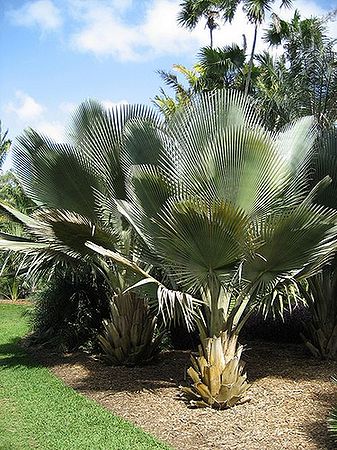
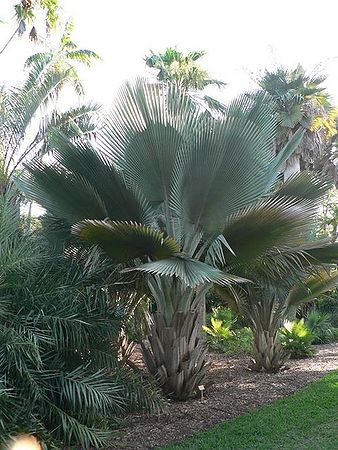
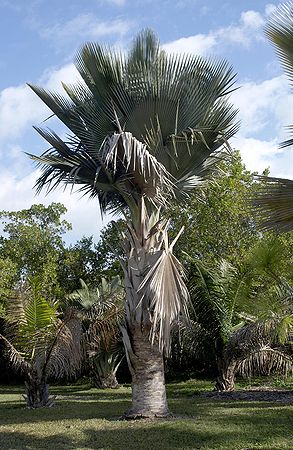
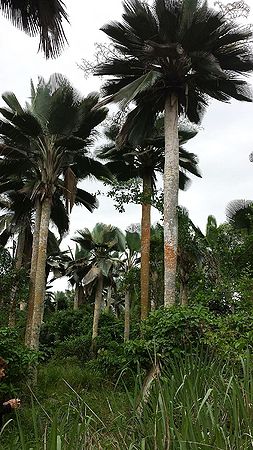
Copernicia fallaensis produces a massive, smooth, light gray trunk that is thickest near the middle and can reach up to 20 m (67 ft.) tall. The huge, rounded crown consists of many enormous, oval leafblades that are very evenly divided into about 120 very stiff segments. Seen against the bright sky, these form a mesmerizing pattern. The color of the leafblade is a waxy blue green and the broad, flat leaf stalks can be almost white. In Cuba, the fruits are eaten by fruit bats. While there has been some discussion in recent years on this palm being merely a robust form of Copernicia baileyana, anyone who has ever seen the two "in the flesh" agrees that that would not be justified. While Copernicia baileyana is a fantastic palm in its own right, C. fallaensis tops it with ease. It is doubtlessly the best of the Copernicia and surely one of the most stately of all palms. Mature plants are a truly awe-inspiring sight that is not easily forgotten. Editing by edric.
Culture
In cultivation, the Giant Yarey Palm is exceedingly rare. It is very easy to germinate and even though it is rather slow growing, especially as a seedling, it adapts well to a wide range of conditions in the tropics and warm subtropics.

Comments and Curiosities
Today there is only a tiny community of less than 100 mature trees remaining in secondary savanna near the town of Falla (Ciego de Ávila province), after which the palm is named. It is considered critically endangered of extinction but unfortunately measures to better preserve its last remaining population have been rather halfhearted, most likely due to a lack of funding. While felling is no longer a problem, overexploitation of the leaves for thatch and weaving is the main threat at the moment.
- IMAGE GALLERY
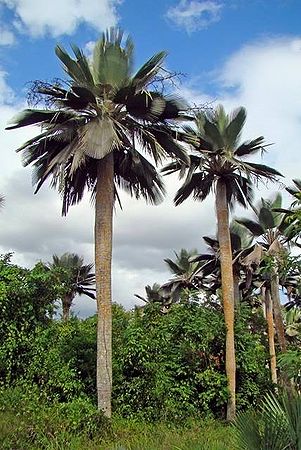
Copernicia fallaensis, Ciego de Ávila, Cuba. Photo by Duanny Suárez
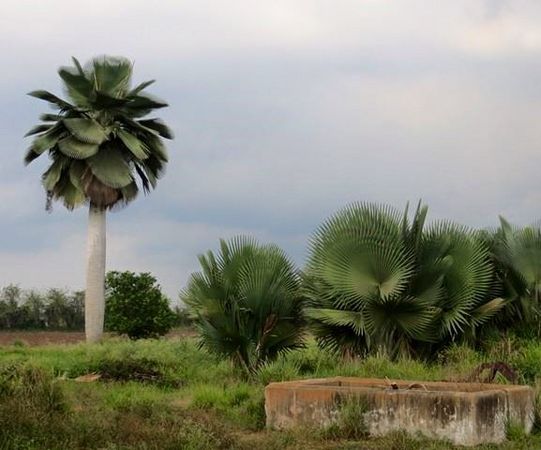
Copernicia fallaensis, Ciego de Ávila, Cuba. Photo by Duanny Suárez
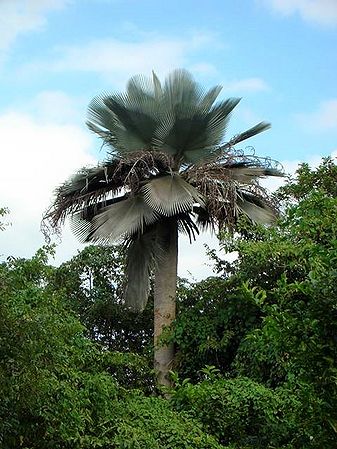
Copernicia fallaensis, Ciego de Ávila, Cuba. Photo by Duanny Suárez
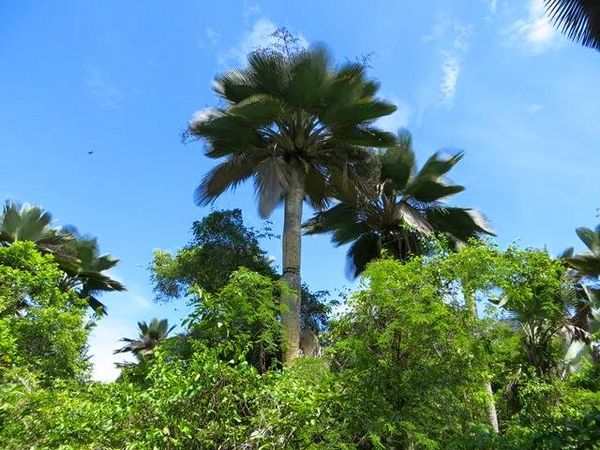
Copernicia fallaensis, Ciego de Ávila, Cuba. Photo by Duanny Suárez
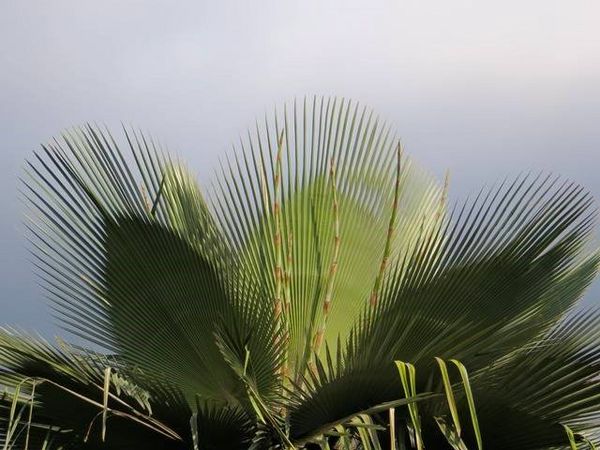
Copernicia fallaensis, Ciego de Ávila, Cuba. Photo by Duanny Suárez

Copernicia fallaensis, Ciego de Ávila, Cuba. Photo by Duanny Suárez
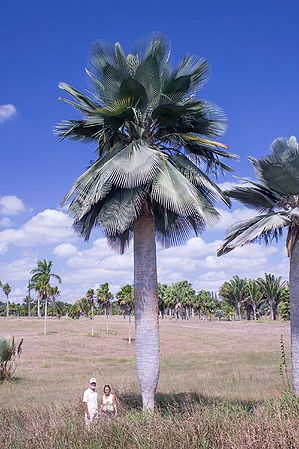
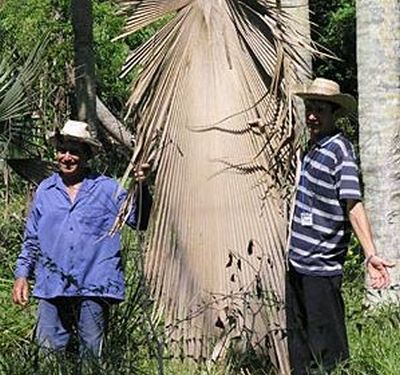
Sonia González and Leonel Mera provide scale for this colossal and spectacular specimen of Copernicia fallaensis in the Jardín Botánico Nacional in Habana, Cuba. It was transplanted to this site from the wild (D. R. Hodel).
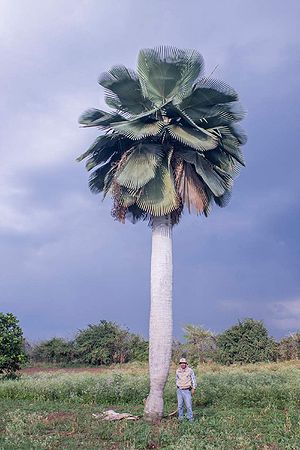
Duanny Suárez provides scale for this Copernicia fallaensis, a remnant of a once more extensive grove near the type locality in Ranchuelo, Falla, Ciego de Ávila, Cuba. This species typically has a large, straight trunk to 20 m tall topped with leaves nearly four m long and a canopy that can spread for more than eight m across.
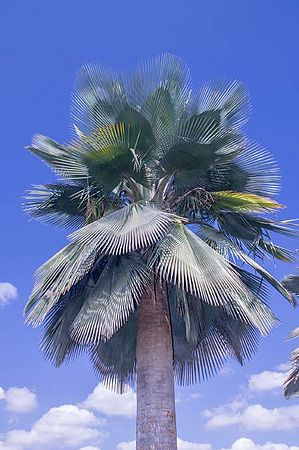
The canopy of Copernicia fallaensis typically holds 30 to 40, stiffly ascending to spreading to drooping, waxy grayish, stunning leaves. Jardín Botánico Nacional in Habana.

Petiole margins of Copernicia fallaensis are coarsely but sharply toothed. Near the type locality in Ranchuelo, Falla, Ciego de Ávila, Cuba.

The expansive, mostly flat, ovate-orbicular blades of Copernicia fallaensis are to two m long. Near the type locality in Ranchuelo, Falla, Ciego de Ávila, Cuba.

Leaf blades of Copernicia fallaensis are divided about one-third to the base into about 120, stiff segments. Near the type locality in Ranchuelo, Falla, Ciego de Ávila, Cuba.

Adaxially the hastula of Copernicia fallaensis is nine cm long. Near the type locality in Ranchuelo, Falla, Ciego de Ávila, Cuba.

Inflorescences of Copernicia fallaensis emerge erect but eventually droop on to subtending leaves. Near the type locality in Ranchuelo, Falla, Ciego de Ávila, Cuba.

Inflorescences of Copernicia fallaensis are from 3.5 to 4 m long and about equal or slightly exceed the leaves in length. Near the type locality in Ranchuelo, Falla, Ciego de Ávila, Cuba.
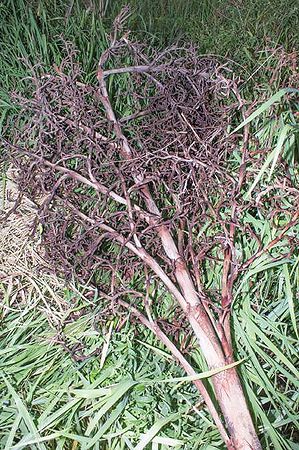
Inflorescences of Copernicia fallaensis typically have 10 or more first-order branches, the most proximal ones originating from near the base. Near the type locality in Ranchuelo, Falla, Ciego de Ávila,.
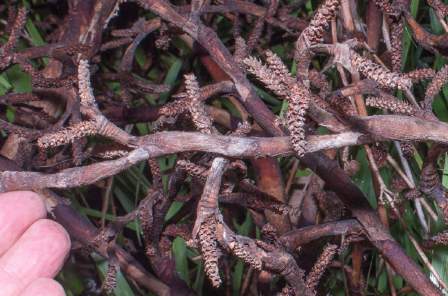
Flower-bearing rachillae of Copernicia fallaensis are to five cm long, four mm in diameter, stiff, and with close-set flowers. Near the type locality in Ranchuelo, Falla, Ciego de Ávila, Cuba.

The best, largest, and healthiest population of Copernicia fallaensis is near or at the type locality at Ranchuelo near Falla in Ciego de Ávila.

At this large population of Copernicia fallaensis 84 adult trees and 187 juveniles exist in a highly disturbed, secondary forest with a few scattered plants nearby in savanna and cleared pasture. Note that some individuals have had leaves harvested. Near or at the type locality in Ranchuelo, Falla, Ciego de Ávila, Cuba.
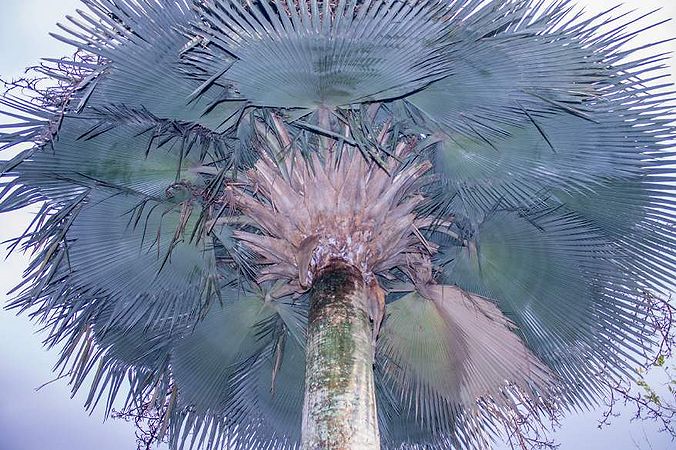
Because of their large size and durability, leaves of Copernicia fallaensis are much prized and are harvested for a variety of products. Note the remnant petioles and leaf bases from which leaves were harvested. Near the type locality in Ranchuelo, Falla, Ciego de Ávila, Cuba.
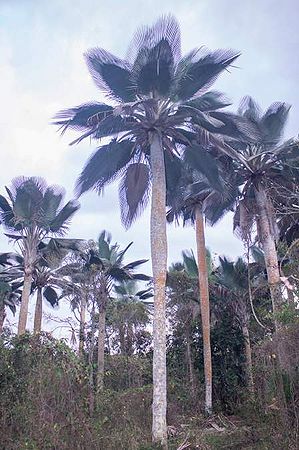
Even at the best population of Copernicia fallaensis some of the palms have evidence of leaf harvesting. Near or at the type locality in Ranchuelo, Falla, Ciego de Ávila, Cuba.

Miami FL.
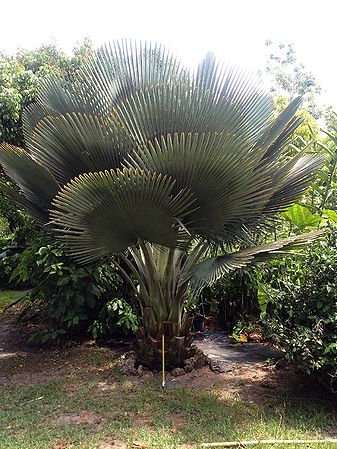
Miami. Photo by Scott Cohen.
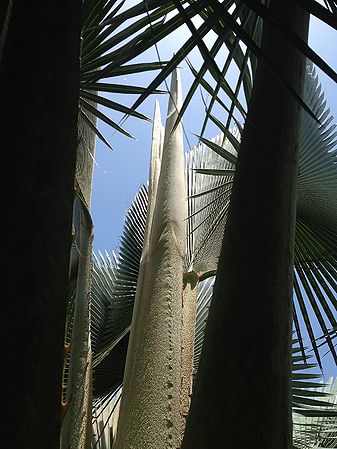
Miami. Photo by Scott Cohen.

Al Bredesen's garden, Kona, HI.
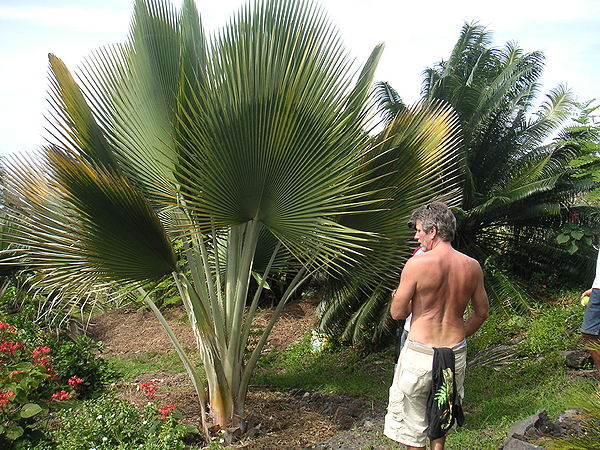
Dean Ouer for scale.
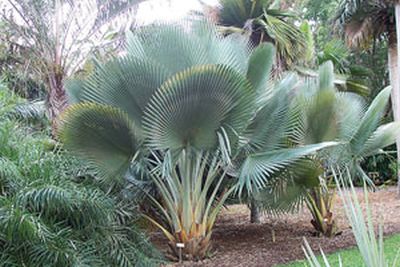

Cuba. In habitat. Photo-Rare Palm Seeds.com
Cuba. In habitat. Photo-Rare Palm Seeds.com

Cuba. In habitat. Photo-Rare Palm Seeds.com

Cuba. In habitat. Photo-Rare Palm Seeds.com

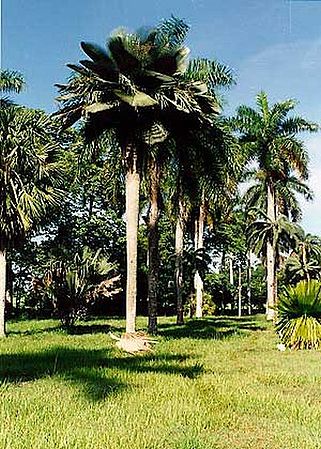
National Botanic Gardens of Cuba. Photo by Rolf Kyburz

National Botanic Gardens of Cuba. Photo by Rolf Kyburz

National Botanic Gardens of Cuba. Photo by Rolf Kyburz
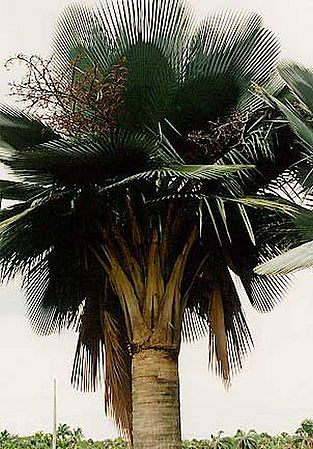
National Botanic Gardens of Cuba. Photo by Rolf Kyburz

Jardin Botanico Nacional, Havana, Cuba. Photo by Paul Craft

Photo by Kyle Wicomb

Photo by Jody Haynes

Photo by Jody Haynes

Photo by Jody Haynes

Cuba. Photo-Phil Bergman

Cienfuegos Botanical Garden, Cuba. Photo by Jason Schoneman

C. fallaensis on left, and perhaps C. alba (or C. prunifera) on right, Jason Schoneman for scale, Cienfuegos Botanical Garden, Cuba. Photo by Jason Schoneman
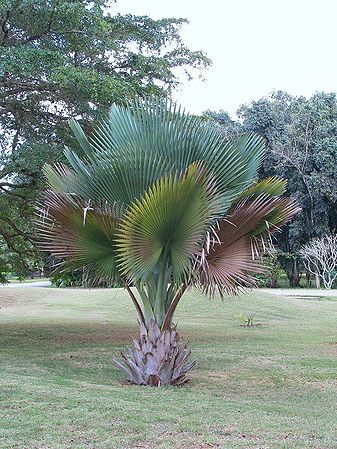
La Habana Botanical Garden, Cuba. Photo by Jason Schoneman
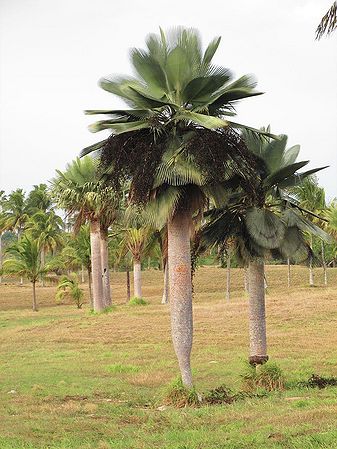
Two in front are Copernicia fallaensis, Copernicia gigas directly behind. La Habana Botanical Garden, Cuba. Photo by Jason Schoneman

Cuba. Photo by Scott
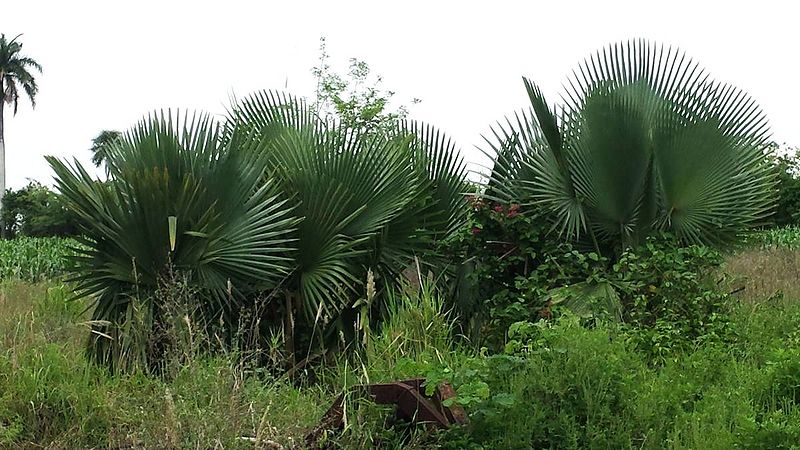
Cuba. Photo by Scott

Cuba. Photo by Scott
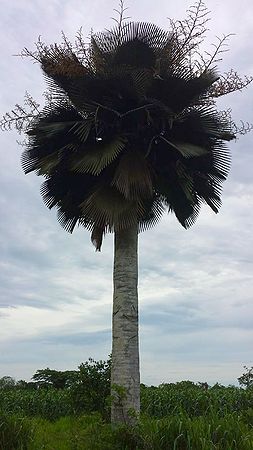
Cuba. Photo by Scott
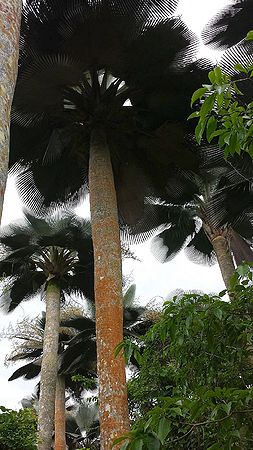
Cuba. Photo by Scott

Cuba. Photo by Scott

Cuba. Photo by Scott
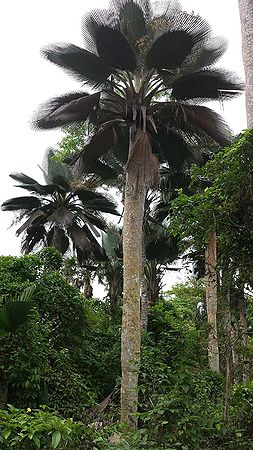
Cuba. Photo by Scott

Cuba. Photo by Scott
Cuba. Photo by Scott

Cuba. Photo by Scott

Cuba. Photo by Scott

Cuba. Photo by Michael Merritt

Cuba. Photo by Michael Merritt

Cuba. Photo by Michael Merritt

Cuba. Photo by Michael Merritt

Cuba. Photo by Michael Merritt

Thailand. Photo by Daryl O'Connor.
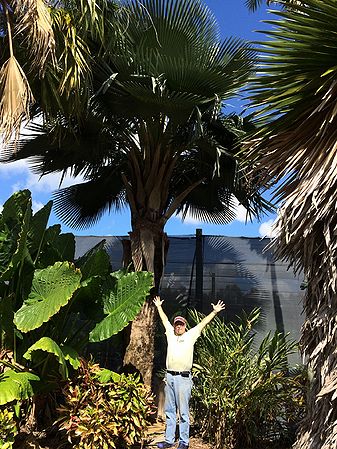
Searle Brothers Nursery, FL. Keith comes to visit Searle Brothers Nursery, FL. Ron Keifert giving scale. Photo by Keith.

Playa Pilar, (Cabo Guillermo) Cuba. January, 2017. Photo by Dr. David Martin. With Duanny Suárez.
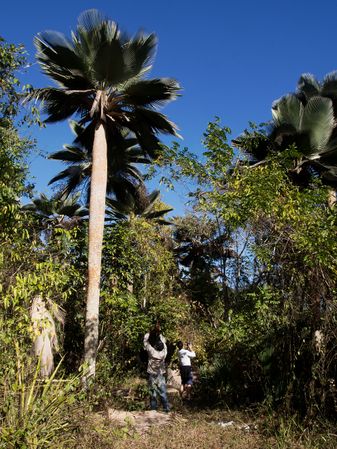
Playa Pilar, (Cabo Guillermo) Cuba. January, 2017. Photo by Dr. David Martin. With Duanny Suárez.

Playa Pilar, (Cabo Guillermo) Cuba. January, 2017. Photo by Dr. David Martin. With Duanny Suárez.

Playa Pilar, (Cabo Guillermo) Cuba. January, 2017. Photo by Dr. David Martin. With Duanny Suárez.
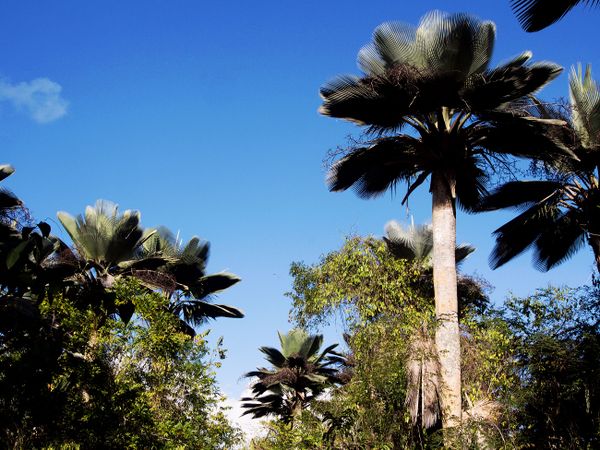
Playa Pilar, (Cabo Guillermo) Cuba. January, 2017. Photo by Dr. David Martin. With Duanny Suárez.

Playa Pilar, (Cabo Guillermo) Cuba. January, 2017. Photo by Dr. David Martin. With Duanny Suárez.

Playa Pilar, (Cabo Guillermo) Cuba. January, 2017. Photo by Dr. David Martin. With Duanny Suárez.

Playa Pilar, (Cabo Guillermo) Cuba. January, 2017. Photo by Dr. David Martin. With Duanny Suárez.

Playa Pilar, (Cabo Guillermo) Cuba. January, 2017. Photo by Dr. David Martin. With Duanny Suárez.

Playa Pilar, (Cabo Guillermo) Cuba. January, 2017. Photo by Dr. David Martin. With Duanny Suárez.

Playa Pilar, (Cabo Guillermo) Cuba. January, 2017. Photo by Dr. David Martin. With Duanny Suárez.


External Links
- Glossary of Palm Terms
- MODERN BOTANICAL LATIN
- "Just To Be Clear"
- http://www.virtualherbarium.org/psg/flagship/Copernicia_fall.html
- http://www.photomazza.com/?Copernicia-fallaensis
- http://www.plantapalm.com/vpe/virtualtours/cuba/vpe_palmsofcuba1.htm
- http://perfildaplanta.blogspot.com/2010/07/roystoneas-confusoes-imperiais-parte-ii.html
References
Phonetic spelling of Latin names by edric.
Special thanks to Geoff Stein, (Palmbob) for his hundreds of photos.
Special thanks to Palmweb.org, Dr. John Dransfield, Dr. Bill Baker & team, for their volumes of information and photos.
Glossary of Palm Terms; Based on the glossary in Dransfield, J., N.W. Uhl, C.B. Asmussen-Lange, W.J. Baker, M.M. Harley & C.E. Lewis. 2008. Genera Palmarum - Evolution and Classification of the Palms. Royal Botanic Gardens, Kew. All images copyright of the artists and photographers (see images for credits).
Many Special Thanks to Ed Vaile for his long hours of tireless editing and numerous contributions.