Difference between revisions of "Dypsis pachyramea"
| (13 intermediate revisions by 2 users not shown) | |||
| Line 1: | Line 1: | ||
| − | |||
__noeditsection__ | __noeditsection__ | ||
| − | |||
| − | |||
{{Palmbox | {{Palmbox | ||
|image=P1010322 Dypsis pachyramea.JPG | |image=P1010322 Dypsis pachyramea.JPG | ||
|image_caption=In habitat, Madagascar. Photo by Phil Arrowsmith. | |image_caption=In habitat, Madagascar. Photo by Phil Arrowsmith. | ||
|genus=Dypsis (DIP-sis) | |genus=Dypsis (DIP-sis) | ||
| − | |species=<br>pachyramea | + | |species=<br>pachyramea (pahk-ih-rah-MEH-ah) |
|subspecies= | |subspecies= | ||
|cultivar= | |cultivar= | ||
| Line 22: | Line 19: | ||
|common_names= | |common_names= | ||
}} | }} | ||
| − | |||
==Habitat and Distribution== | ==Habitat and Distribution== | ||
| − | Endemic to Madagascar. Masoala Peninsula. Lowland forest, on steep slopes and in humid valley bottoms; alt. to 400 m. | + | Endemic to Madagascar. Masoala Peninsula. Lowland forest, on steep slopes and in humid [[Image:P1010319 Dypsis pachyramea and John.D.JPG|thumb|left|400px|In Habitat, Dr. John Dransfield for scale. Photo by Phil Arrowsmith.]]valley bottoms; alt. to 400 m. |
==Description== | ==Description== | ||
Slender, clustering, undergrowth palmlet occurring in rather dense stands. STEMS to 50 cm tall, usually less, decumbent, rooting at the ground and sprouting at the rooting point, 7-8 mm in diam., in the upper part obscured by marcescent leaf sheaths, internodes 7-23 mm long; nodal scars about 2 mm wide, stem surface covered in scattered chestnut-brown scales. LEAVES about 8 in the crown; sheaths tubular, 60 x 9-14 mm, striate when dry, apically with 2 short triangular auricles 4.5 x 3 mm, these soon disintegrating, the sheath surface covered in dense caducous fimbriate-margined chestnutbrown scales; petiole absent or to about 9 cm long, triangular in cross section, 2 mm wide, densely covered in fimbriate-margined caducous chestnut-brown scales; blade narrow triangular, entire bifid, plicate, matt mid green, 39-43 cm, with costa 20-23 cm long, the lobes 17-20 cm long, 3.5-4.0 cm wide at the base, tapering to 1 cm wide at the shallowly dentate tips; costa bearing abundant caducous chestnut-brown scales, adaxial blade surface with scattered brown punctiform scales both on and between the ribs, abaxial surface with caducous fimbriate scales along ribs and scattered punctiform brown scales between ribs. INFLORESCENCE interfoliar, erect or sharply reflexed, much shorter than the leaves, 7-15 cm, branched to one order only; peduncle to 10 cm long, 3 mm in diam. distally, densely covered with fimbriate dark brown caducous scales; prophyll inserted to 10 mm above the base of the peduncle, 46 x 6 mm, tattering and bearing caducous dark brown scales; peduncular bract inserted about 2 cm above the prophyll insertion, 40 x 6 mm, tattering and scaly as the prophyll; rachis to 3 cm; rachillae 5-10, thick, short, 10-25 x 3 mm in liquid-preserved specimen, the longest being the continuation of the rachis, rachilla surface obscured by dense fimbriate scales. Triads borne congested ± throughout the rachilla length, partially obscured by the scales and partially sunken in pits, the rachilla bracts rounded, about 0.5 x 1 mm, forming the lower lips of the pits. STAMINATE FLOWERS at anthesis about 1.1 mm, spherical; sepals rounded, about 0.8 mm in diam., margins irregularly dentate or entire; petals ± free except at the very base, broadly triangular, 1 x 1 mm, striate, glabrous; androecium with 3 antepetalous stamens, filaments forming a fleshy ring c. 0.4 mm high, anthers didymous, 0.2 mm, ± sessile, introrse, connective about 0.1 mm, staminodes scarcely visible as 3 minute triangular lobes positioned between the anthers; pistillode scarcely visible. PISTILLATE FLOWERS at anthesis 2 x 1.5 mm, briefly stalked; sepals ovate, margins irregularly dentate, 1.2-1.5 x 0.9 mm; petals 1.5 x 1 mm, free, with thick triangular striate valvate tips, basally weakly imbricate; staminodes 6, irregularly triangular, 0.1-0.75 mm, irregularly grouped at one side of the ovary or separated, if grouped then connate; ovary spherical, about 1.1 mm in diam., stigmas eccentrically apical, to 0.2 mm, basally connate. Immature FRUIT green, fusiform, mature fruit cherry-red, ellipsoid, 17 x 7 mm; epicarp smooth, mesocarp 1-2 mm thick, endocarp 0.4 mm thick with sparse anastomosing fibres. SEED ellipsoid, 14 x 5 mm, embryo lateral. (J. Dransfield and H. Beentje. 1995)/Palmweb. Editing by edric. | Slender, clustering, undergrowth palmlet occurring in rather dense stands. STEMS to 50 cm tall, usually less, decumbent, rooting at the ground and sprouting at the rooting point, 7-8 mm in diam., in the upper part obscured by marcescent leaf sheaths, internodes 7-23 mm long; nodal scars about 2 mm wide, stem surface covered in scattered chestnut-brown scales. LEAVES about 8 in the crown; sheaths tubular, 60 x 9-14 mm, striate when dry, apically with 2 short triangular auricles 4.5 x 3 mm, these soon disintegrating, the sheath surface covered in dense caducous fimbriate-margined chestnutbrown scales; petiole absent or to about 9 cm long, triangular in cross section, 2 mm wide, densely covered in fimbriate-margined caducous chestnut-brown scales; blade narrow triangular, entire bifid, plicate, matt mid green, 39-43 cm, with costa 20-23 cm long, the lobes 17-20 cm long, 3.5-4.0 cm wide at the base, tapering to 1 cm wide at the shallowly dentate tips; costa bearing abundant caducous chestnut-brown scales, adaxial blade surface with scattered brown punctiform scales both on and between the ribs, abaxial surface with caducous fimbriate scales along ribs and scattered punctiform brown scales between ribs. INFLORESCENCE interfoliar, erect or sharply reflexed, much shorter than the leaves, 7-15 cm, branched to one order only; peduncle to 10 cm long, 3 mm in diam. distally, densely covered with fimbriate dark brown caducous scales; prophyll inserted to 10 mm above the base of the peduncle, 46 x 6 mm, tattering and bearing caducous dark brown scales; peduncular bract inserted about 2 cm above the prophyll insertion, 40 x 6 mm, tattering and scaly as the prophyll; rachis to 3 cm; rachillae 5-10, thick, short, 10-25 x 3 mm in liquid-preserved specimen, the longest being the continuation of the rachis, rachilla surface obscured by dense fimbriate scales. Triads borne congested ± throughout the rachilla length, partially obscured by the scales and partially sunken in pits, the rachilla bracts rounded, about 0.5 x 1 mm, forming the lower lips of the pits. STAMINATE FLOWERS at anthesis about 1.1 mm, spherical; sepals rounded, about 0.8 mm in diam., margins irregularly dentate or entire; petals ± free except at the very base, broadly triangular, 1 x 1 mm, striate, glabrous; androecium with 3 antepetalous stamens, filaments forming a fleshy ring c. 0.4 mm high, anthers didymous, 0.2 mm, ± sessile, introrse, connective about 0.1 mm, staminodes scarcely visible as 3 minute triangular lobes positioned between the anthers; pistillode scarcely visible. PISTILLATE FLOWERS at anthesis 2 x 1.5 mm, briefly stalked; sepals ovate, margins irregularly dentate, 1.2-1.5 x 0.9 mm; petals 1.5 x 1 mm, free, with thick triangular striate valvate tips, basally weakly imbricate; staminodes 6, irregularly triangular, 0.1-0.75 mm, irregularly grouped at one side of the ovary or separated, if grouped then connate; ovary spherical, about 1.1 mm in diam., stigmas eccentrically apical, to 0.2 mm, basally connate. Immature FRUIT green, fusiform, mature fruit cherry-red, ellipsoid, 17 x 7 mm; epicarp smooth, mesocarp 1-2 mm thick, endocarp 0.4 mm thick with sparse anastomosing fibres. SEED ellipsoid, 14 x 5 mm, embryo lateral. (J. Dransfield and H. Beentje. 1995)/Palmweb. Editing by edric. | ||
| Line 30: | Line 26: | ||
This species was at first confused with Dypsis humbertii var. angustifolia (= D. angustifolia). The inflorescences of both taxa are remarkably similar, and unlike other species of Dypsis in that the few short fat rachillae, densely covered with hairs obscure the flowers. There are also similarities in habit and form of the leaf. However, stamens in the new taxon are antepetalous, while in D. angustifolia they are antesepalous. (J. Dransfield and H. Beentje. 1995)/Palmweb. | This species was at first confused with Dypsis humbertii var. angustifolia (= D. angustifolia). The inflorescences of both taxa are remarkably similar, and unlike other species of Dypsis in that the few short fat rachillae, densely covered with hairs obscure the flowers. There are also similarities in habit and form of the leaf. However, stamens in the new taxon are antepetalous, while in D. angustifolia they are antesepalous. (J. Dransfield and H. Beentje. 1995)/Palmweb. | ||
==Culture== | ==Culture== | ||
| − | + | Cold Hardiness Zone: 10a | |
==Comments and Curiosities== | ==Comments and Curiosities== | ||
This is one of the smallest members of the genus. It is an attractive species with mid green, deeply plicate leaves and short, squat inflorescences hidden among the leaf bases. It is found in very humid lowland forest on the western side of the Masoala Peninsula. The species name is derived from the Greek for thick branches. (J. Dransfield and H. Beentje. 1995)/Palmweb. | This is one of the smallest members of the genus. It is an attractive species with mid green, deeply plicate leaves and short, squat inflorescences hidden among the leaf bases. It is found in very humid lowland forest on the western side of the Masoala Peninsula. The species name is derived from the Greek for thick branches. (J. Dransfield and H. Beentje. 1995)/Palmweb. | ||
Conservation: Vulnerable. Only known from two sites. (J. Dransfield and H. Beentje. 1995)/Palmweb. | Conservation: Vulnerable. Only known from two sites. (J. Dransfield and H. Beentje. 1995)/Palmweb. | ||
| + | |||
| + | <br clear="all"> | ||
| + | {{#Widget:AdResban}} | ||
| + | <center><gallery caption="IMAGE GALLERY" perrow="" widths="" heights=""> | ||
| + | Image:P1010318 Dypsis pachyramea.JPG|Jn habitat, Madagascar. Photo by Phil Arrowsmith. | ||
| + | Image:P1010319 Dypsis pachyramea and John.D.JPG|In Habitat, Dr. John Dransfield for scale. Photo by Phil Arrowsmith. | ||
| + | Image:P1010320 Dypsis pachyramea.JPG|In habitat, Madagascar. Photo by Phil Arrowsmith. | ||
| + | Image:P1010321 Dypsis pachyramea.JPG|In habitat, Madagascar. Photo by Phil Arrowsmith. | ||
| + | Image:P1010322 Dypsis pachyramea.JPG|In habitat, Madagascar. Photo by Phil Arrowsmith. | ||
| + | image:D0b6879f-c75d-4fad-b3a3-3d55b2adcc34.jpg|Masoala, Madagascar. Photo by Dr. John Dransfield, Royal Botanic Gardens, Kew/Palmweb. | ||
| + | image:Af54f981-ed87-49e2-9892-c505c08d107c.jpg|Masoala, Madagascar. Photo by Dr. John Dransfield, Royal Botanic Gardens, Kew/Palmweb. | ||
| + | image:4462f6f5-6f89-4136-a4f9-191cea90cdd9.jpg|Hiaraka, Masoala, Madagascar. Photo by Dr. John Dransfield, Royal Botanic Gardens, Kew/Palmweb. | ||
| + | image:2e1a9668-83fe-4ef9-b8bb-c66a772775d9.jpg|Hiaraka, Masoala, Madagascar. Photo by Dr. John Dransfield, Royal Botanic Gardens, Kew/Palmweb. | ||
| + | image:DypPac.jpg|Madagascar. In habitat. Photo-Rare Palm Seeds.com | ||
| + | image:Dp10765786094_5bf7d72f9c_k.jpg|Ambodiriana reserve - Manompana, Madagascar. "Photo by Olivier Reilhes" | ||
| + | image:Dp10765784826_85b79a89f6_k.jpg|Ambodiriana reserve - Manompana, Madagascar. "Photo by Olivier Reilhes" | ||
| + | image:Dp10765872064_1ebde418b1_k.jpg|Ambodiriana reserve - Manompana, Madagascar. "Photo by Olivier Reilhes" | ||
| + | image:Dp10766062965_63fb45197c_k.jpg|Ambodiriana reserve - Manompana, Madagascar. "Photo by Olivier Reilhes" | ||
| + | image:Dp10767129424_deebea0b7a_k.jpg|Ambodiriana reserve - Manompana, Madagascar. Olivier giving scale. "Photo by Olivier Reilhes" | ||
| + | image:Dp10767316403_5e1a8ede04_k.jpg|Ambodiriana reserve - Manompana, Madagascar. "Photo by Olivier Reilhes" | ||
| + | image:Dp10767462625_cc7e937b97_k.jpg|Ambodiriana reserve - Manompana, Madagascar. "Photo by Olivier Reilhes" | ||
| + | image:Dp10767511596_e5fb94f40a_k.jpg|Ambodiriana reserve - Manompana, Madagascar. "Photo by Olivier Reilhes" | ||
| + | image:Dp10767575314_ca9ade8232_k.jpg|Ambodiriana reserve - Manompana, Madagascar. "Photo by Olivier Reilhes" | ||
| + | image:Dp10767726753_63666f659d_k.jpg|Ambodiriana reserve - Manompana, Madagascar. "Photo by Olivier Reilhes" | ||
| + | File:26789507503_09ea9e01c4_o.jpg|Tampolo - Masoala - Madagascar (2016) - East Coast of Madagascar. Photo by "Olivier Reilhes". | ||
| + | |||
| + | File:post-22-0-33260100-1426215897.jpg|Floribunda Nursery, Hawaii. Photo by Bö-Goran Lundkvist. | ||
| + | File:post-74-0-82346100-1433600164.jpg|Bill Austin's Garden, Hawaii. Photo by Jack Sayers. | ||
| + | |||
| + | </gallery></center> | ||
==External Links== | ==External Links== | ||
*[http://eunops.org/content/glossary-palm-terms Glossary of Palm Terms] | *[http://eunops.org/content/glossary-palm-terms Glossary of Palm Terms] | ||
| Line 42: | Line 68: | ||
Phonetic spelling of Latin names by edric. | Phonetic spelling of Latin names by edric. | ||
| − | Special thanks to Geoff Stein, (Palmbob) for his hundreds of photos | + | Special thanks to Geoff Stein, (Palmbob) for his hundreds of photos. |
| − | Special thanks to [http://palmweb.org/?q=node/2 Palmweb.org], Dr. John Dransfield, Dr. Bill Baker & team, for their volumes of information and photos | + | Special thanks to [http://palmweb.org/?q=node/2 Palmweb.org], Dr. John Dransfield, Dr. Bill Baker & team, for their volumes of information and photos. |
Glossary of Palm Terms; Based on the glossary in Dransfield, J., N.W. Uhl, C.B. Asmussen-Lange, W.J. Baker, M.M. Harley & C.E. Lewis. 2008. Genera Palmarum - Evolution and Classification of the Palms. Royal Botanic Gardens, Kew. All images copyright of the artists and photographers (see images for credits). | Glossary of Palm Terms; Based on the glossary in Dransfield, J., N.W. Uhl, C.B. Asmussen-Lange, W.J. Baker, M.M. Harley & C.E. Lewis. 2008. Genera Palmarum - Evolution and Classification of the Palms. Royal Botanic Gardens, Kew. All images copyright of the artists and photographers (see images for credits). | ||
| Line 50: | Line 76: | ||
Dransfield, J. & Beentje, H. 1995. The Palms of Madagascar. Royal Botanic Gardens, Kew and The International Palm Society. | Dransfield, J. & Beentje, H. 1995. The Palms of Madagascar. Royal Botanic Gardens, Kew and The International Palm Society. | ||
| − | |||
| − | |||
| − | |||
| − | |||
| − | |||
| − | |||
| − | |||
| − | |||
| − | |||
| − | |||
| − | |||
| − | |||
| − | |||
| − | |||
| − | |||
| − | |||
| − | |||
| − | |||
| − | |||
| − | |||
| − | |||
| − | |||
| − | |||
| − | |||
| − | |||
{{SpeciesListBackLink}} | {{SpeciesListBackLink}} | ||
[[Category:Palms of Madagascar]] | [[Category:Palms of Madagascar]] | ||
[[Category:DYPSIS|pachyramea]] | [[Category:DYPSIS|pachyramea]] | ||
Latest revision as of 00:16, 18 June 2016
| Dypsis (DIP-sis) pachyramea (pahk-ih-rah-MEH-ah) | |||||||
|---|---|---|---|---|---|---|---|
 In habitat, Madagascar. Photo by Phil Arrowsmith. | |||||||
| Scientific Classification | |||||||
| |||||||
| Synonyms | |||||||
|
| |||||||
| Native Continent | |||||||
 | |||||||
| Morphology | |||||||
| |||||||
| Culture | |||||||
|
| |||||||
| Survivability index | |||||||
|
| |||||||
| Common names | |||||||
|
| |||||||
Contents
Habitat and Distribution
Endemic to Madagascar. Masoala Peninsula. Lowland forest, on steep slopes and in humid
Description
Slender, clustering, undergrowth palmlet occurring in rather dense stands. STEMS to 50 cm tall, usually less, decumbent, rooting at the ground and sprouting at the rooting point, 7-8 mm in diam., in the upper part obscured by marcescent leaf sheaths, internodes 7-23 mm long; nodal scars about 2 mm wide, stem surface covered in scattered chestnut-brown scales. LEAVES about 8 in the crown; sheaths tubular, 60 x 9-14 mm, striate when dry, apically with 2 short triangular auricles 4.5 x 3 mm, these soon disintegrating, the sheath surface covered in dense caducous fimbriate-margined chestnutbrown scales; petiole absent or to about 9 cm long, triangular in cross section, 2 mm wide, densely covered in fimbriate-margined caducous chestnut-brown scales; blade narrow triangular, entire bifid, plicate, matt mid green, 39-43 cm, with costa 20-23 cm long, the lobes 17-20 cm long, 3.5-4.0 cm wide at the base, tapering to 1 cm wide at the shallowly dentate tips; costa bearing abundant caducous chestnut-brown scales, adaxial blade surface with scattered brown punctiform scales both on and between the ribs, abaxial surface with caducous fimbriate scales along ribs and scattered punctiform brown scales between ribs. INFLORESCENCE interfoliar, erect or sharply reflexed, much shorter than the leaves, 7-15 cm, branched to one order only; peduncle to 10 cm long, 3 mm in diam. distally, densely covered with fimbriate dark brown caducous scales; prophyll inserted to 10 mm above the base of the peduncle, 46 x 6 mm, tattering and bearing caducous dark brown scales; peduncular bract inserted about 2 cm above the prophyll insertion, 40 x 6 mm, tattering and scaly as the prophyll; rachis to 3 cm; rachillae 5-10, thick, short, 10-25 x 3 mm in liquid-preserved specimen, the longest being the continuation of the rachis, rachilla surface obscured by dense fimbriate scales. Triads borne congested ± throughout the rachilla length, partially obscured by the scales and partially sunken in pits, the rachilla bracts rounded, about 0.5 x 1 mm, forming the lower lips of the pits. STAMINATE FLOWERS at anthesis about 1.1 mm, spherical; sepals rounded, about 0.8 mm in diam., margins irregularly dentate or entire; petals ± free except at the very base, broadly triangular, 1 x 1 mm, striate, glabrous; androecium with 3 antepetalous stamens, filaments forming a fleshy ring c. 0.4 mm high, anthers didymous, 0.2 mm, ± sessile, introrse, connective about 0.1 mm, staminodes scarcely visible as 3 minute triangular lobes positioned between the anthers; pistillode scarcely visible. PISTILLATE FLOWERS at anthesis 2 x 1.5 mm, briefly stalked; sepals ovate, margins irregularly dentate, 1.2-1.5 x 0.9 mm; petals 1.5 x 1 mm, free, with thick triangular striate valvate tips, basally weakly imbricate; staminodes 6, irregularly triangular, 0.1-0.75 mm, irregularly grouped at one side of the ovary or separated, if grouped then connate; ovary spherical, about 1.1 mm in diam., stigmas eccentrically apical, to 0.2 mm, basally connate. Immature FRUIT green, fusiform, mature fruit cherry-red, ellipsoid, 17 x 7 mm; epicarp smooth, mesocarp 1-2 mm thick, endocarp 0.4 mm thick with sparse anastomosing fibres. SEED ellipsoid, 14 x 5 mm, embryo lateral. (J. Dransfield and H. Beentje. 1995)/Palmweb. Editing by edric.
This species was at first confused with Dypsis humbertii var. angustifolia (= D. angustifolia). The inflorescences of both taxa are remarkably similar, and unlike other species of Dypsis in that the few short fat rachillae, densely covered with hairs obscure the flowers. There are also similarities in habit and form of the leaf. However, stamens in the new taxon are antepetalous, while in D. angustifolia they are antesepalous. (J. Dransfield and H. Beentje. 1995)/Palmweb.
Culture
Cold Hardiness Zone: 10a
Comments and Curiosities
This is one of the smallest members of the genus. It is an attractive species with mid green, deeply plicate leaves and short, squat inflorescences hidden among the leaf bases. It is found in very humid lowland forest on the western side of the Masoala Peninsula. The species name is derived from the Greek for thick branches. (J. Dransfield and H. Beentje. 1995)/Palmweb.
Conservation: Vulnerable. Only known from two sites. (J. Dransfield and H. Beentje. 1995)/Palmweb.
- IMAGE GALLERY

Jn habitat, Madagascar. Photo by Phil Arrowsmith.

In Habitat, Dr. John Dransfield for scale. Photo by Phil Arrowsmith.

In habitat, Madagascar. Photo by Phil Arrowsmith.

In habitat, Madagascar. Photo by Phil Arrowsmith.

In habitat, Madagascar. Photo by Phil Arrowsmith.

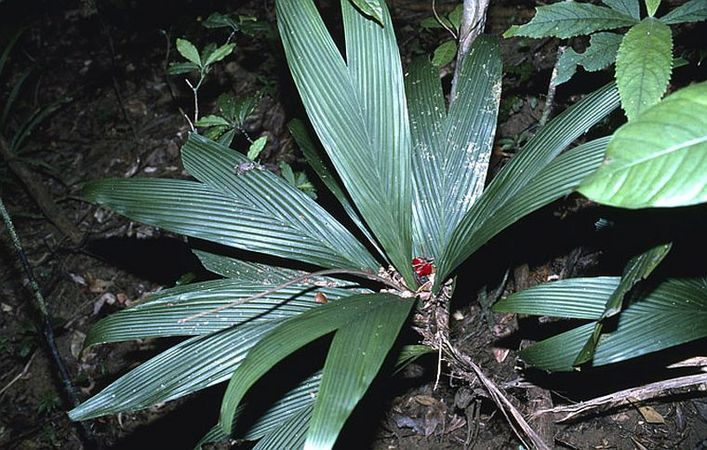
Masoala, Madagascar. Photo by Dr. John Dransfield, Royal Botanic Gardens, Kew/Palmweb.
Masoala, Madagascar. Photo by Dr. John Dransfield, Royal Botanic Gardens, Kew/Palmweb.
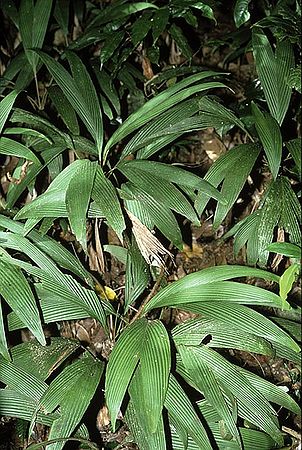
Hiaraka, Masoala, Madagascar. Photo by Dr. John Dransfield, Royal Botanic Gardens, Kew/Palmweb.
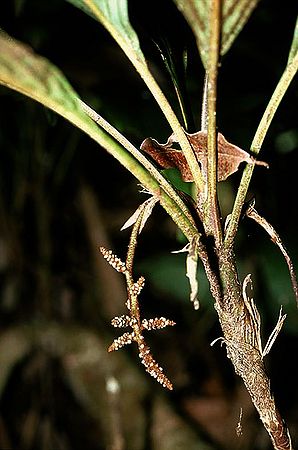
Hiaraka, Masoala, Madagascar. Photo by Dr. John Dransfield, Royal Botanic Gardens, Kew/Palmweb.

Madagascar. In habitat. Photo-Rare Palm Seeds.com
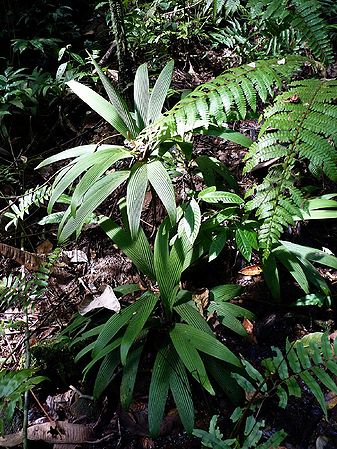
Ambodiriana reserve - Manompana, Madagascar. "Photo by Olivier Reilhes"
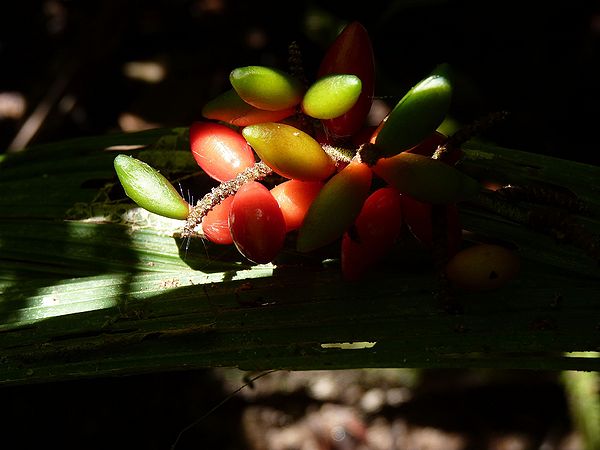
Ambodiriana reserve - Manompana, Madagascar. "Photo by Olivier Reilhes"

Ambodiriana reserve - Manompana, Madagascar. "Photo by Olivier Reilhes"

Ambodiriana reserve - Manompana, Madagascar. "Photo by Olivier Reilhes"

Ambodiriana reserve - Manompana, Madagascar. Olivier giving scale. "Photo by Olivier Reilhes"

Ambodiriana reserve - Manompana, Madagascar. "Photo by Olivier Reilhes"

Ambodiriana reserve - Manompana, Madagascar. "Photo by Olivier Reilhes"
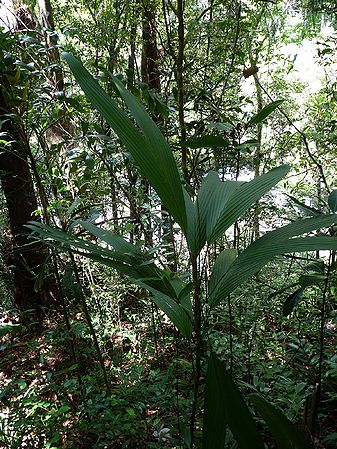
Ambodiriana reserve - Manompana, Madagascar. "Photo by Olivier Reilhes"
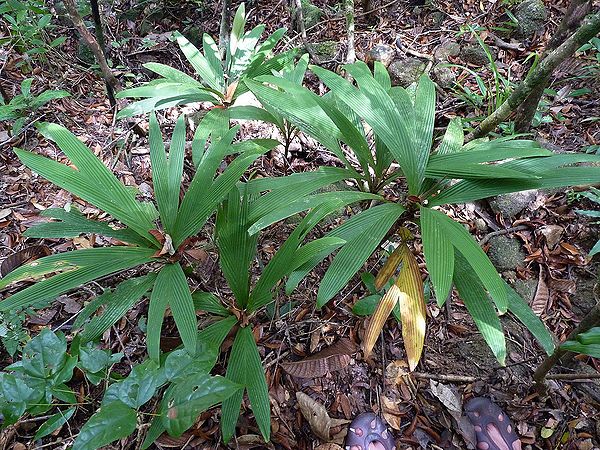
Ambodiriana reserve - Manompana, Madagascar. "Photo by Olivier Reilhes"

Ambodiriana reserve - Manompana, Madagascar. "Photo by Olivier Reilhes"
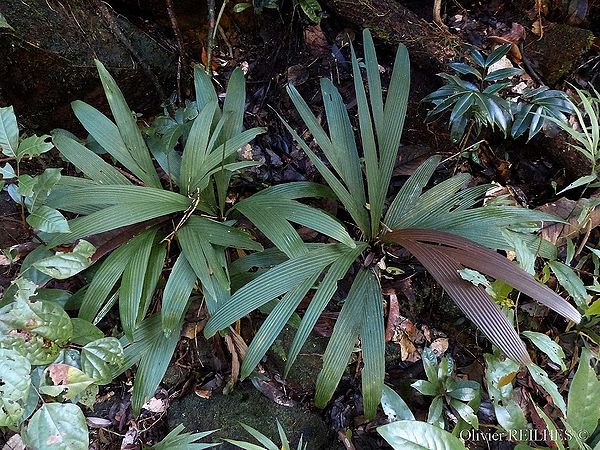
Tampolo - Masoala - Madagascar (2016) - East Coast of Madagascar. Photo by "Olivier Reilhes".

Floribunda Nursery, Hawaii. Photo by Bö-Goran Lundkvist.

Bill Austin's Garden, Hawaii. Photo by Jack Sayers.


External Links
References
Phonetic spelling of Latin names by edric.
Special thanks to Geoff Stein, (Palmbob) for his hundreds of photos.
Special thanks to Palmweb.org, Dr. John Dransfield, Dr. Bill Baker & team, for their volumes of information and photos.
Glossary of Palm Terms; Based on the glossary in Dransfield, J., N.W. Uhl, C.B. Asmussen-Lange, W.J. Baker, M.M. Harley & C.E. Lewis. 2008. Genera Palmarum - Evolution and Classification of the Palms. Royal Botanic Gardens, Kew. All images copyright of the artists and photographers (see images for credits).
Dransfield, J. & Beentje, H. 1995. The Palms of Madagascar. Royal Botanic Gardens, Kew and The International Palm Society.
Many Special Thanks to Ed Vaile for his long hours of tireless editing and numerous contributions.