Difference between revisions of "Ravenea rivularis"
Dypsisdean (Talk | contribs) |
|||
| (113 intermediate revisions by 6 users not shown) | |||
| Line 1: | Line 1: | ||
| − | [[ | + | __noeditsection__ |
| − | [[Image: | + | {{Palmbox |
| + | |image=Ravenea_rivularis-IMG_0468.jpg | ||
| + | |image_caption= | ||
| + | |genus=Ravenea (rah-vehn-EH-ah) | ||
| + | |species=<br>rivularis (rih-voo-LAHR-iss) | ||
| + | |subspecies= | ||
| + | |variety= | ||
| + | |cultivar= | ||
| + | |synonyms= | ||
| + | |continent=africa | ||
| + | |habit=Solitary | ||
| + | |leaf_type=Pinnate | ||
| + | |height=30m | ||
| + | |trunk_diameter=35-50 cm | ||
| + | |sun_exposure=Full Sun | ||
| + | |watering=Very Moist | ||
| + | |soil_type=Rich Soil | ||
| + | |msi= | ||
| + | |ssi= | ||
| + | |common_names=Gora (Sakalava), Bakaly, Vakaka (Bara), Malio (near Manera); majesty palm (in horticulture). Majestic Palm, or Majesty Palm. | ||
| + | }} | ||
| + | ==Habitat and Distribution== | ||
| + | Endemic to South central Madagascar, Mangoky and Onilahy river systems. [[File:Ravenea_a3e81ea222_b_Zona.jpg|thumb|left|370px|Photo: idtools.org - Courtesy of Dr. Scott Zona.]]In shallow standing water on riverbanks, swampy valley bottoms, either in deciduous forest or in gallery forest; alt. 350-750 m; gregarious, often forming stands. | ||
| + | ==Description== | ||
| + | Majestic palm. TRUNK 5-22 (30?) m high, cylindrical or slightly inflated towards the middle, 36-50 cm in diam., near crown 15-18 cm in diam.; internodes 4-10 cm; wood with tough black fibre layer in the outer part; inner wood soft; bark pale brown-grey (not white, as Fl. Madagascar states!); diameter of base of crown about 22 cm. LEAVES 16-25 in the crown, porrect to pendulous, slightly arching, held on edge in the distal half of the leaf; sheath 30-50 x 15-16 cm, green and proximally with cottony white or grey-brown indument; margins ragged and fibrous; petiole 6-20 cm long, 4-4.5 x 1.5-1.6 cm across, adaxially flat with slightly sharp edges, white-waxy and -scaly; rachis green, white and scaly when young, 1.2-1.7 m long, 1-1.7 cm wide towards the middle, abaxially almost flat or slightly convex, densely pubescent to glabrescent, adaxially flat in the proximal half, more distally keeled with flat top and with the keel almost as wide as the rachis; leaflets regular, in one plane, stiff to pendulous, attenuate, green to slightly yellow, slightly waxy, 70-73 on each side of the rachis, the proximal 20-55 x 0.5-1.7 cm, the median 52-64 x 1.5-3.2 cm (interval about 2 cm), the distal 16-42 x 0.4-1.9 cm, especially abaxially with the veins bearing minute whitish scales, also with a few large brown or grey ramenta on midrib abaxially. {{read more top}}STAMINATE INFLORESCENCE multiple in 5s-7s (Fl. Mad. says solitary), erect, branched to 2 orders, 86-90 cm; peduncle 32-45 cm, green, proximally 0.9-1.1 cm across and densely pubescent, distally about 0.8 cm across and glabrescent, slightly flattened; prophyll not known; peduncular bracts (based on one collection, cut just above base) 18 cm, 85 cm, 88 cm, 71 cm (the last inserted at 13 cm from the base of the peduncle), abaxially short-pubescent; non-tubular peduncular bract at 15-30 cm from the base, membranous, 35-41 x 2 cm; rachis bracts about 6 x 0.2 cm at the base of the rachis; rachis 52- 89 cm, slightly pubescent; branches 60-100, dense; rachillae 3-21 cm long, sinuous in the distal part; bracteole about 0.7 x 0.4 mm; pedicel 0.5-1 mm long. STAMINATE FLOWERS with the calyx connate for 0.5-0.7 mm, 0.6-1 mm across, free lobes 1.2-1.3 x 0.7-0.8 mm, triangular, acute; petals 3.5-5.8 mm, ovate, acute; filaments 0.4 (epipetalous, adnate for 0.3- 0.4 mm)-0.8 (free) mm; anthers 3.1-3.4 x 1.2-1.5 mm; pistillode 0.5 x 0.6 mm. FLOWERS with slight resinous smell. PISTILLATE INFLORESCENCES solitary, erect or spreading, branched to 1 order, 130-150 cm long; peduncle 40-60 cm, proximally 4 x 2.5 cm across, distally 1.2-2.2 x 1-1.8 cm across, green, white-scaly; prophyll 13-16 cm long, adnate for about 2 cm; bracts narrow, 24-35 x 5-7 cm, 52-65 x 6 (inserted at about 4 cm from the base of the peduncle), 110-130 x 5 (inserted at about 5 cm), 124-150 x 4.5 cm (inserted at about 6 cm), abaxially white-scaly; at about 60 cm from the base with a non-tubular peduncular bract about 20 x 0.7 cm; proximal rachis bract 6-15 x 0.3 cm; rachis 50-72 cm, with 125-146 densely packed reflexed rachillae; rachillae 10-32 cm, 1.5 (-2.5 in fruit) mm across, with bulbous base, proximally 3.5 mm across, green with white bloom; pedicel 1-4 mm long. PISTILLATE FLOWER with the calyx connate for 1-1.3 mm, free lobes 1-1.3 x 1.3 mm, triangular, acute; petals ovate/triangular, acute, 3-3.5 x 2.5 mm; staminodes 6, short; ovary ovoid-conical, slightly shorter than the petals. FRUITS bright red, globose to slightly ellipsoid, 7.5-9 x 7-8.5 mm, 1-seeded, with bitter pulp; stigmatic remains subapical to lateral. SEED 5.5-6 x 5.5 mm. SEEDLING with 2 scale leaves and a bifid eophyll. (J. Dransfield and H. Beentje. 1995)/Palmweb. Editing by edric. | ||
| + | |||
| + | The protologue mentions two populations, at Imaloto at the foot of the Isalo and at the Matitina R. near the sea (E Madagascar); the first one must have been the Perrier collection chosen as lectotype (which has staminate and pistillate flowers, as well as young fruit, just as in the protologue); the second one is only cited as Perrier s.n. in the Flore de Madagascar, a specimen which we have not seen; this might be an early collection of R. musicalis, the only eastern species looking vaguely like R. rivularis. HB has searched for palms at the site indicated, but failed to find a single (wild) one; older people did not know of any native palms, nor did they recognize the local name given (Akoraka in the Tanala language). Jumelle (1927b) mentions populations seen on Makay sandstone, in the Mangoky basin; the Flore de Madagascar adds the Sakeny R. valley (Menabe) and Madiovalo, just West of Ambato-Boeni, near the mouth of the Betsiboka R.; and the Bongolava (without mentioning which one; the name just means long plateau and there are several). The first three sites are indicated on the map by question marks. We consider the Madiovalo and Bongolava ones as unlikely; possibly these refer to riverside trees of R. sambiranensis, which has been collected in such a habitat on the (Miandrivazo) Bongolava. (J. Dransfield and H. Beentje. 1995)/Palmweb. | ||
| + | {{read more bottom}} | ||
| + | ==Culture== | ||
| + | '''SOUTHERN CALIFORNIA''' | ||
| + | |||
| + | Majesty Palms will grow well outside in Southern California under certain conditions. | ||
| + | |||
| + | First, LOTS of water. And, any conditions that help same. Clay soil is much better than sand, or silt, because clay holds water. R. rivularis like to be waterlogged, since their habitat is along riverbeds. | ||
| + | |||
| + | Make sure to give space to a palm that will produce a trunk a foot and a half (18" or .5 m) across, up to 100 feet (eventually) 33. m tall. A great lawn palm. A great palm in a boggy spot where the land has been raped, and drainage is not so good. | ||
| + | |||
| + | "This is one of the most commonly sold 'house palms' nowadays, and the sad thing is it performs terribly as one. It is a great outdoor plant, though in the continental US it's a bit hard to keep from yellowing at the tips, especially if planted in full sun. It is a relatively fast palm for Southern California, and grows faster the more heat and water it gets. It eventually grows to 50' or more in the US, but in Madagascar, it's home, it can get up to nearly 100'. As the name suggests, it grows along rivers and loves to have its roots constantly moist. The only major dangers to this palm are cold (can't handle temps below the mid 20sF) and snails LOVE it, and will quickly shred the leaves to bits. Watering the crown, particulaly in the cooler months of the year, and especially the cool months to warm month period, is risky (though rain water seems to be OK... tap water is the problem). Rot/bud damage is very common in this species, at it is in many of the non-crownshafted feather-leaf palms, from tap water on the crowns ANY time of the year... but mostly in late winter/spring, as the palm starts to grow again... so if you plant this palm in your lawn, try to avoid having the sprinkler hit the crown. It is nearly impossible to overwater the roots of this plant (unless maybe planted in a very heavy clay soil)... but the crown is very sensitive to being 'overwatered'. I can't tell you how often i see this happen around southern California (and happened to several of my own palms)... live and learn." (Geoff Stein) | ||
| + | <center> | ||
| + | [[{{PFC}}http://www.palmpedia.net/palmsforcal/index.php5/Ravenea_rivularis]] | ||
| + | </center> | ||
| + | ==Comments and Curiosities== | ||
| + | {{read more top}} | ||
| + | This is a [[dioecious]] genus. | ||
| + | |||
| + | An aptly named species, since it only grows along riverbanks. It has recently become very popular in cultivation, and when well-watered grows at an impressive speed. The species can be admired from the main road Ihosy-Tulear, in a large stand at Ilkaka village near the Isalo National Park. (J. Dransfield and H. Beentje. 1995)/Palmweb. | ||
| + | |||
| + | Conservation: Vulnerable in habitat. Some 60 trees seen in two populations; they do not grow in any protected area. (J. Dransfield and H. Beentje. 1995)/Palmweb. | ||
| + | |||
| + | Uses: Seeds collected for export. This is one of the most sought after Madagascan palm species in international horticulture. Seed is harvested from the wild for trade. | ||
| + | |||
| + | |||
| + | Conservation: IUCN Red List of Threatened Species - Endangered. Known from four fragmented sites in the southwest of Madagascar with an extent of occurrence of 2,122 km² and an area of occupancy of 144 km². The species may be locally abundant, however, about 900 mature trees are estimated for the whole distribution range. The subpopulation in Isalo is on the margin of the national park and those in Analavelona occur in a taboo area. There is continuing decline in the extent and quality of the habitat and in mature individuals due to the various threats. This is one of the most popular palm species from Madagascar in international horticulture, and although there are strict trade regulations in place, illegal harvest of seed from the wild still occurs. Endemic to the southwest of Madagascar, between Isalo, Sakaraha and Analavelona mountains | ||
| + | Population: About 900 mature trees are estimated across all the known sites and the population is declining. Usually found on river-banks in lowland forest, but also grows in shallow and slow moving water. Recorded from 300 up to 1,000 m. (Rakotoarinivo, M. & Dransfield, J. 2012.) | ||
| + | |||
| + | Date Assessed: 2010-12-17. | ||
| + | ♦ Estimated area of occupancy (AOO) - km2: 144 | ||
| + | ♦ Number of Locations: 4 | ||
| + | ♦ Lower elevation limit (metres): 300 | ||
| + | ♦ Upper elevation limit (metres): 1000 | ||
| + | |||
| + | Conservation Actions: The species is listed on CITES Appendix II. The subpopulation at Isalo is on the margin of the national park and those in Analavelona occur in a taboo area. Monitoring of the harvesting is required and possible additional enforcement of the controls. (Rakotoarinivo, M. & Dransfield, J. 2012.) | ||
| + | |||
| + | One of the most popular potted plants on Earth. Fast from seed to a couple meters tall. | ||
| + | |||
| + | {{read more bottom}} | ||
| + | <br style="clear:both;"/> | ||
| + | {{#Widget:AdResban}} | ||
| + | <center><gallery caption="IMAGE GALLERY" perrow="" widths="" heights=""> | ||
| + | Image:MadPalms90.jpg|In habitat, Madagascar. | ||
| + | image:JMMAD_Rave_rivu1.jpg|In fruit out of Isalo Madagascar. Photo by Jeff Marcus | ||
| + | image:JMMAD_Rivu_rave2.jpg|This is a very threatened population of Ravenea rivularis grown in a river with Malagasy people sifting for Sapphires..This was out of the Sapphire town of Ilaka, Madagascar. Photo by Jeff Marcus | ||
| + | image:8264429a-bc2e-437b-a297-edc9f7426553.jpg|Ilakaka, Madagascar. Photo by Dr. John Dransfield, Royal Botanic Gardens, Kew/Palmweb. | ||
| + | image:10b1a7ef-c022-4459-936b-2cc5f0882669.jpg|Brisbane, Queensland, Australia. Photo by Dr. John Dransfield, Royal Botanic Gardens, Kew/Palmweb. | ||
| + | image:F5efd8e2-a441-4b98-b8b4-720172a1eac5.jpg|Ilkaka, Madagascar. Photo by Dr. Henk Beentje, Royal Botanic Gardens, Kew/Palmweb. | ||
| + | image:59c21580-9411-4614-92bb-8ff80809423f.jpg|Near Isalo, Madagascar. Photo by Dr. Henk Beentje, Royal Botanic Gardens, Kew/Palmweb. | ||
| + | image:Bdca0e7d-fe92-49e2-abf6-08d24813cf53.jpg|Ilkaka, Madagascar. Photo by Dr. Henk Beentje, Royal Botanic Gardens, Kew/Palmweb. | ||
| + | image:F8a17d03-001b-4e65-a2de-6ea4d77fe623.jpg|Ilkaka, Madagascar. Photo by Dr. Henk Beentje, Royal Botanic Gardens, Kew/Palmweb. | ||
| + | image:45b8fa0d-2a45-4894-96d2-9662323a5f20.jpg|Near Ranshira, Madagascar. Photo by Dr. Henk Beentje, Royal Botanic Gardens, Kew/Palmweb. | ||
| + | image:8f0b042b-1a1e-4700-a89a-65e0ce84819f.jpg|Ilkaka, near Isalo, Madagascar. Photo by Dr. Henk Beentje, Royal Botanic Gardens, Kew/Palmweb. | ||
| + | image:40da948f-2514-4ec6-a4f1-a6a7cb2fce7a.jpg|Stan Walkley's Garden, Queensland, Australia. Photo by Dr. William J. Baker, Royal Botanic Gardens, Kew/Palmweb. | ||
| + | image:D4d2f387-8a8d-4ffe-a26b-eda1b8705af6.jpg|Ilkaka, near Isalo, Madagascar. Photo by Dr. Henk Beentje, Royal Botanic Gardens, Kew/Palmweb. | ||
| + | image:Ravenea-rivularis53.jpg|Hawaiian Tropical Botanical Garden | ||
| + | image:Ravenea_rivularis96.jpg|Photo by Rudolf | ||
| + | image:Ravenea_rivularis_with_people_larb.JPG|Southern California. Photo by Geoff Stein | ||
| + | image:Ravenea_rivularis_update.JPG|Southern California. Photo by Geoff Stein | ||
| + | image:Ravenea_rivulari_SCP_tall.jpg|Southern California. Photo by Geoff Stein | ||
| + | image:51b91b.jpg|Southern California. Photo by Geoff Stein | ||
| + | image:Majestys_on_Winnetka_update.JPG|Southern California. 2.5 years later. Photo by Geoff Stein | ||
| + | image:4fbfca.jpg|Los Angeles, CA. Photo by Geoff Stein | ||
| + | image:9b1e1b.jpg|Pasadena, CA. Photo by Geoff Stein | ||
| + | image:A4fcf0.jpg|San Diego, CA. Photo by Geoff Stein | ||
| + | image:3cc874.jpg|Santa Ana, CA. Photo by Geoff Stein | ||
| + | image:C12c0f.jpg|Hawaii. Photo by Geoff Stein | ||
| + | image:Ec9c9f.jpg|Ho'omaluhia Gardens, Hawaii. Photo by Geoff Stein | ||
| + | image:B99587.jpg|Los Angeles arboretum, CA. Photo by Geoff Stein | ||
| + | image:Db2aae.jpg|Southern California. Female, needs male tree's pollen to produce seed. Photo by Geoff Stein | ||
| + | image:1810ce.jpg|Southern California. Photo by Geoff Stein | ||
| + | image:395232.jpg|Balboa Park, San Diego, CA. Perhaps tallest of the species in Californa. Photo by Geoff Stein | ||
| + | image:D4b23a.jpg|Southern California. After freeze below 26 F. 2007. Photo by Geoff Stein | ||
| + | image:7581e6.jpg|Southern California. The next year, 2008. Photo by Geoff Stein | ||
| + | image:437f48.jpg|Huntington gardens, Pasadena, California. Photo by Geoff Stein | ||
| + | image:C38f58.jpg|"Hot, full sun, Palm Desert, California (over 120F many days)." Photo by Geoff Stein | ||
| + | File:8b7c97.jpg|Southern California. Photo by Geoff Stein | ||
| + | File:44f4c2.jpg|Southern California. Photo by Geoff Stein | ||
| + | File:5bfbb7.jpg|Southern California. Photo by Geoff Stein | ||
| + | File:2dc504.jpg|Southern California. Photo by Geoff Stein | ||
| + | File:c6eb2a.jpg|Southern California. Photo by Geoff Stein | ||
| + | |||
| + | |||
| + | image:Df6c74.jpg|Rio de Janeiro Botanical Garden. Photo by Gustichock | ||
| + | image:4f7efe.jpg|Rio de Janeiro Botanical Garden. Photo by Gustichock | ||
| + | image:6d26d7.jpg|Mauritius Island. "orange fruits on a female plant (no polinisation - not viable fruits)." Photo by timrann | ||
| + | image:B21d94.jpg|Mauritius Island. "orange fruits on a female plant (no polinisation - not viable fruits)." Photo by timrann | ||
| + | File:rrIMG_7393.jpg|Old Beach, Tasmania. Garden of Troy Donovan. Photo by Troy Donovan. | ||
| + | |||
| + | |||
| + | File:rivularis10.jpg|Photo: idtools.org | ||
| + | File:Ravenea_hab2_pja.jpg|Photo: idtools.org | ||
| + | File:Rave_riv_fruit_pja.jpg|Photo: idtools.org | ||
| + | File:Ravenea rivularis P200 H22 Y2005 N1718.JPG|Photo: idtools.org | ||
| + | File:7023108747_455a05e249_b.jpg|Photo by Kyle Wicomb. | ||
| + | File:3520354925_1e600b4fbb_o.jpg|Photo by Kyle Wicomb. | ||
| + | File:18380799684_81a51f9bf4_c.jpg|Huntington Botanical Gardens, CA. Photo by Kyle Wicomb. | ||
| + | File:8283302570_bc0c2f82bc_z.jpg|2015. Kyle Wicomb's palms at McCarty Hall, the University of Florida in Gainesville, FL. In ground 2007. Photo by Kyle Wicomb. | ||
| + | File:Ravenea_rivularis-IMG_0468.jpg | ||
| + | |||
| + | image:Dca5b5.jpg|Melbourne Beach, FL. Photo by tiareman | ||
| + | image:90d3b7.jpg|Melbourne Beach, FL. "The water level rises in the summer and completely covers the bases of these palms, and they get real green during that period." Photo by tiareman | ||
| + | image: | ||
| + | image:4db551.jpg|South Coast Plaza, Costa Mesa, (Orange Co.) California. | ||
| + | image:rivularis.jpg|''Ravenea rivularis'' in California. | ||
| + | |||
| + | image:420893_10151253311689434_1012518608_n.jpg|Medellin, Colombia. (1,500 Mts. or 5,000 feet above see level), Photo by Jeff Anderson | ||
| + | File:post-42-0-13694300-1432208477.jpg|Ravenea rivularis - Wollongong Botanical Gardens Palm Collection, 90 minute drive south of Sydney. Livistona australis is the local tree. Photo by Daryl O'Connor. | ||
| + | File:2008-05-04_11-26-31.jpg|Gerardo Herrero's Farm, 2008 Costa Rica. 2008 IPS Biennial. Photo by Ryan D. Gallivan. | ||
| + | |||
| + | File:Ravenea_a3e81ea222_b_Zona.jpg|Photo: idtools.org - Courtesy of Dr. Scott Zona. | ||
| + | |||
| + | |||
| + | File:rr32190887906.JPG|Photo: idtools.org | ||
| + | File:rr1106490226.JPG|Photo: idtools.org | ||
| + | </gallery></center> | ||
| + | ==External Links== | ||
| + | *[http://eunops.org/content/glossary-palm-terms Glossary of Palm Terms] | ||
| + | *[http://www.calflora.net/botanicalnames/pronunciation.html MODERN BOTANICAL LATIN] | ||
| + | *[http://www.jlhudsonseeds.net/Pronunciation.htm "Just To Be Clear"] | ||
| + | *http://www.palms.org/principes/1994/ravanea.htm | ||
| + | *http://www.cites.org/common/com/pc/20/inf%20docs/F20-11i-A6.pdf | ||
| + | *http://www.youtube.com/watch?v=oNfXx_KoMns | ||
| + | *https://www.youtube.com/watch?v=xNiFhreFvFM | ||
| + | *http://idtools.org/id/palms/palmid/factsheet.php?name=Ravenea+rivularis | ||
| + | ==References== | ||
| + | Phonetic spelling of Latin names by edric. | ||
| + | |||
| + | Special thanks to Geoff Stein, (Palmbob) for his hundreds of photos. | ||
| + | |||
| + | Special thanks to [http://palmweb.org/?q=node/2 Palmweb.org], Dr. John Dransfield, Dr. Bill Baker & team, for their volumes of information and photos. | ||
| + | |||
| + | Glossary of Palm Terms; Based on the glossary in Dransfield, J., N.W. Uhl, C.B. Asmussen-Lange, W.J. Baker, M.M. Harley & C.E. Lewis. 2008. Genera Palmarum - Evolution and Classification of the Palms. Royal Botanic Gardens, Kew. All images copyright of the artists and photographers (see images for credits). | ||
| + | |||
| + | Dransfield, J. & Beentje, H. 1995. The Palms of Madagascar. Royal Botanic Gardens, Kew and The International Palm Society. | ||
| + | |||
| + | {{SpeciesListBackLink}} | ||
| + | [[Category:Palms of Madagascar]] | ||
| + | [[Category:RAVENEA|rivularis]] | ||
Latest revision as of 07:03, 13 February 2023
| Ravenea (rah-vehn-EH-ah) rivularis (rih-voo-LAHR-iss) | ||||||||
|---|---|---|---|---|---|---|---|---|
 | ||||||||
| Scientific Classification | ||||||||
| ||||||||
| Synonyms | ||||||||
|
| ||||||||
| Native Continent | ||||||||
 | ||||||||
| Morphology | ||||||||
| ||||||||
| Culture | ||||||||
| ||||||||
| Survivability index | ||||||||
|
| ||||||||
| Common names | ||||||||
|
| ||||||||
Contents
Habitat and Distribution
Endemic to South central Madagascar, Mangoky and Onilahy river systems.
Description
Majestic palm. TRUNK 5-22 (30?) m high, cylindrical or slightly inflated towards the middle, 36-50 cm in diam., near crown 15-18 cm in diam.; internodes 4-10 cm; wood with tough black fibre layer in the outer part; inner wood soft; bark pale brown-grey (not white, as Fl. Madagascar states!); diameter of base of crown about 22 cm. LEAVES 16-25 in the crown, porrect to pendulous, slightly arching, held on edge in the distal half of the leaf; sheath 30-50 x 15-16 cm, green and proximally with cottony white or grey-brown indument; margins ragged and fibrous; petiole 6-20 cm long, 4-4.5 x 1.5-1.6 cm across, adaxially flat with slightly sharp edges, white-waxy and -scaly; rachis green, white and scaly when young, 1.2-1.7 m long, 1-1.7 cm wide towards the middle, abaxially almost flat or slightly convex, densely pubescent to glabrescent, adaxially flat in the proximal half, more distally keeled with flat top and with the keel almost as wide as the rachis; leaflets regular, in one plane, stiff to pendulous, attenuate, green to slightly yellow, slightly waxy, 70-73 on each side of the rachis, the proximal 20-55 x 0.5-1.7 cm, the median 52-64 x 1.5-3.2 cm (interval about 2 cm), the distal 16-42 x 0.4-1.9 cm, especially abaxially with the veins bearing minute whitish scales, also with a few large brown or grey ramenta on midrib abaxially.| read more |
|---|
| STAMINATE INFLORESCENCE multiple in 5s-7s (Fl. Mad. says solitary), erect, branched to 2 orders, 86-90 cm; peduncle 32-45 cm, green, proximally 0.9-1.1 cm across and densely pubescent, distally about 0.8 cm across and glabrescent, slightly flattened; prophyll not known; peduncular bracts (based on one collection, cut just above base) 18 cm, 85 cm, 88 cm, 71 cm (the last inserted at 13 cm from the base of the peduncle), abaxially short-pubescent; non-tubular peduncular bract at 15-30 cm from the base, membranous, 35-41 x 2 cm; rachis bracts about 6 x 0.2 cm at the base of the rachis; rachis 52- 89 cm, slightly pubescent; branches 60-100, dense; rachillae 3-21 cm long, sinuous in the distal part; bracteole about 0.7 x 0.4 mm; pedicel 0.5-1 mm long. STAMINATE FLOWERS with the calyx connate for 0.5-0.7 mm, 0.6-1 mm across, free lobes 1.2-1.3 x 0.7-0.8 mm, triangular, acute; petals 3.5-5.8 mm, ovate, acute; filaments 0.4 (epipetalous, adnate for 0.3- 0.4 mm)-0.8 (free) mm; anthers 3.1-3.4 x 1.2-1.5 mm; pistillode 0.5 x 0.6 mm. FLOWERS with slight resinous smell. PISTILLATE INFLORESCENCES solitary, erect or spreading, branched to 1 order, 130-150 cm long; peduncle 40-60 cm, proximally 4 x 2.5 cm across, distally 1.2-2.2 x 1-1.8 cm across, green, white-scaly; prophyll 13-16 cm long, adnate for about 2 cm; bracts narrow, 24-35 x 5-7 cm, 52-65 x 6 (inserted at about 4 cm from the base of the peduncle), 110-130 x 5 (inserted at about 5 cm), 124-150 x 4.5 cm (inserted at about 6 cm), abaxially white-scaly; at about 60 cm from the base with a non-tubular peduncular bract about 20 x 0.7 cm; proximal rachis bract 6-15 x 0.3 cm; rachis 50-72 cm, with 125-146 densely packed reflexed rachillae; rachillae 10-32 cm, 1.5 (-2.5 in fruit) mm across, with bulbous base, proximally 3.5 mm across, green with white bloom; pedicel 1-4 mm long. PISTILLATE FLOWER with the calyx connate for 1-1.3 mm, free lobes 1-1.3 x 1.3 mm, triangular, acute; petals ovate/triangular, acute, 3-3.5 x 2.5 mm; staminodes 6, short; ovary ovoid-conical, slightly shorter than the petals. FRUITS bright red, globose to slightly ellipsoid, 7.5-9 x 7-8.5 mm, 1-seeded, with bitter pulp; stigmatic remains subapical to lateral. SEED 5.5-6 x 5.5 mm. SEEDLING with 2 scale leaves and a bifid eophyll. (J. Dransfield and H. Beentje. 1995)/Palmweb. Editing by edric.
The protologue mentions two populations, at Imaloto at the foot of the Isalo and at the Matitina R. near the sea (E Madagascar); the first one must have been the Perrier collection chosen as lectotype (which has staminate and pistillate flowers, as well as young fruit, just as in the protologue); the second one is only cited as Perrier s.n. in the Flore de Madagascar, a specimen which we have not seen; this might be an early collection of R. musicalis, the only eastern species looking vaguely like R. rivularis. HB has searched for palms at the site indicated, but failed to find a single (wild) one; older people did not know of any native palms, nor did they recognize the local name given (Akoraka in the Tanala language). Jumelle (1927b) mentions populations seen on Makay sandstone, in the Mangoky basin; the Flore de Madagascar adds the Sakeny R. valley (Menabe) and Madiovalo, just West of Ambato-Boeni, near the mouth of the Betsiboka R.; and the Bongolava (without mentioning which one; the name just means long plateau and there are several). The first three sites are indicated on the map by question marks. We consider the Madiovalo and Bongolava ones as unlikely; possibly these refer to riverside trees of R. sambiranensis, which has been collected in such a habitat on the (Miandrivazo) Bongolava. (J. Dransfield and H. Beentje. 1995)/Palmweb. |
Culture
SOUTHERN CALIFORNIA
Majesty Palms will grow well outside in Southern California under certain conditions.
First, LOTS of water. And, any conditions that help same. Clay soil is much better than sand, or silt, because clay holds water. R. rivularis like to be waterlogged, since their habitat is along riverbeds.
Make sure to give space to a palm that will produce a trunk a foot and a half (18" or .5 m) across, up to 100 feet (eventually) 33. m tall. A great lawn palm. A great palm in a boggy spot where the land has been raped, and drainage is not so good.
"This is one of the most commonly sold 'house palms' nowadays, and the sad thing is it performs terribly as one. It is a great outdoor plant, though in the continental US it's a bit hard to keep from yellowing at the tips, especially if planted in full sun. It is a relatively fast palm for Southern California, and grows faster the more heat and water it gets. It eventually grows to 50' or more in the US, but in Madagascar, it's home, it can get up to nearly 100'. As the name suggests, it grows along rivers and loves to have its roots constantly moist. The only major dangers to this palm are cold (can't handle temps below the mid 20sF) and snails LOVE it, and will quickly shred the leaves to bits. Watering the crown, particulaly in the cooler months of the year, and especially the cool months to warm month period, is risky (though rain water seems to be OK... tap water is the problem). Rot/bud damage is very common in this species, at it is in many of the non-crownshafted feather-leaf palms, from tap water on the crowns ANY time of the year... but mostly in late winter/spring, as the palm starts to grow again... so if you plant this palm in your lawn, try to avoid having the sprinkler hit the crown. It is nearly impossible to overwater the roots of this plant (unless maybe planted in a very heavy clay soil)... but the crown is very sensitive to being 'overwatered'. I can't tell you how often i see this happen around southern California (and happened to several of my own palms)... live and learn." (Geoff Stein)

Comments and Curiosities
| read more |
|---|
|
This is a dioecious genus. An aptly named species, since it only grows along riverbanks. It has recently become very popular in cultivation, and when well-watered grows at an impressive speed. The species can be admired from the main road Ihosy-Tulear, in a large stand at Ilkaka village near the Isalo National Park. (J. Dransfield and H. Beentje. 1995)/Palmweb. Conservation: Vulnerable in habitat. Some 60 trees seen in two populations; they do not grow in any protected area. (J. Dransfield and H. Beentje. 1995)/Palmweb. Uses: Seeds collected for export. This is one of the most sought after Madagascan palm species in international horticulture. Seed is harvested from the wild for trade.
Date Assessed: 2010-12-17. ♦ Estimated area of occupancy (AOO) - km2: 144 ♦ Number of Locations: 4 ♦ Lower elevation limit (metres): 300 ♦ Upper elevation limit (metres): 1000 Conservation Actions: The species is listed on CITES Appendix II. The subpopulation at Isalo is on the margin of the national park and those in Analavelona occur in a taboo area. Monitoring of the harvesting is required and possible additional enforcement of the controls. (Rakotoarinivo, M. & Dransfield, J. 2012.) One of the most popular potted plants on Earth. Fast from seed to a couple meters tall.
|
- IMAGE GALLERY
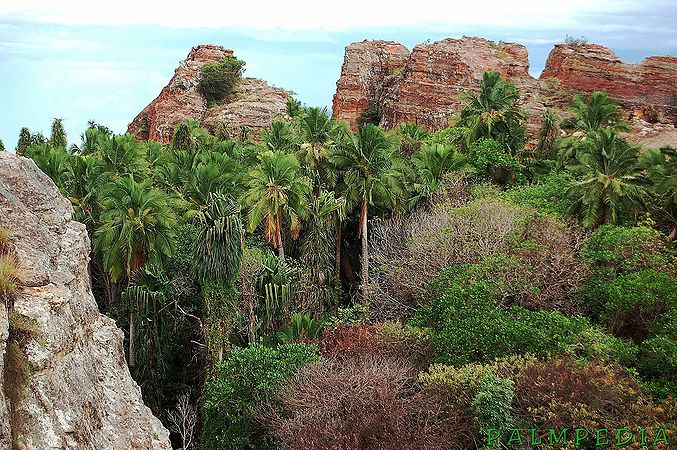
In habitat, Madagascar.

In fruit out of Isalo Madagascar. Photo by Jeff Marcus
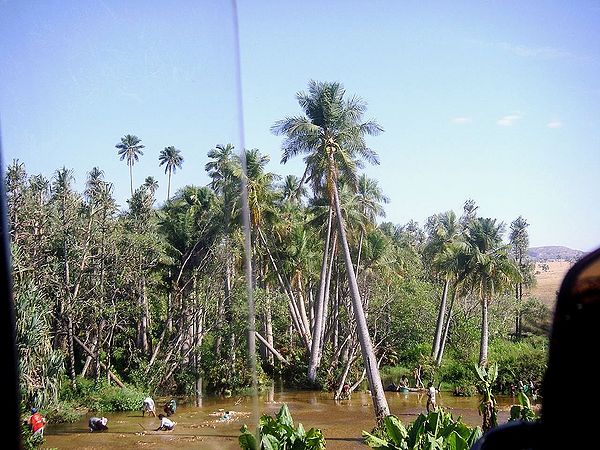
This is a very threatened population of Ravenea rivularis grown in a river with Malagasy people sifting for Sapphires..This was out of the Sapphire town of Ilaka, Madagascar. Photo by Jeff Marcus

Ilakaka, Madagascar. Photo by Dr. John Dransfield, Royal Botanic Gardens, Kew/Palmweb.

Brisbane, Queensland, Australia. Photo by Dr. John Dransfield, Royal Botanic Gardens, Kew/Palmweb.
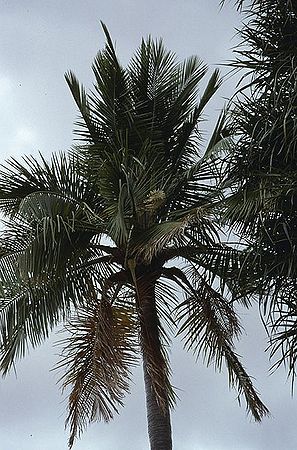
Ilkaka, Madagascar. Photo by Dr. Henk Beentje, Royal Botanic Gardens, Kew/Palmweb.
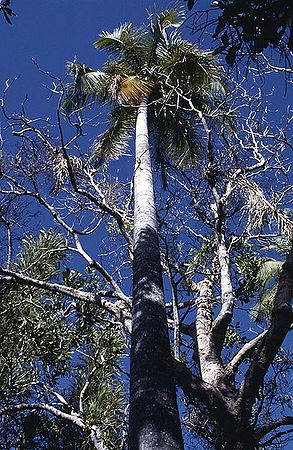
Near Isalo, Madagascar. Photo by Dr. Henk Beentje, Royal Botanic Gardens, Kew/Palmweb.
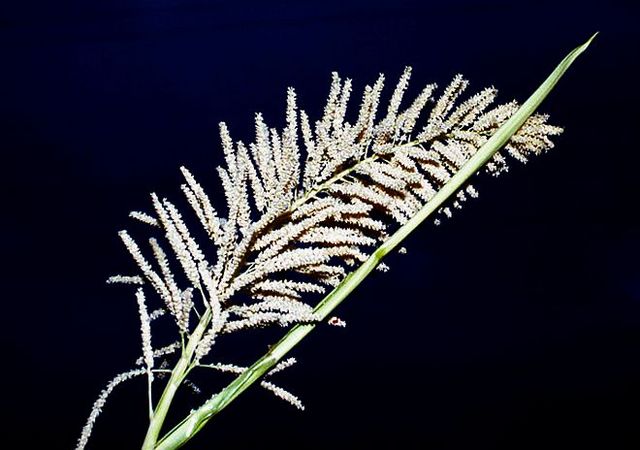
Ilkaka, Madagascar. Photo by Dr. Henk Beentje, Royal Botanic Gardens, Kew/Palmweb.
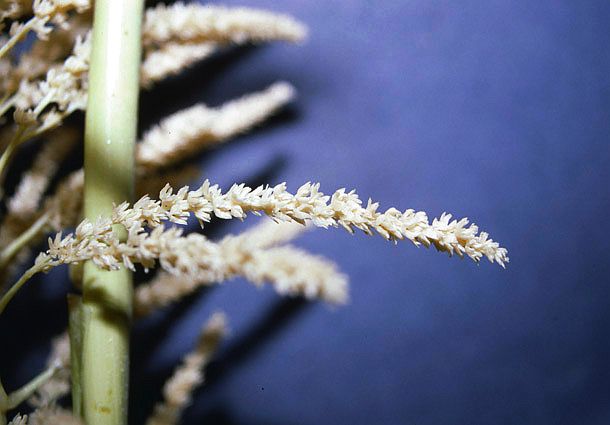
Ilkaka, Madagascar. Photo by Dr. Henk Beentje, Royal Botanic Gardens, Kew/Palmweb.
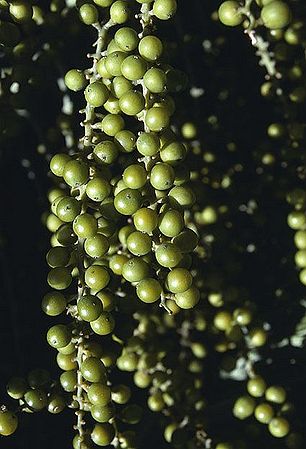
Near Ranshira, Madagascar. Photo by Dr. Henk Beentje, Royal Botanic Gardens, Kew/Palmweb.
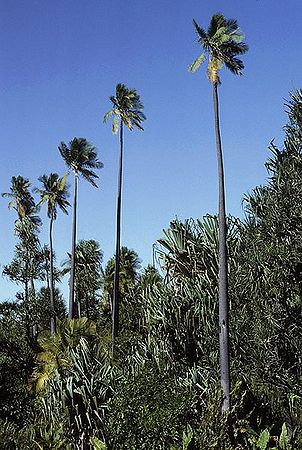
Ilkaka, near Isalo, Madagascar. Photo by Dr. Henk Beentje, Royal Botanic Gardens, Kew/Palmweb.

Stan Walkley's Garden, Queensland, Australia. Photo by Dr. William J. Baker, Royal Botanic Gardens, Kew/Palmweb.

Ilkaka, near Isalo, Madagascar. Photo by Dr. Henk Beentje, Royal Botanic Gardens, Kew/Palmweb.
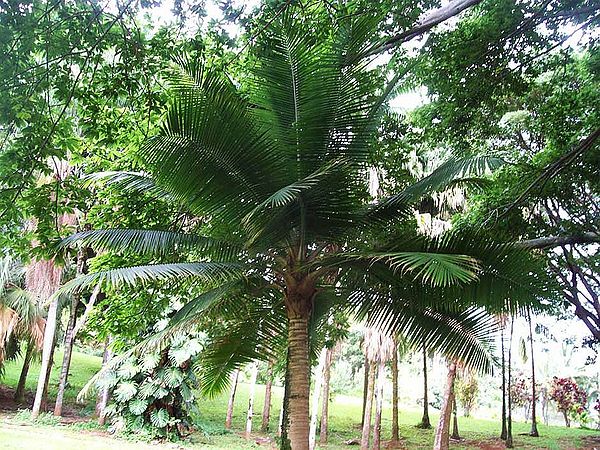
Hawaiian Tropical Botanical Garden

Photo by Rudolf

Southern California. Photo by Geoff Stein

Southern California. Photo by Geoff Stein
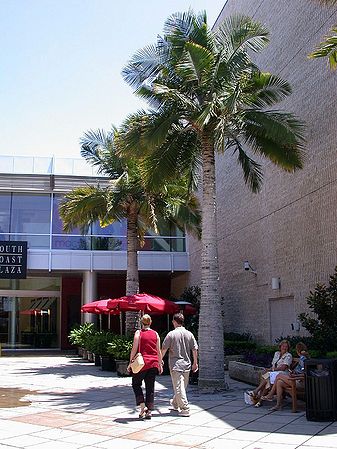
Southern California. Photo by Geoff Stein
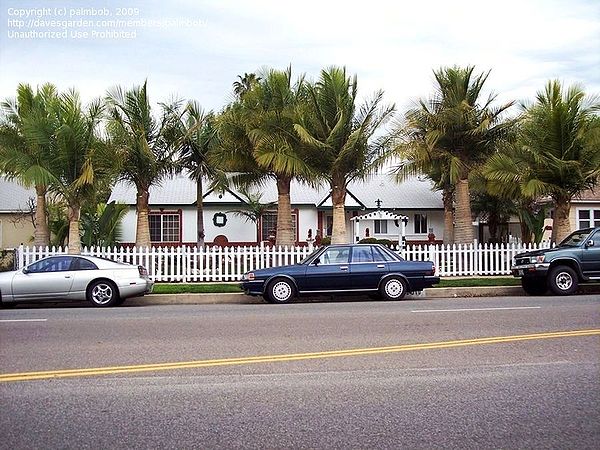
Southern California. Photo by Geoff Stein

Southern California. 2.5 years later. Photo by Geoff Stein
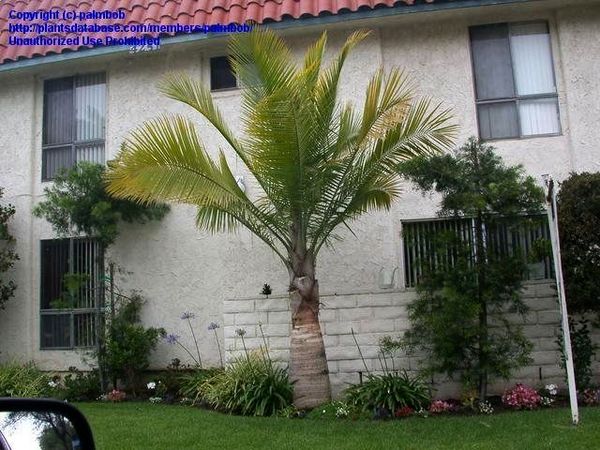
Los Angeles, CA. Photo by Geoff Stein

Pasadena, CA. Photo by Geoff Stein
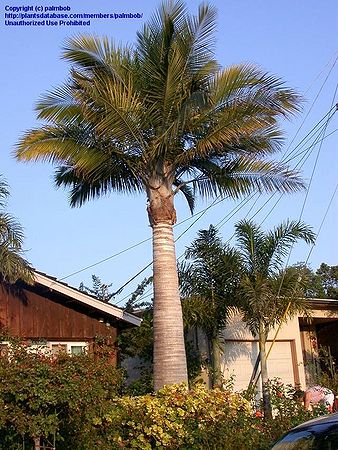
San Diego, CA. Photo by Geoff Stein
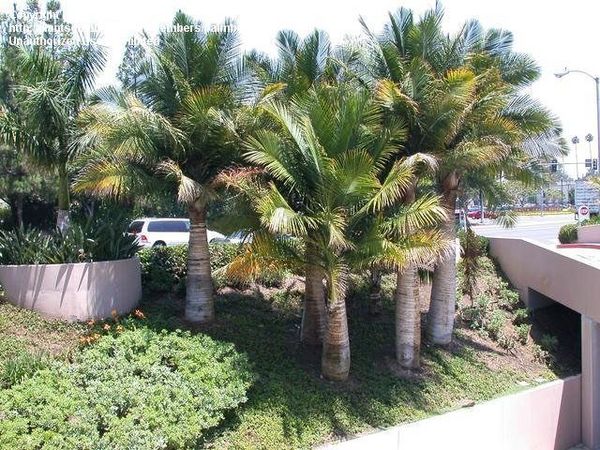
Santa Ana, CA. Photo by Geoff Stein

Hawaii. Photo by Geoff Stein

Ho'omaluhia Gardens, Hawaii. Photo by Geoff Stein

Los Angeles arboretum, CA. Photo by Geoff Stein

Southern California. Female, needs male tree's pollen to produce seed. Photo by Geoff Stein
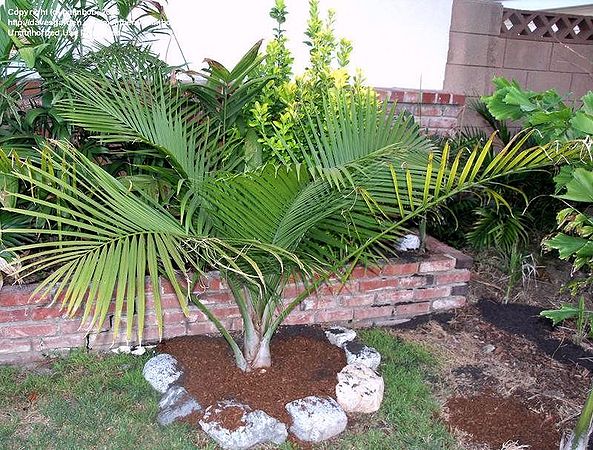
Southern California. Photo by Geoff Stein

Balboa Park, San Diego, CA. Perhaps tallest of the species in Californa. Photo by Geoff Stein
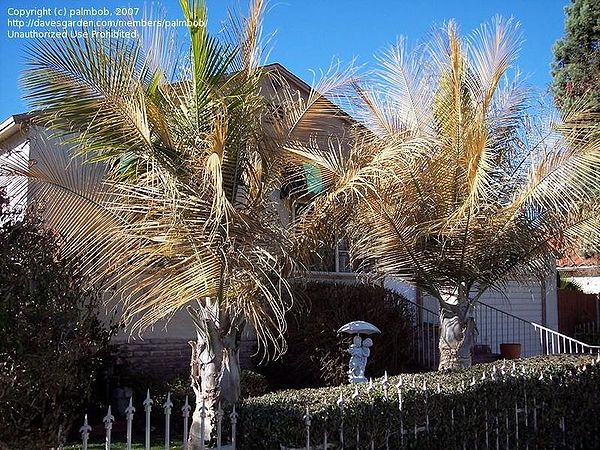
Southern California. After freeze below 26 F. 2007. Photo by Geoff Stein

Southern California. The next year, 2008. Photo by Geoff Stein

Huntington gardens, Pasadena, California. Photo by Geoff Stein
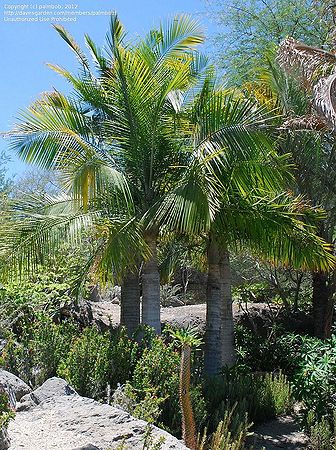
"Hot, full sun, Palm Desert, California (over 120F many days)." Photo by Geoff Stein
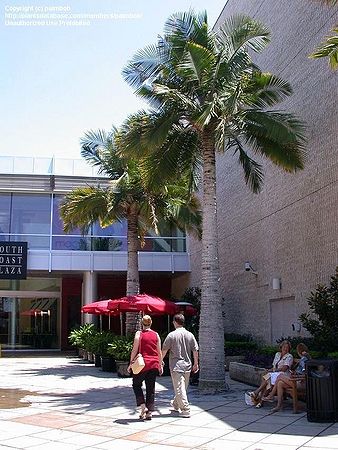
Southern California. Photo by Geoff Stein

Southern California. Photo by Geoff Stein

Southern California. Photo by Geoff Stein
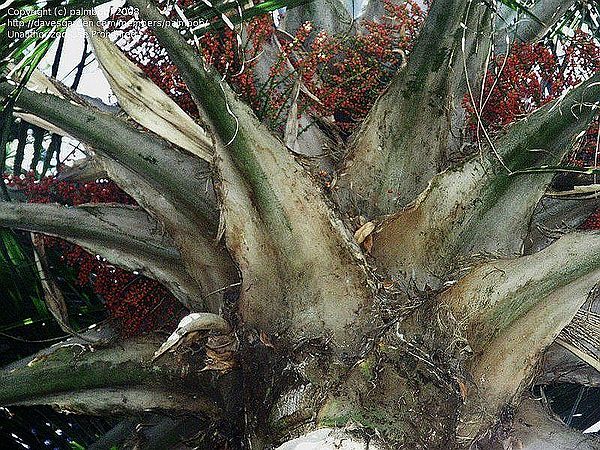
Southern California. Photo by Geoff Stein

Southern California. Photo by Geoff Stein

Rio de Janeiro Botanical Garden. Photo by Gustichock
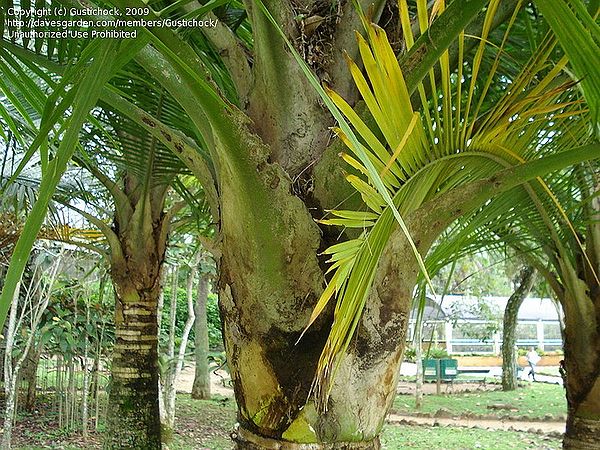
Rio de Janeiro Botanical Garden. Photo by Gustichock

Mauritius Island. "orange fruits on a female plant (no polinisation - not viable fruits)." Photo by timrann
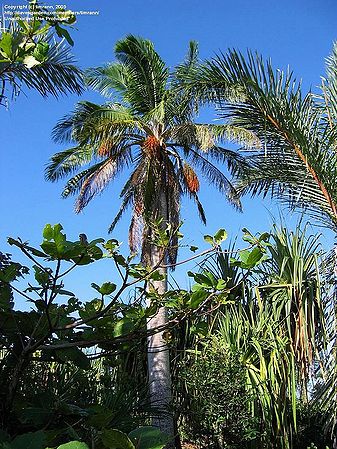
Mauritius Island. "orange fruits on a female plant (no polinisation - not viable fruits)." Photo by timrann
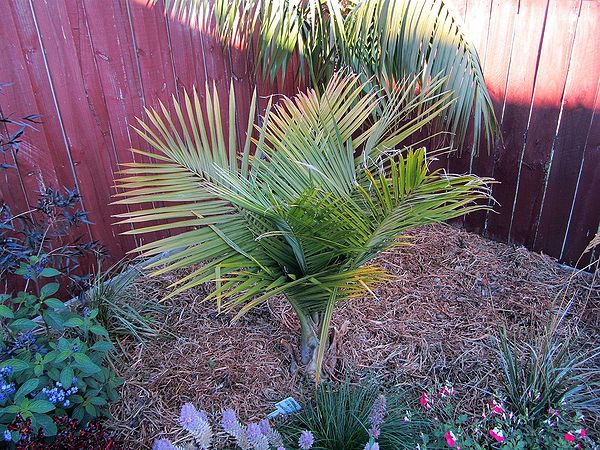
Old Beach, Tasmania. Garden of Troy Donovan. Photo by Troy Donovan.

Photo: idtools.org
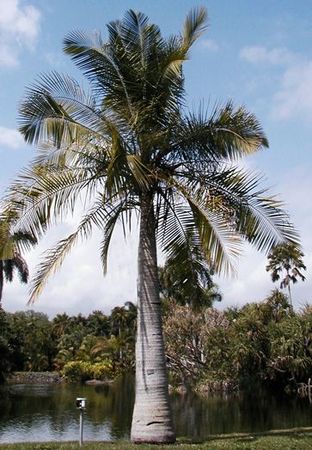
Photo: idtools.org

Photo: idtools.org

Photo: idtools.org

Photo by Kyle Wicomb.

Photo by Kyle Wicomb.

Huntington Botanical Gardens, CA. Photo by Kyle Wicomb.
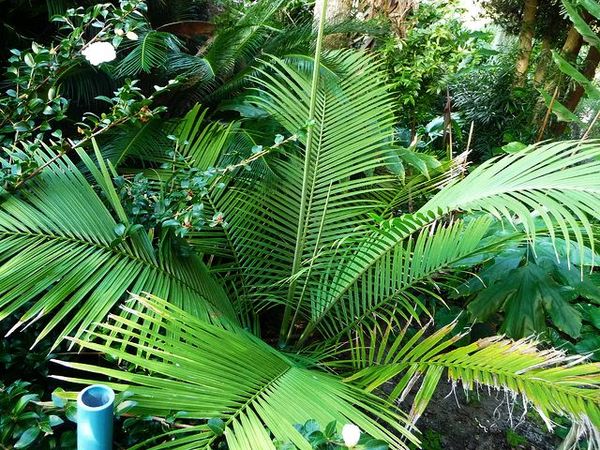
2015. Kyle Wicomb's palms at McCarty Hall, the University of Florida in Gainesville, FL. In ground 2007. Photo by Kyle Wicomb.


Melbourne Beach, FL. Photo by tiareman

Melbourne Beach, FL. "The water level rises in the summer and completely covers the bases of these palms, and they get real green during that period." Photo by tiareman

South Coast Plaza, Costa Mesa, (Orange Co.) California.

Ravenea rivularis in California.
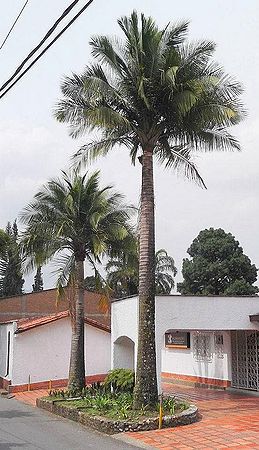
Medellin, Colombia. (1,500 Mts. or 5,000 feet above see level), Photo by Jeff Anderson

Ravenea rivularis - Wollongong Botanical Gardens Palm Collection, 90 minute drive south of Sydney. Livistona australis is the local tree. Photo by Daryl O'Connor.

Gerardo Herrero's Farm, 2008 Costa Rica. 2008 IPS Biennial. Photo by Ryan D. Gallivan.

Photo: idtools.org - Courtesy of Dr. Scott Zona.
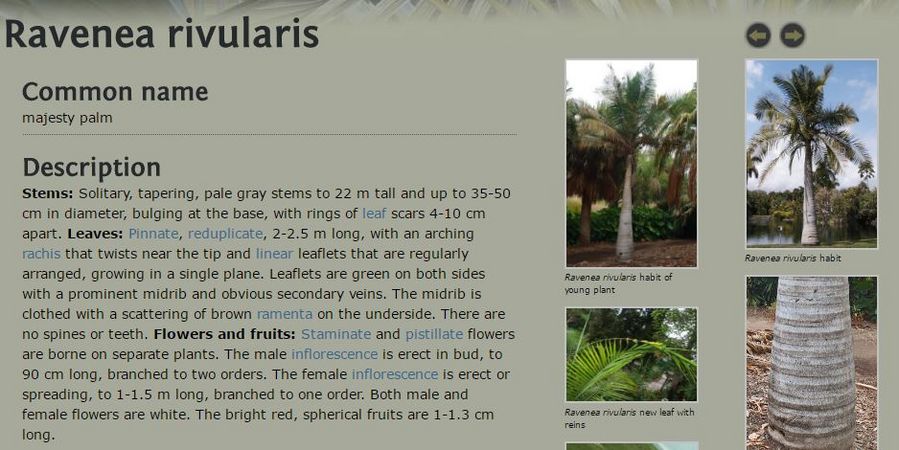
Photo: idtools.org

Photo: idtools.org


External Links
- Glossary of Palm Terms
- MODERN BOTANICAL LATIN
- "Just To Be Clear"
- http://www.palms.org/principes/1994/ravanea.htm
- http://www.cites.org/common/com/pc/20/inf%20docs/F20-11i-A6.pdf
- http://www.youtube.com/watch?v=oNfXx_KoMns
- https://www.youtube.com/watch?v=xNiFhreFvFM
- http://idtools.org/id/palms/palmid/factsheet.php?name=Ravenea+rivularis
References
Phonetic spelling of Latin names by edric.
Special thanks to Geoff Stein, (Palmbob) for his hundreds of photos.
Special thanks to Palmweb.org, Dr. John Dransfield, Dr. Bill Baker & team, for their volumes of information and photos.
Glossary of Palm Terms; Based on the glossary in Dransfield, J., N.W. Uhl, C.B. Asmussen-Lange, W.J. Baker, M.M. Harley & C.E. Lewis. 2008. Genera Palmarum - Evolution and Classification of the Palms. Royal Botanic Gardens, Kew. All images copyright of the artists and photographers (see images for credits).
Dransfield, J. & Beentje, H. 1995. The Palms of Madagascar. Royal Botanic Gardens, Kew and The International Palm Society.
Many Special Thanks to Ed Vaile for his long hours of tireless editing and numerous contributions.