Difference between revisions of "Syagrus coronata"
| Line 25: | Line 25: | ||
Brazil Northeast, Brazil Southeast. The Licuri Palm, Syagrus coronata, is a species of palm tree that plays an important role in the diets of tropical rainforest animals. It is native to eastern Brazil, ranging from the southern part of the state of Pernambuco, into the state of Bahia, south to the Jequitinhonha River in the state of Minas Gerais. | Brazil Northeast, Brazil Southeast. The Licuri Palm, Syagrus coronata, is a species of palm tree that plays an important role in the diets of tropical rainforest animals. It is native to eastern Brazil, ranging from the southern part of the state of Pernambuco, into the state of Bahia, south to the Jequitinhonha River in the state of Minas Gerais. | ||
==Description== | ==Description== | ||
| − | Syagrus coronata reaches 3 to 12 m (9.8 to 39 ft) tall with a crown of semi-plumose leaves. The blooms are bright yellow, and the plants bear fruit for most of the year. Licuri palm nuts are the main food source of the Lear's Macaw, making up around 95% of their diet. These nuts can grow to be one inch (2.5 cm) in width. | + | Syagrus coronata reaches 3 to 12 m (9.8 to 39 ft) tall with a crown of attractive, arching, semi-plumose leaves. The leaf bases are persitant, and covered in a white indument, and arranged in roughly 5 spiral rows. The blooms are bright yellow, and the plants bear fruit for most of the year. Licuri palm nuts are the main food source of the Lear's Macaw, making up around 95% of their diet. These nuts can grow to be one inch (2.5 cm) in width. |
==Culture== | ==Culture== | ||
Revision as of 02:59, 10 January 2013
<google>CH02</google>

| Syagrus (SIGH-ah-gruhs) coronata (kor-oh-NAH-tah) | |||||||
|---|---|---|---|---|---|---|---|
 New Caledonia, photo by Ben, edric. | |||||||
| Scientific Classification | |||||||
| |||||||
| Synonyms | |||||||
|
| |||||||
| Native Continent | |||||||
 | |||||||
| Morphology | |||||||
| |||||||
| Culture | |||||||
|
| |||||||
| Survivability index | |||||||
|
| |||||||
| Common names | |||||||
|
| |||||||
Contents
Habitat and Distribution
Brazil Northeast, Brazil Southeast. The Licuri Palm, Syagrus coronata, is a species of palm tree that plays an important role in the diets of tropical rainforest animals. It is native to eastern Brazil, ranging from the southern part of the state of Pernambuco, into the state of Bahia, south to the Jequitinhonha River in the state of Minas Gerais.
Description
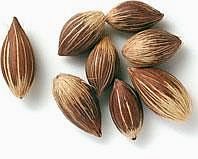
Syagrus coronata reaches 3 to 12 m (9.8 to 39 ft) tall with a crown of attractive, arching, semi-plumose leaves. The leaf bases are persitant, and covered in a white indument, and arranged in roughly 5 spiral rows. The blooms are bright yellow, and the plants bear fruit for most of the year. Licuri palm nuts are the main food source of the Lear's Macaw, making up around 95% of their diet. These nuts can grow to be one inch (2.5 cm) in width.
Culture
Comments and Curiosities
"This is probably one of the more drought and wind tolerant Syagrus species and one of the few prone to rot if overwatered. It is often used in xeriscape landscaping and is a very attractive species- has a relatively sparse crown of long, arching leaves with stiff, plumosely arranged leaflets that are slight bluish to pale green. The trunk often is ornamentally sculptured with a spiral pattern of old leaf scars (though eventually these fall off and reveal a standard smooth trunk without much in the way of rings). Like all Syagrus, this species has no crownshaft. My palm was done well but is planted in pure clay and browntips a lot- some struggling through long, cold, wet winters in that sloggy soil. Still, pretty hardy. No frost damaged down to 25F." (Geoff Stein), edric.
Conservation: The destruction of small seedlings by cattle poses a threat to the plants, primarily through the destruction of concentrated groves. Those groves are vital to the Lear's Macaw.
External Links
- Glossary of Palm Terms
- Pronunciation Key
- http://www.youtube.com/watch?v=ke6uxzrWeFQ
- http://www.palms.org/palmsjournal/2004/vol48n1p43-49.pdf
- http://tropicalfruitforum.com/index.php?topic=984.0
References
Special thanks to Geoff Stein, (Palmbob) for his hundreds of photos, edric.
Special thanks to palmweb.org, Dr. John Dransfield, Dr. Bill Baker & team, for their volumes of information and photos, edric.
- IMAGE GALLERY

Vero Beach, Florida.

New Caledonia, photo by Ben, edric.

New Caledonia, photo by Ben, edric.

Morro do Chapeu, Brazil. Photo by Dr. Simon Mayo, edric.

Morro do Chapeu, Brazil. Photo by Dr. Simon Mayo, edric.

Morro do Chapeu, Brazil. Photo by Dr. Simon Mayo, edric.

Morro do Chapeu, Brazil. Photo by Dr. Simon Mayo, edric.

Morro do Chapeu, Brazil. Photo by Dr. Simon Mayo, edric.

California. Photo by Geoff Stein, edric.

California. Photo by Geoff Stein, edric.

California. Photo by Geoff Stein, edric.

Hawaii. Photo by Geoff Stein, edric.

Photo-National Tropical Botanicl Garden, edric.

Photo-National Tropical Botanicl Garden, edric.

Photo-National Tropical Botanicl Garden, edric.

Photo-National Tropical Botanicl Garden, edric.

Miami, Fairchild Tropical Botanic Garden. Photo-R.A. Howard. ©Smithsonian Institution.

Miami, Fairchild Tropical Botanic Garden. Photo-R.A. Howard. ©Smithsonian Institution.

Bahia, Brazil. Photo by Alex Popovkin, edric.


Many Special Thanks to Ed Vaile for his long hours of tireless editing and numerous contributions.