Difference between revisions of "Raphia hookeri"
| (17 intermediate revisions by one user not shown) | |||
| Line 1: | Line 1: | ||
__noeditsection__ | __noeditsection__ | ||
{{Palmbox | {{Palmbox | ||
| − | |image= | + | |image=Raphia_hookeri_infructescences.jpg |
| − | |image_caption= | + | |image_caption=Nong Nooch Tropical Botanical Nursury, Thailand. Photo by Paul Craft. |
|genus=Raphia (rahf-EE-ah) | |genus=Raphia (rahf-EE-ah) | ||
|species=<br>hookeri (hook-EHR-ee) | |species=<br>hookeri (hook-EHR-ee) | ||
| Line 17: | Line 17: | ||
|soil_type= | |soil_type= | ||
|msi= | |msi= | ||
| − | |common_names=Raphia palm, | + | |common_names=Raphia palm, West African Wine Palm, Ivory Coast raphia palm (En). Raphia (Fr). Ráfia (Po). Mwale (Sw). |
}} | }} | ||
==Habitat and Distribution== | ==Habitat and Distribution== | ||
| − | Raphia hookeri is found from Gambia through the Guinea forest zone of West Africa to Cameroon, Gabon and Congo and possibly to DR Congo and Angola. It is occasionally cultivated, e.g. in Nigeria. Outside Africa it is grown in India, Peninsular Malaysia and Singapore. Raphia hookeri occurs in freshwater swamps and on river banks in the Guinean Zone of West and Central Africa. It generally does not tolerate saline conditions; near the Guinea coast it is replaced by Raphia palma-pinus. In some places (e.g. southern Benin and south-eastern Nigeria) human activity (cutting of dicotyledonous trees, planting of Raphia hookeri) has turned natural swamp vegetation into ‘rafiales’, in which Raphia hookeri is the dominant species. The soils of Nigerian freshwater swamps are light textured and generally acidic. (PROTA) | + | Raphia hookeri is found from Gambia through the Guinea forest zone of West Africa to [[image:Post-416-009625000_1328369819.jpg|thumb|left|390px|Nigeria, jungle area in the heart of Lagos, 6 degrees North of the Equator. Photo by Chris.]]Cameroon, Gabon and Congo and possibly to DR Congo and Angola. It is occasionally cultivated, e.g. in Nigeria. Outside Africa it is grown in India, Peninsular Malaysia and Singapore. Raphia hookeri occurs in freshwater swamps and on river banks in the Guinean Zone of West and Central Africa. It generally does not tolerate saline conditions; near the Guinea coast it is replaced by Raphia palma-pinus. In some places (e.g. southern Benin and south-eastern Nigeria) human activity (cutting of dicotyledonous trees, planting of Raphia hookeri) has turned natural swamp vegetation into ‘rafiales’, in which Raphia hookeri is the dominant species. The soils of Nigerian freshwater swamps are light textured and generally acidic. (PROTA) |
| − | + | ||
| + | Western tropical Africa - Sierra Leone to Central African Republic and Zaire, south to Angola. Lowland coastal freshwater swamps, where it can grow in water up to 1 metre deep, and river banks. | ||
==Description== | ==Description== | ||
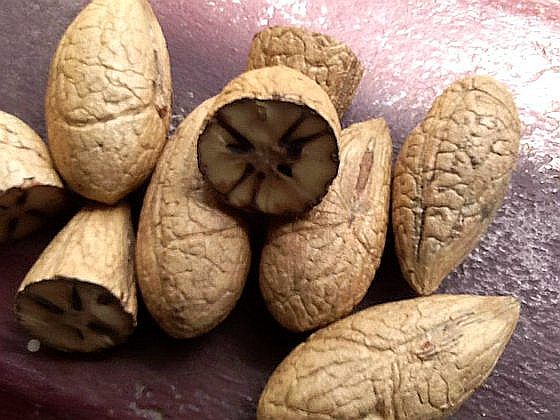
| + | Tall, solitary or rarely clustered palm; stem 15 m long or more, with leaves to 10-15 m long; leaflets to 160-180 on each side of rachis; inflorescences pendant, up to 3.5 m long; fruits variable in shape, ranging from ellipsoid to nearly cylindrical and turbinate, 5-12 cm long and 4-6 cm in diameter, covered by yellow-brown scales. (palms.myspecies.info) | ||
| + | |||
[[Monoecious]] Palm, trunk up to 10 m tall and 30 cm in diameter, usually single, occasionally with 1–4 suckers; upper part of trunk with blackish fibres (marcescent leaf-bases). Leaves arranged spirally, pinnate, up to 12 m long, erect, dark green and shining above, waxy and glaucous below; sheath 3–4 m long, unarmed, splitting opposite the petiole; petiole 3–4 m long; leaflets 1–1.5 m × 4–5 cm, about 200 on each side of the rachis, terminal segments gradually narrowing to a fine point and having spines on upper side of midrib and on margins. Inflorescence axillary, pendulous, 2.5 m or more long, branched to 2 orders, compressed-cylindrical, with crowded branches; branches bearing many curved ultimate branchlets in 4 rows but mostly compressed into one plane; branchlets 15–23 cm long, rigid; branches and branchlets with short-tubular, truncate bracts at base. Flowers unisexual; male flowers at apex of inflorescence branchlets, female flowers at base, 3-merous; male flowers 1.5–2.5 cm long, with 1 bracteole slightly longer than thick, calyx with blunt lobes, corolla much longer than calyx, curved, with segments thickened near the tip, stamens (15–) 18–22 (–24), with erect, linear anthers; female flowers larger than male, with 2 bracteoles, calyx as in male, corolla about as long as calyx, with acuminate segments thickened near tip, staminodes 12–15, ovary superior, 3-celled, stigma sessile, recurved, subulate. Fruit a 1-seeded berry, inversely conical or ellipsoid, 6–12 cm × 4–5 cm, with stout beak 1–1.5 cm long, more or less obliquely tipped, covered with scales in (11–) 12 (–15) vertical rows; scales convex, slightly less broad than long, narrowly furrowed, reddish brown or pale yellowish brown with darker point, obtuse at the base, almost entire. Seed 6–7.5 cm × 3–3.5 cm, oblong, irregularly grooved; albumen narrowly ruminate. Seedling with hypogeal germination, with tap root and some adventitious roots; first 3–4 leaves strongly reduced and irregularly incised, subsequent leaf 50–100 cm long and with about 12 leaflets at each side of the rachis. (PROTA), Editing by edric. | [[Monoecious]] Palm, trunk up to 10 m tall and 30 cm in diameter, usually single, occasionally with 1–4 suckers; upper part of trunk with blackish fibres (marcescent leaf-bases). Leaves arranged spirally, pinnate, up to 12 m long, erect, dark green and shining above, waxy and glaucous below; sheath 3–4 m long, unarmed, splitting opposite the petiole; petiole 3–4 m long; leaflets 1–1.5 m × 4–5 cm, about 200 on each side of the rachis, terminal segments gradually narrowing to a fine point and having spines on upper side of midrib and on margins. Inflorescence axillary, pendulous, 2.5 m or more long, branched to 2 orders, compressed-cylindrical, with crowded branches; branches bearing many curved ultimate branchlets in 4 rows but mostly compressed into one plane; branchlets 15–23 cm long, rigid; branches and branchlets with short-tubular, truncate bracts at base. Flowers unisexual; male flowers at apex of inflorescence branchlets, female flowers at base, 3-merous; male flowers 1.5–2.5 cm long, with 1 bracteole slightly longer than thick, calyx with blunt lobes, corolla much longer than calyx, curved, with segments thickened near the tip, stamens (15–) 18–22 (–24), with erect, linear anthers; female flowers larger than male, with 2 bracteoles, calyx as in male, corolla about as long as calyx, with acuminate segments thickened near tip, staminodes 12–15, ovary superior, 3-celled, stigma sessile, recurved, subulate. Fruit a 1-seeded berry, inversely conical or ellipsoid, 6–12 cm × 4–5 cm, with stout beak 1–1.5 cm long, more or less obliquely tipped, covered with scales in (11–) 12 (–15) vertical rows; scales convex, slightly less broad than long, narrowly furrowed, reddish brown or pale yellowish brown with darker point, obtuse at the base, almost entire. Seed 6–7.5 cm × 3–3.5 cm, oblong, irregularly grooved; albumen narrowly ruminate. Seedling with hypogeal germination, with tap root and some adventitious roots; first 3–4 leaves strongly reduced and irregularly incised, subsequent leaf 50–100 cm long and with about 12 leaflets at each side of the rachis. (PROTA), Editing by edric. | ||
==Culture== | ==Culture== | ||
| − | Hot, sunny, and moist; doesn't mind wet feet. Not very cold tolerant. Cold Hardiness Zone: 10a | + | A palm of the wet, lowland tropics, where it is found at elevations up to 200 metres. It grows best in areas where annual daytime temperatures are within the range 24 - 30°c, but can tolerate 14 - 36°c. It prefers a mean annual rainfall in the range 3,000 - 4,000 mm, but tolerates 2,000 - 5,000 mm. Requires a hot, sunny position in a moist soil. Prefers a pH in the range 5 - 6, tolerating 4.5 - 6.5. Dislikes saline soils. Plants can tolerate being in flooded ground. |
| + | |||
| + | A monocarpic plant - growing for several years without flowering, then producing a massive inflorescence and dying after setting seed. Inflorescences are produced more or less simultaneously in the axis of the most distal leaves. Tapping for wine may damage the developing inflorescence, making flowering impossible and accelerating death. | ||
| + | |||
| + | The time from planting to flowering in Raphia hookeri is 3 - 7 years. Managed stands are mostly left to rejuvenate naturally by seed. In Nigeria, selected trees are left untapped for this purpose. Hot, sunny, and moist; doesn't mind wet feet. Not very cold tolerant. Cold Hardiness Zone: 10a | ||
==Comments and Curiosities== | ==Comments and Curiosities== | ||
{{read more top}} | {{read more top}} | ||
| Line 37: | Line 44: | ||
Propagation and planting: Managed stands of Raphia hookeri are mostly left to rejuvenate naturally by seed. In Nigeria, selected trees are left untapped for this purpose. Occasionally, Raphia hookeri is propagated from seed. The 1000-seed weight is about 25 kg. The germination period may range from 1–24 months, and the germination rate from 30–60%. Young plants are easily transplanted. In nurseries, a spacing of 30 cm × 30 cm is recommended. It has been claimed that seeds should be sown ventral side upwards, because the embryo is located on this side, but research has shown that seed orientation does not influence germination or seedling growth. | Propagation and planting: Managed stands of Raphia hookeri are mostly left to rejuvenate naturally by seed. In Nigeria, selected trees are left untapped for this purpose. Occasionally, Raphia hookeri is propagated from seed. The 1000-seed weight is about 25 kg. The germination period may range from 1–24 months, and the germination rate from 30–60%. Young plants are easily transplanted. In nurseries, a spacing of 30 cm × 30 cm is recommended. It has been claimed that seeds should be sown ventral side upwards, because the embryo is located on this side, but research has shown that seed orientation does not influence germination or seedling growth. | ||
| − | In Nigeria, Raphia hookeri sometimes serves as support for yams. In Benin, tomatoes, cassava, sugar cane, red pepper and other crops are sometimes grown on earth ridges in Raphia hookeri swamps. (PROTA) | + | In Nigeria, Raphia hookeri sometimes serves as support for yams. In Benin, tomatoes, cassava, sugar cane, red pepper and other crops are sometimes grown on earth ridges in Raphia hookeri swamps. (PROTA). |
| − | Management: In West Africa, Raphia hookeri is exploited from natural stands, but it is also planted and tended on upland farms. Suckers are often removed by farmers to promote growth of the main stem. (PROTA) | + | Management: In West Africa, Raphia hookeri is exploited from natural stands, but it is also planted and tended on upland farms. Suckers are often removed by farmers to promote growth of the main stem. (PROTA). |
Diseases and pests: Raphia hookeri in Nigeria is affected by seedling blight, caused by Glomerella cingulata. Symptoms are transparent yellow circular spots appearing on the youngest fully expanded leaves, later becoming necrotic and coalescing. The infection spreads from the tip to the base of the leaflet and may lead to leaflet shedding. Severely infected seedlings may die. Fruit rot, caused by Thielaviopsis paradoxa (synonym: Chalara paradoxa), also occurs in Nigeria, causing dark brown rot of the mesocarp. It is a weak pathogen entering fruit via wounds, sometimes killing the embryo, and leading to loss of planting material. The aphid Cerataphis palmae may cause considerable damage, e.g. in Nigeria. (PROTA) | Diseases and pests: Raphia hookeri in Nigeria is affected by seedling blight, caused by Glomerella cingulata. Symptoms are transparent yellow circular spots appearing on the youngest fully expanded leaves, later becoming necrotic and coalescing. The infection spreads from the tip to the base of the leaflet and may lead to leaflet shedding. Severely infected seedlings may die. Fruit rot, caused by Thielaviopsis paradoxa (synonym: Chalara paradoxa), also occurs in Nigeria, causing dark brown rot of the mesocarp. It is a weak pathogen entering fruit via wounds, sometimes killing the embryo, and leading to loss of planting material. The aphid Cerataphis palmae may cause considerable damage, e.g. in Nigeria. (PROTA) | ||
| Line 55: | Line 62: | ||
image:Rh2787216.jpg|Caracas Botanic Garden, Venezuela. Photo by Dr. John Dransfield, Royal Botanic Gardens, Kew/Palmweb. | image:Rh2787216.jpg|Caracas Botanic Garden, Venezuela. Photo by Dr. John Dransfield, Royal Botanic Gardens, Kew/Palmweb. | ||
image:Rh2787217.jpg|Flecker Botanic Garden, Queensland, Australia. Photo by Dr. William J. Baker, Royal Botanic Gardens, Kew/Palmweb. | image:Rh2787217.jpg|Flecker Botanic Garden, Queensland, Australia. Photo by Dr. William J. Baker, Royal Botanic Gardens, Kew/Palmweb. | ||
| − | image:6373561511_04fa9eb953_o.jpg|Cooper City, FL. Photo by Kyle Wicomb | + | image:6373561511_04fa9eb953_o.jpg|Cooper City, FL. Photo by Kyle Wicomb. |
| − | image:5548686789_8990017a16_o.jpg|Cooper City, FL. Photo by Kyle Wicomb | + | image:5548686789_8990017a16_o.jpg|Cooper City, FL. Photo by Kyle Wicomb. |
image:Raphiapalmbeingtapped.jpg|Tapping for wine. Photo-enpostng.com | image:Raphiapalmbeingtapped.jpg|Tapping for wine. Photo-enpostng.com | ||
| − | image:Cache_tVjwKna_14441.jpg|Photo-liberianfaunaflora.org, | + | image:Cache_tVjwKna_14441.jpg|Photo-liberianfaunaflora.org |
| − | image:Post-416-051111000_1328369713.jpg|Nigeria, jungle area in the heart of Lagos, 6 degrees North of the Equator. Photo by Chris | + | File:RDG2009-11-09_17-17-09.jpg|SPFS sale 2009. Fairchild Botanical Gardens, FL. At the back edge of the property, the trio examines one of Mike's giant Raphia hookeri. It has quite a few stems that are each covered with thick, twisted stringy fiber. The fan palm in the center is Licuala ramsayi. Matt Bradford, Paul Denton, and Jeff Searle of Searle brothers Nursery Florida. Photo by Ryan D. Gallivan. |
| − | image:Post-416-009625000_1328369819.jpg|Nigeria, jungle area in the heart of Lagos, 6 degrees North of the Equator. Photo by Chris | + | File:RDG2009-11-09_17-17-35.jpg|SPFS sale 2009. Fairchild Botanical Gardens, FL. At the back edge of the property, the trio examines one of Mike's giant Raphia hookeri. It has quite a few stems that are each covered with thick, twisted stringy fiber. The fan palm in the center is Licuala ramsayi. Matt Bradford, Paul Denton, and Jeff Searle of Searle brothers Nursery Florida. Photo by Ryan D. Gallivan. |
| − | image:Post-416-027545300_1328369994.jpg|Nigeria, jungle area in the heart of Lagos, 6 degrees North of the Equator. Photo by Chris | + | image:Post-416-051111000_1328369713.jpg|Nigeria, jungle area in the heart of Lagos, 6 degrees North of the Equator. Photo by Chris. |
| − | image:Post-416-061623100_1328370083.jpg|Nigeria, jungle area in the heart of Lagos, 6 degrees North of the Equator. Photo by Chris, | + | image:Post-416-009625000_1328369819.jpg|Nigeria, jungle area in the heart of Lagos, 6 degrees North of the Equator. Photo by Chris. |
| + | image:Post-416-027545300_1328369994.jpg|Nigeria, jungle area in the heart of Lagos, 6 degrees North of the Equator. Photo by Chris. | ||
| + | image:Post-416-061623100_1328370083.jpg|Nigeria, jungle area in the heart of Lagos, 6 degrees North of the Equator. Photo by Chris. | ||
| + | |||
| + | File:Raphia_hookeri_specimen3.jpg|Nong Nooch Tropical Botanical Nursury, Thailand. Photo by Paul Craft. | ||
| + | File:Raphia_hookeri_specimen2.jpg|Nong Nooch Tropical Botanical Nursury, Thailand. Photo by Paul Craft. | ||
| + | File:Raphia_hookeri_trunk.jpg|Nong Nooch Tropical Botanical Nursury, Thailand. Photo by Paul Craft. | ||
| + | File:Raphia_hookeri_infructescences.jpg|Nong Nooch Tropical Botanical Nursury, Thailand. Photo by Paul Craft. | ||
| + | File:raphia_hookeri_001_(trunk_detail).jpg | ||
| + | File:TC427_Raphia_hookeri_Ebolbom_Cameroon_May2013_04.JPG|Near Otottomo Forest Reserve May 2013. Photo by Thomas Couvreur. | ||
| + | File:Raphia_hookeri_Ebolbom_Cameroon_May2013_18.JPG|Near Otottomo Forest Reserve May 2013. Photo by Dr. Thomas Couvreur. | ||
| + | File:TC504_Raphia_hookeri_Cameroon_Lele_Sept2013_05.JPG|Near Lélé village, Cameroon, September 2013. Photo by Dr. Thomas Couvreur. | ||
| + | File:TC427_Raphia_hookeri_Ebolbom_Cameroon_May2013_30.JPG|Near Lélé village, Cameroon, September 2013. Photo by Dr. Thomas Couvreur. | ||
| + | File:TC504_Raphia_hookeri_Cameroon_Lele_Sept2013_10.JPG|Near Lélé village, Cameroon, September 2013. Photo by Dr. Thomas Couvreur. | ||
| + | File:TC504_Raphia_hookeri_Cameroon_Lele_Sept2013_12.JPG|Near Lélé village, Cameroon, September 2013. Photo by Dr. Thomas Couvreur. | ||
| + | File:TC504_Raphia_hookeri_Cameroon_Lele_Sept2013_17.JPG|Near Lélé village, Cameroon, September 2013. Photo by Dr. Thomas Couvreur. | ||
| + | File:TC504_Raphia_hookeri_Cameroon_Lele_Sept2013_18.JPG|Near Lélé village, Cameroon, September 2013. Photo by Dr. Thomas Couvreur. | ||
| + | File:TC504_Raphia_hookeri_Cameroon_Lele_Sept2013_21.JPG|Near Lélé village, Cameroon, September 2013. Photo by Dr. Thomas Couvreur. | ||
| + | |||
image:Raphia-hookeri.jpg|Photo-Rare Palm Seeds.com | image:Raphia-hookeri.jpg|Photo-Rare Palm Seeds.com | ||
image:Raphia-hookeri-2.jpg|Photo-Rare Palm Seeds.com | image:Raphia-hookeri-2.jpg|Photo-Rare Palm Seeds.com | ||
| − | image:Raphia_hookeri02.jpg|Photo by Michael Pascall | + | image:Raphia_hookeri02.jpg|Photo by Michael Pascall. |
| − | image:Raphia_hookeri.jpg|Photo by Michael Pascall | + | image:Raphia_hookeri.jpg|Photo by Michael Pascall. |
| − | image:Raphia_hookeri03.jpg|Photo by Michael Pascall | + | image:Raphia_hookeri03.jpg|Photo by Michael Pascall. |
| − | image:Raphia_hookeri04.jpg|Photo by Michael Pascall | + | image:Raphia_hookeri04.jpg|Photo by Michael Pascall. |
| − | image:Raphia_hookeri(Ogoro)2.jpg|Photo-medicinalplantsinnigeria.com | + | image:Raphia_hookeri(Ogoro)2.jpg|Photo-medicinalplantsinnigeria.com |
| − | image:Raphiahookeri(Oguro)-fruits.jpg|Photo-medicinalplantsinnigeria.com | + | image:Raphiahookeri(Oguro)-fruits.jpg|Photo-medicinalplantsinnigeria.com |
| − | image:Raphia_hookeri_002.jpg|Photo-Jungle Music Palms & Cycads | + | File:786585_orig.jpg|Photo-medicinalplantsinnigeria.com |
| − | + | image:Raphia_hookeri_002.jpg|Photo-Jungle Music Palms & Cycads. | |
| − | + | File:rh876908812143.JPG | |
| + | File:RAPHIA-HOOKERI-SEEDS98976.jpg | ||
| + | |||
| + | File:Raphia-Hookeri-seeds.jpg | ||
| + | File:Raphia Hookeri Seed_1.jpg | ||
| + | File:Raphia-Hookeri.jpg | ||
| + | File:RAPHIA-HOOKERI4532.jpg | ||
| + | File:RaffiaForGraftingTrees.JPG | ||
| + | File:RAPHIA-HOOKERI.jpg_350x350.jpg | ||
| + | File:2088672644_2017753814.310x310.jpg | ||
| + | File:Raphia_Hookeri_Kernels.jpg | ||
| + | File:24-11-2015_15h15_RaphiaHookeriSeeds__.jpg | ||
| + | |||
</gallery></center> | </gallery></center> | ||
==External Links== | ==External Links== | ||
Latest revision as of 23:36, 13 November 2016
| Raphia (rahf-EE-ah) hookeri (hook-EHR-ee) | |||||||
|---|---|---|---|---|---|---|---|
 Nong Nooch Tropical Botanical Nursury, Thailand. Photo by Paul Craft. | |||||||
| Scientific Classification | |||||||
| |||||||
| Synonyms | |||||||
|
| |||||||
| Native Continent | |||||||
 | |||||||
| Morphology | |||||||
| |||||||
| Culture | |||||||
|
| |||||||
| Survivability index | |||||||
|
| |||||||
| Common names | |||||||
|
| |||||||
Contents
Habitat and Distribution
Raphia hookeri is found from Gambia through the Guinea forest zone of West Africa to
Western tropical Africa - Sierra Leone to Central African Republic and Zaire, south to Angola. Lowland coastal freshwater swamps, where it can grow in water up to 1 metre deep, and river banks.
Description
Tall, solitary or rarely clustered palm; stem 15 m long or more, with leaves to 10-15 m long; leaflets to 160-180 on each side of rachis; inflorescences pendant, up to 3.5 m long; fruits variable in shape, ranging from ellipsoid to nearly cylindrical and turbinate, 5-12 cm long and 4-6 cm in diameter, covered by yellow-brown scales. (palms.myspecies.info)
Monoecious Palm, trunk up to 10 m tall and 30 cm in diameter, usually single, occasionally with 1–4 suckers; upper part of trunk with blackish fibres (marcescent leaf-bases). Leaves arranged spirally, pinnate, up to 12 m long, erect, dark green and shining above, waxy and glaucous below; sheath 3–4 m long, unarmed, splitting opposite the petiole; petiole 3–4 m long; leaflets 1–1.5 m × 4–5 cm, about 200 on each side of the rachis, terminal segments gradually narrowing to a fine point and having spines on upper side of midrib and on margins. Inflorescence axillary, pendulous, 2.5 m or more long, branched to 2 orders, compressed-cylindrical, with crowded branches; branches bearing many curved ultimate branchlets in 4 rows but mostly compressed into one plane; branchlets 15–23 cm long, rigid; branches and branchlets with short-tubular, truncate bracts at base. Flowers unisexual; male flowers at apex of inflorescence branchlets, female flowers at base, 3-merous; male flowers 1.5–2.5 cm long, with 1 bracteole slightly longer than thick, calyx with blunt lobes, corolla much longer than calyx, curved, with segments thickened near the tip, stamens (15–) 18–22 (–24), with erect, linear anthers; female flowers larger than male, with 2 bracteoles, calyx as in male, corolla about as long as calyx, with acuminate segments thickened near tip, staminodes 12–15, ovary superior, 3-celled, stigma sessile, recurved, subulate. Fruit a 1-seeded berry, inversely conical or ellipsoid, 6–12 cm × 4–5 cm, with stout beak 1–1.5 cm long, more or less obliquely tipped, covered with scales in (11–) 12 (–15) vertical rows; scales convex, slightly less broad than long, narrowly furrowed, reddish brown or pale yellowish brown with darker point, obtuse at the base, almost entire. Seed 6–7.5 cm × 3–3.5 cm, oblong, irregularly grooved; albumen narrowly ruminate. Seedling with hypogeal germination, with tap root and some adventitious roots; first 3–4 leaves strongly reduced and irregularly incised, subsequent leaf 50–100 cm long and with about 12 leaflets at each side of the rachis. (PROTA), Editing by edric.
Culture
A palm of the wet, lowland tropics, where it is found at elevations up to 200 metres. It grows best in areas where annual daytime temperatures are within the range 24 - 30°c, but can tolerate 14 - 36°c. It prefers a mean annual rainfall in the range 3,000 - 4,000 mm, but tolerates 2,000 - 5,000 mm. Requires a hot, sunny position in a moist soil. Prefers a pH in the range 5 - 6, tolerating 4.5 - 6.5. Dislikes saline soils. Plants can tolerate being in flooded ground.
A monocarpic plant - growing for several years without flowering, then producing a massive inflorescence and dying after setting seed. Inflorescences are produced more or less simultaneously in the axis of the most distal leaves. Tapping for wine may damage the developing inflorescence, making flowering impossible and accelerating death.
The time from planting to flowering in Raphia hookeri is 3 - 7 years. Managed stands are mostly left to rejuvenate naturally by seed. In Nigeria, selected trees are left untapped for this purpose. Hot, sunny, and moist; doesn't mind wet feet. Not very cold tolerant. Cold Hardiness Zone: 10a
Comments and Curiosities
| read more |
|---|
|
Uses: Raphia hookeri yields two valuable types of fibre: piassava or bass, and raffia. The very strong piassava fibre is obtained from the petiole and leaf sheath and is used locally to make weather-resistant coarse ropes, belts for climbing oil-palms and brushes. It is exported for the production of hard brooms and brushes. Piassava fibre is used to make exceptionally strong paper. It can also be used to produce very fine-textured charcoal, much favoured for the manufacture of home-made gunpowder. The soft but strong raffia fibre has also been considered a potential source of pulp for paper production. It is obtained by pulling off ribbon-like strips from the upper surface of the leaflets of young unfolding leaves and is used to make mats, hats, baskets, bags, ropes, hammocks, ceremonial costumes, etc. It may be woven into cloth. In Europe it is used as tying material for horticulture and handicrafts. The leaves of Raphia hookeri, often split lengthwise, are used for thatching, though they last only 1 year. They are also used to make mats, baskets and other articles of wickerwork, and are used for hut-walls and fences. The midribs and petioles of the leaves (‘raffia bamboo’ or ‘bamboo’) are used for poles, rafters, ladders, furniture and cross-bearers in canoes. Split lengthwise they are used to make screens. Sap tapped from the stem when the tree nears the flowering stage ferments rapidly into palm wine (‘mimbo’), a very popular drink throughout West Africa. In Nigeria it is bottled for commercial purposes, although there is a risk that bottles can explode due to continuing fermentation. The wine is distilled into a strong alcoholic liquor and can also be used as bakers’ yeast. The young terminal bud or ‘palm cabbage’ is eaten as a vegetable. The raw fruit is sometimes used to flavour food, but elsewhere it is considered poisonous, and it is crushed for use as fish poison. Boiled or roasted kernels are sometimes eaten. In Ghana the leaf juice is used for the treatment of laryngitis and lactation failure. Boiled fruits are eaten in Nigeria. The oily mesocarp is used in traditional medicine for its laxative and stomachic properties and as a liniment for pains. The ash of burnt and ground roots mixed with palm oil is instilled into the ear for the treatment of otitis. Larvae of the rhinoceros beetle (Oryctes sp.), found in rotting stems, are collected and eaten. (PROTA) Production and international trade: Raphia hookeri is the main piassava yielding Raphia species. Its piassava has been exported to temperate countries (mainly Europe) for the production of brooms and brushes since the end of the 19th Century, when the supply of South American piassava (from Attalea funifera Mart. and Leopoldinia piassaba Wallace), used in Europe for brooms since the middle of the 19th Century, could no longer meet demand. The trade reached its peak in the 1950s and 1960s (7000 t exported from Sierra Leone, the main exporting country, in 1964; 5300 t from Nigeria in 1966; there was also trade from Guinea), after which it declined with the advent of plastic brooms. The particular qualities of African piassava for broom-making are such that it still enters the international market. The main types of African piassava fibre in trade are ‘Sherbro’, ‘Sulima’ and ‘Calabar’ (‘Opobo’). Sherbro and Sulima are obtained from the petiole, the former from Raphia hookeri and the latter from Raphia palma-pinus (Gaertn.) Hutch., often with an admixture of Raphia hookeri fibres, whereas Calabar is extracted from the leaf sheath of Raphia hookeri. The leaf sheaths of Raphia palma-pinus are rather short and do not yield high quality fibre. Most of the raffia of commerce is produced in Madagascar from Raphia farinifera. (PROTA) Although palm wine is the main product of Raphia hookeri in several regions, no production data are available. The wine is mainly used and traded locally. Distilled palm wine is also mainly traded locally although there is some trade between neighbouring countries. (PROTA) Anatomy: The hypodermis of Raphia hookeri leaflets consists of thick fibres arranged in a continuous ribbon-like layer with no discontinuities. In Raphia vinifera the fibres are not arranged in a ribbon-like layer, but are discontinuous, resulting in less tenacity. In both the stem and petiole the vascular system consists of bundles which are scattered throughout the ground tissue and the cortex is very narrow or non-existent. The peripheral vascular bundles of the central cylinder are congested and have a well-developed fibrous sheath. The vascular bundles are separated by parenchyma. In the inner part of the central cylinder, the vascular bundles are more diffuse than in the periphery. Stem fibres are more numerous than in the petiole, partly because the vascular bundles are closer and partly because the fibrous bundle sheaths are thicker in the central parts. Growth and development Raphia hookeri develops in accordance with Tomlinson’s growth model. When young the main stem forms a few basal suckers. Raphia species have monocarpic stems, i.e. they flower and fruit only once, followed by death. Inflorescences are produced more or less simultaneously in the axils of the most distal leaves. Tapping for wine may damage the developing inflorescence, making flowering impossible and accelerating death. The time from planting to flowering in Raphia hookeri is 3–7 years. In Nigeria, Raphia hookeri flowers in May. The pericarp reaches maturity at 24–30 months, the seed matures in about 30–33 months. Lipid accumulation in the pericarp mainly occurs between 30–36 months after pollination. Ground squirrels, bats and birds feed on the mesocarp. (PROTA) Propagation and planting: Managed stands of Raphia hookeri are mostly left to rejuvenate naturally by seed. In Nigeria, selected trees are left untapped for this purpose. Occasionally, Raphia hookeri is propagated from seed. The 1000-seed weight is about 25 kg. The germination period may range from 1–24 months, and the germination rate from 30–60%. Young plants are easily transplanted. In nurseries, a spacing of 30 cm × 30 cm is recommended. It has been claimed that seeds should be sown ventral side upwards, because the embryo is located on this side, but research has shown that seed orientation does not influence germination or seedling growth. In Nigeria, Raphia hookeri sometimes serves as support for yams. In Benin, tomatoes, cassava, sugar cane, red pepper and other crops are sometimes grown on earth ridges in Raphia hookeri swamps. (PROTA). Management: In West Africa, Raphia hookeri is exploited from natural stands, but it is also planted and tended on upland farms. Suckers are often removed by farmers to promote growth of the main stem. (PROTA). Diseases and pests: Raphia hookeri in Nigeria is affected by seedling blight, caused by Glomerella cingulata. Symptoms are transparent yellow circular spots appearing on the youngest fully expanded leaves, later becoming necrotic and coalescing. The infection spreads from the tip to the base of the leaflet and may lead to leaflet shedding. Severely infected seedlings may die. Fruit rot, caused by Thielaviopsis paradoxa (synonym: Chalara paradoxa), also occurs in Nigeria, causing dark brown rot of the mesocarp. It is a weak pathogen entering fruit via wounds, sometimes killing the embryo, and leading to loss of planting material. The aphid Cerataphis palmae may cause considerable damage, e.g. in Nigeria. (PROTA) Harvesting: Because palm wine from Raphia hookeri is highly prized, cultivators are reluctant to diminish plant vigour by cutting leaves for their fibre. However, dying leaves can be harvested for piassava with little effect on wine yields. Removing the leaf sheaths requires considerable leverage, and is usually a team effort. Stout poles, flattened at the end, are inserted into the suture of the lowest leaf sheath and the stem, and the sheath is levered away, while additional weight is applied to the petiole. As it is easier to remove the leaf sheaths from a fallen trunk, palms are often felled after tapping and before fibre harvesting. In Nigeria, external fibres covering the trunk are sometimes set on fire, after which the tree is felled with an axe, the leaves and lower trunk are cut off with a cutlass, and the leaf stalks are cut and removed from the base to the crown successively. Tapping for palm wine begins when the first small leaf (2–3 m long) subtending an inflorescence appears. A cavity is cut in the stem just below the growing point and the resulting sap is collected in a calabash. When sap flow diminishes, the hole is enlarged until it is about 50 cm × 20 cm. Raphia can usually be tapped for 18–25 days before the tree dies. Unlike oil palm, Raphia palms are rarely felled before tapping. For maximum oil yields, the fruits should be harvested 36–42 months after pollination. (PROTA) Native to tropical western Africa, this massive palm is found in swampy lowland areas predominantly along the coast from Senegal southwards into the Congo basin. It is a large tree with a trunk to over 15 m (50 ft.) tall and long, upright, densely plumose leaves with a beautiful, feathery appearance that nearly double this height. One leaf holds up to 360 arching leaflets that are to 5 cm (2 in.) wide and 1.5 m (5 ft.) long and are dark green above, grayish white and waxy below. The trunk is usually solitary and densely clothed in the long, curly, ribbon-like fibers of the leafbases that shed with age. Essentially a palm for the tropics, the Wine Palm develops with breathtaking speed. It appreciates heavy feeding and watering and thrives in boggy ground. In Africa it is popularly cultivated, mainly as a source of building material and for tapping its sugary sap that is fermented into an alcoholic product that we dare not call wine. Despite its many virtues, it is very rarely seen in cultivation outside Africa. (RPS.com) |
- IMAGE GALLERY

East Nigeria, Nigeria. Photo by Dr. P. Tuley, Royal Botanic Gardens, Kew/Palmweb.

Caracas Botanic Garden, Venezuela. Photo by Dr. John Dransfield, Royal Botanic Gardens, Kew/Palmweb.
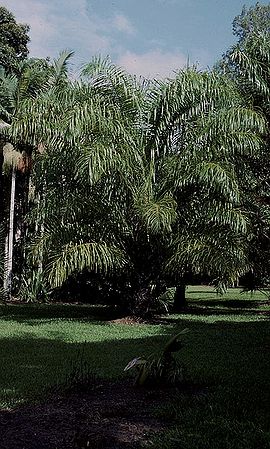
Flecker Botanic Garden, Queensland, Australia. Photo by Dr. William J. Baker, Royal Botanic Gardens, Kew/Palmweb.

Caracas Botanic Garden, Venezuela. Photo by Dr. John Dransfield, Royal Botanic Gardens, Kew/Palmweb.

Flecker Botanic Garden, Queensland, Australia. Photo by Dr. William J. Baker, Royal Botanic Gardens, Kew/Palmweb.

Cooper City, FL. Photo by Kyle Wicomb.

Cooper City, FL. Photo by Kyle Wicomb.

Tapping for wine. Photo-enpostng.com

Photo-liberianfaunaflora.org

SPFS sale 2009. Fairchild Botanical Gardens, FL. At the back edge of the property, the trio examines one of Mike's giant Raphia hookeri. It has quite a few stems that are each covered with thick, twisted stringy fiber. The fan palm in the center is Licuala ramsayi. Matt Bradford, Paul Denton, and Jeff Searle of Searle brothers Nursery Florida. Photo by Ryan D. Gallivan.

SPFS sale 2009. Fairchild Botanical Gardens, FL. At the back edge of the property, the trio examines one of Mike's giant Raphia hookeri. It has quite a few stems that are each covered with thick, twisted stringy fiber. The fan palm in the center is Licuala ramsayi. Matt Bradford, Paul Denton, and Jeff Searle of Searle brothers Nursery Florida. Photo by Ryan D. Gallivan.

Nigeria, jungle area in the heart of Lagos, 6 degrees North of the Equator. Photo by Chris.

Nigeria, jungle area in the heart of Lagos, 6 degrees North of the Equator. Photo by Chris.

Nigeria, jungle area in the heart of Lagos, 6 degrees North of the Equator. Photo by Chris.

Nigeria, jungle area in the heart of Lagos, 6 degrees North of the Equator. Photo by Chris.
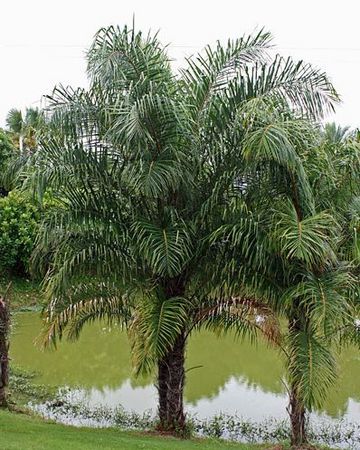
Nong Nooch Tropical Botanical Nursury, Thailand. Photo by Paul Craft.
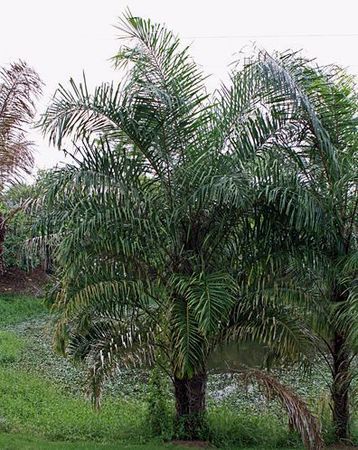
Nong Nooch Tropical Botanical Nursury, Thailand. Photo by Paul Craft.

Nong Nooch Tropical Botanical Nursury, Thailand. Photo by Paul Craft.

Nong Nooch Tropical Botanical Nursury, Thailand. Photo by Paul Craft.


Near Otottomo Forest Reserve May 2013. Photo by Thomas Couvreur.

Near Otottomo Forest Reserve May 2013. Photo by Dr. Thomas Couvreur.

Near Lélé village, Cameroon, September 2013. Photo by Dr. Thomas Couvreur.

Near Lélé village, Cameroon, September 2013. Photo by Dr. Thomas Couvreur.

Near Lélé village, Cameroon, September 2013. Photo by Dr. Thomas Couvreur.

Near Lélé village, Cameroon, September 2013. Photo by Dr. Thomas Couvreur.

Near Lélé village, Cameroon, September 2013. Photo by Dr. Thomas Couvreur.

Near Lélé village, Cameroon, September 2013. Photo by Dr. Thomas Couvreur.

Near Lélé village, Cameroon, September 2013. Photo by Dr. Thomas Couvreur.

Photo-Rare Palm Seeds.com

Photo-Rare Palm Seeds.com

Photo by Michael Pascall.

Photo by Michael Pascall.

Photo by Michael Pascall.

Photo by Michael Pascall.

Photo-medicinalplantsinnigeria.com

Photo-medicinalplantsinnigeria.com

Photo-medicinalplantsinnigeria.com

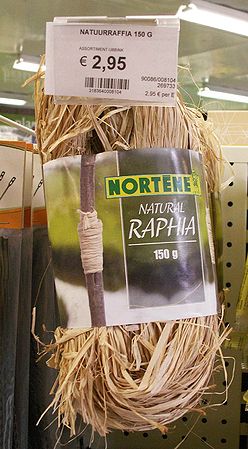
Photo-Jungle Music Palms & Cycads.






.jpg)


2.jpg)
-fruits.jpg)


External Links
- Glossary of Palm Terms
- MODERN BOTANICAL LATIN
- "Just To Be Clear"
- PROTA
- http://journals.cambridge.org/action/displayAbstract?fromPage=online&aid=8084419
- http://www.academia.edu/5381542/Nutritional_Potential_of_Hard_seed_of_Raphia_hookeri
- http://jxb.oxfordjournals.org/content/36/11/1817
- http://www.ajol.info/index.php/tfb/article/view/56623
- http://www.enpostng.com/Education,-Research-and-Training.php
- http://www.palmtalk.org/forum/index.php?/topic/31733-nigerian-raphia/
- http://www.liberianfaunaflora.org/FFI/Plant.aspx?ix=760&pid=3004&ppid=3004&genus=
- Physicochemical characterization of exudates from Raffia Palm (Raphia hookeri)
References
Phonetic spelling of Latin names by edric.
Special thanks to Geoff Stein, (Palmbob) for his hundreds of photos.
Special thanks to Palmweb.org, Dr. John Dransfield, Dr. Bill Baker & team, for their volumes of information and photos.
Glossary of Palm Terms; Based on the glossary in Dransfield, J., N.W. Uhl, C.B. Asmussen-Lange, W.J. Baker, M.M. Harley & C.E. Lewis. 2008. Genera Palmarum - Evolution and Classification of the Palms. Royal Botanic Gardens, Kew. All images copyright of the artists and photographers (see images for credits).
Many Special Thanks to Ed Vaile for his long hours of tireless editing and numerous contributions.