Difference between revisions of "Dypsis procera"
| (26 intermediate revisions by 2 users not shown) | |||
| Line 1: | Line 1: | ||
| − | |||
__noeditsection__ | __noeditsection__ | ||
| − | |||
| − | |||
{{Palmbox | {{Palmbox | ||
| − | |image= | + | |image=27298375212_61723c6327_o.jpg |
| − | |image_caption=Madagascar. | + | |image_caption=Tampolo - Masoala - Madagascar (2016) - East Coast of Madagascar. Photo by "Olivier Reilhes". |
| − | |genus= | + | |genus=Dypsis (DIP-sis) |
| − | |species= | + | |species=<br>procera (proh-SAH-rah) |
|subspecies= | |subspecies= | ||
|cultivar= | |cultivar= | ||
| Line 22: | Line 19: | ||
|common_names= | |common_names= | ||
}} | }} | ||
| − | |||
==Habitat and Distribution== | ==Habitat and Distribution== | ||
| − | Endemic to Madagascar. Around the Bay of Antongil. Lowland rain forest, usually on flat land, sometimes on slopes; alt. to 600 m. | + | Endemic to Madagascar. Around the Bay of Antongil. Lowland rain forest, usually on flat land, [[File:27362898076_55d4ff4464_o.jpg|thumb|left|370px|Tampolo - Masoala - Madagascar (2016) - East Coast of Madagascar. Photo by "Olivier Reilhes".]]sometimes on slopes; alt. to 600 m. |
==Description== | ==Description== | ||
| − | Moderate-sized clustering (very rarely solitary) palm of forest undergrowth, tending to form diffuse colonies by few short stolons. STEMS erect, to 6 m tall, 1-2.5 cm in diam., internodes 2-10 cm long, when young green, with scattered caducous brown scales. LEAVES about 8 in the crown; leaf-sheaths forming a crownshaft; sheath 17-31 cm long, 1.5-2.5 cm in diam., pale green, covered in caducous red-brown scales, these frequently in irregular vertical patches about 3-22 x 1 mm, leaf sheath mouth with irregularly tattering ligule; petiole rarely very short (3-4 cm), usually 10-25 x 0.5-0.8 cm, bearing scattered, caducous red-brown scales; rachis 38-60 cm long (? rarely more); blade entire bifid, or irregularly divided into 2-8 narrow to broad leaflets; basal leaflets 43-80 x 2-15 cm, mid-leaf leaflets 25-50 x 1.2-8.5 cm, apical leaflets 23-55 x 1.5-15 cm; lamina surfaces bearing numerous minute punctiform scales along main and minor veins. INFLORESCENCE interfoliar, branched to 2 orders; peduncle 35-46 cm long, 0.5-0.7 cm in diam., brown scaly; prophyll 21-36 x 0.5-0.7 cm, borne 5-12 cm above the base of the peduncle, membranous, bearing caducous scales; peduncular bract, rarely preserved, usually abscising before expansion of rachillae from bud, borne at least 12 cm above prophyll, to 16 x 7 cm; rachis 14-35 cm long, scaly as the peduncle, bearing 8-13 first order branches, lower 2-6 branched; rachillae 10-18 in number, 15-50 cm long, 1.2 mm in diam., densely covered in redbrown branched trichomes, triads about 2 mm distant. STAMINATE FLOWERS about 2 x 1.3 mm; sepals rounded-triangular, 0.8 x 0.7 mm, keeled, glabrous; petals ± elliptic, valvate, striate, 2 x 1.4 mm; stamens 3, antesepalous, filaments 1.1 x 0.4 mm, strap-like, anthers sagittate to subpendulous, 0.9 x 0.5 mm; pistillode conical, to 3 mm. PISTILLATE FLOWERS in very young bud about 1 mm in diam., rounded; sepals broadly imbricate, 1 x 1.1 mm; petals triangular-rounded, striate, 1.1 x 0.5 mm; staminodes 3, minute, irregularly dentiform; immature ovary about 0.5 x 0.2 mm. Mature FRUIT unknown; immature fruit ellipsoid, 7 x 3 mm, green. SEED with homogeneous endosperm. (J. Dransfield and H. Beentje. 1995) Editing by edric. | + | Moderate-sized clustering (very rarely solitary) palm of forest undergrowth, tending to form diffuse colonies by few short stolons. STEMS erect, to 6 m tall, 1-2.5 cm in diam., internodes 2-10 cm long, when young green, with scattered caducous brown scales. LEAVES about 8 in the crown; leaf-sheaths forming a crownshaft; sheath 17-31 cm long, 1.5-2.5 cm in diam., pale green, covered in caducous red-brown scales, these frequently in irregular vertical patches about 3-22 x 1 mm, leaf sheath mouth with irregularly tattering ligule; petiole rarely very short (3-4 cm), usually 10-25 x 0.5-0.8 cm, bearing scattered, caducous red-brown scales; rachis 38-60 cm long (? rarely more); blade entire bifid, or irregularly divided into 2-8 narrow to broad leaflets; basal leaflets 43-80 x 2-15 cm, mid-leaf leaflets 25-50 x 1.2-8.5 cm, apical leaflets 23-55 x 1.5-15 cm; lamina surfaces bearing numerous minute punctiform scales along main and minor veins. INFLORESCENCE interfoliar, branched to 2 orders; peduncle 35-46 cm long, 0.5-0.7 cm in diam., brown scaly; prophyll 21-36 x 0.5-0.7 cm, borne 5-12 cm above the base of the peduncle, membranous, bearing caducous scales; peduncular bract, rarely preserved, usually abscising before expansion of rachillae from bud, borne at least 12 cm above prophyll, to 16 x 7 cm; rachis 14-35 cm long, scaly as the peduncle, bearing 8-13 first order branches, lower 2-6 branched; rachillae 10-18 in number, 15-50 cm long, 1.2 mm in diam., densely covered in redbrown branched trichomes, triads about 2 mm distant. STAMINATE FLOWERS about 2 x 1.3 mm; sepals rounded-triangular, 0.8 x 0.7 mm, keeled, glabrous; petals ± elliptic, valvate, striate, 2 x 1.4 mm; stamens 3, antesepalous, filaments 1.1 x 0.4 mm, strap-like, anthers sagittate to subpendulous, 0.9 x 0.5 mm; pistillode conical, to 3 mm. PISTILLATE FLOWERS in very young bud about 1 mm in diam., rounded; sepals broadly imbricate, 1 x 1.1 mm; petals triangular-rounded, striate, 1.1 x 0.5 mm; staminodes 3, minute, irregularly dentiform; immature ovary about 0.5 x 0.2 mm. Mature FRUIT unknown; immature fruit ellipsoid, 7 x 3 mm, green. SEED with homogeneous endosperm. (J. Dransfield and H. Beentje. 1995)/Palmweb. Editing by edric. |
| − | + | {{read more top}} | |
| − | Jumelle distinguished Dypsis longipes from all other species of Dypsis sensu stricto by the combination of entire bifid leaf and spicate inflorescence borne on a long peduncle. However, the inflorescence of the holotype clearly displays six scars near the base of the "spike" where branches have been broken off, and there is no doubt that the inflorescence originally bore several long flexuous branches. With this spurious difference removed, Dypsis longipes is clearly conspecific with D. procera. Furthermore, of the leaf blades in the type one appears to be entire bifid, the other has two leaflets on one side of the rachis; however, in both cases the rachis at the base of the lamina is much narrower than the petioles on the same sheath, suggesting that, far from being whole laminae, the two leaf samples represent the apical portions of two pinnate leaves. D. procera is a distinctive but rather variable taxon that occurs with some frequency in forest surrounding the Bay of Antongil, in the lowlands and up to altitudes of about 400 m. It is a colonial palm tending to form diffuse clumps by short stolons. Lamina dissection varies from narrowly to broadly and irregularly pinnate, to entire bifid, the entire-bifid forms being particularly striking and beautiful. In most collections the leafsheaths bear scales in distinctive irregular vertical patches. Dransfield JD6397 differs from other collections in being rather smaller in all its parts, with a short entire bifid leaf and with leaf sheaths that lack the distinctive patches of scales, but are nevertheless scaly. (J. Dransfield and H. Beentje. 1995). | + | Jumelle distinguished Dypsis longipes from all other species of Dypsis sensu stricto by the combination of entire bifid leaf and spicate inflorescence borne on a long peduncle. However, the inflorescence of the holotype clearly displays six scars near the base of the "spike" where branches have been broken off, and there is no doubt that the inflorescence originally bore several long flexuous branches. With this spurious difference removed, Dypsis longipes is clearly conspecific with D. procera. Furthermore, of the leaf blades in the type one appears to be entire bifid, the other has two leaflets on one side of the rachis; however, in both cases the rachis at the base of the lamina is much narrower than the petioles on the same sheath, suggesting that, far from being whole laminae, the two leaf samples represent the apical portions of two pinnate leaves. D. procera is a distinctive but rather variable taxon that occurs with some frequency in forest surrounding the Bay of Antongil, in the lowlands and up to altitudes of about 400 m. It is a colonial palm tending to form diffuse clumps by short stolons. Lamina dissection varies from narrowly to broadly and irregularly pinnate, to entire bifid, the entire-bifid forms being particularly striking and beautiful. In most collections the leafsheaths bear scales in distinctive irregular vertical patches. Dransfield JD6397 differs from other collections in being rather smaller in all its parts, with a short entire bifid leaf and with leaf sheaths that lack the distinctive patches of scales, but are nevertheless scaly. (J. Dransfield and H. Beentje. 1995)/Palmweb. |
| + | {{read more bottom}} | ||
==Culture== | ==Culture== | ||
Growing Climate: -Easy to grow and very stunning palm. Fertilize once per year and mulch garden bed well. This Dypsis likes regular watering and will take small amount of full sunlight, but preferrers a shady position. Temperatures from 4.C to 35.C are recommended. Hardiness: USDA, zones 10A-11. | Growing Climate: -Easy to grow and very stunning palm. Fertilize once per year and mulch garden bed well. This Dypsis likes regular watering and will take small amount of full sunlight, but preferrers a shady position. Temperatures from 4.C to 35.C are recommended. Hardiness: USDA, zones 10A-11. | ||
==Comments and Curiosities== | ==Comments and Curiosities== | ||
| − | D. procera is an attractive palm of the undergrowth of the very humid forests that surround the Bay of Antongil. The leaf sheaths with their discrete patches of red-brown scales are distinctive. Leaf dissection varies greatly. There are some particularly beautiful forms with entire bifid leaves that would make splendid ornamentals. D. procera is cultivated in several Australian collections (and probably elsewhere), where it has been misidentified as D. hildebrandtii (see Stewart 1994, p. 97). The species name, procera, meaning very tall, or high, seems inappropriate for this undergrowth palm, but it is one of the taller of the palms that belong to Dypsis in the restricted sense, rather than the present broad sense. (J. Dransfield and H. Beentje. 1995). | + | D. procera is an attractive palm of the undergrowth of the very humid forests that surround the Bay of Antongil. The leaf sheaths with their discrete patches of red-brown scales are distinctive. Leaf dissection varies greatly. There are some particularly beautiful forms with entire bifid leaves that would make splendid ornamentals. D. procera is cultivated in several Australian collections (and probably elsewhere), where it has been misidentified as D. hildebrandtii (see Stewart 1994, p. 97). The species name, procera, meaning very tall, or high, seems inappropriate for this undergrowth palm, but it is one of the taller of the palms that belong to Dypsis in the restricted sense, rather than the present broad sense. (J. Dransfield and H. Beentje. 1995)/Palmweb. |
| − | Conservation: Vulnerable. Restricted in distribution in an area where the forest is unprotected, and under some threat by shifting cultivations. (J. Dransfield and H. Beentje. 1995) | + | Conservation: Vulnerable. Restricted in distribution in an area where the forest is unprotected, and under some threat by shifting cultivations. (J. Dransfield and H. Beentje. 1995)/Palmweb. |
| − | + | ||
| − | + | ||
| − | + | ||
| − | = | + | <br clear="all"> |
| − | + | {{#Widget:AdResban}} | |
| − | + | <center><gallery caption="IMAGE GALLERY" perrow="" widths="" heights=""> | |
| − | + | ||
| − | + | ||
| − | <center><gallery caption="IMAGE GALLERY" perrow=" | + | |
Image:P1010026 Dypsis procera.JPG|Photo by Phil Arrowsmith in Habitat, Madagascar. | Image:P1010026 Dypsis procera.JPG|Photo by Phil Arrowsmith in Habitat, Madagascar. | ||
| + | image: | ||
Image:Dypsis procera 2.jpg|Big Island, Hawaii. | Image:Dypsis procera 2.jpg|Big Island, Hawaii. | ||
Image:Dypsis procera closer.jpg|Close-up, Big Island, Hawaii. | Image:Dypsis procera closer.jpg|Close-up, Big Island, Hawaii. | ||
| − | image:F120614v1.JPG|Floribunda Palms, Hawaii, photo by BGL | + | image:F120614v1.JPG|Floribunda Palms, Hawaii, photo by BGL |
| − | image:100_5945pocerabilla.jpg|Hawaii. Photo by Bill Austin | + | image:100_5945pocerabilla.jpg|Hawaii. Photo by Bill Austin |
| − | image: | + | image:Post_Madagascar_2005_230z.JPG|Marojejy Park, Madagascar, photo by Jeff Searle, Searle Brothers Nursery, FL. |
| − | image:-gallery-members-Dypsis_procera_craft.jpg|Former Sullivan Garden, Hawaii, photo by Paul Craft | + | image:-gallery-members-Dypsis_procera_craft.jpg|Former Sullivan Garden, Hawaii, photo by Paul Craft |
| − | image:D817c2hawaii15ft.jpg|Hawaii. 15 ft. tall | + | image:D817c2hawaii15ft.jpg|Hawaii. 15 ft. tall. |
| − | image:DypPro.jpg|Madagascar. | + | image:DypPro.jpg|Madagascar. In habitat. Photo-Rare Palm Seeds.com |
| − | image:DypPro2.jpg|Madagascar. | + | image:DypPro2.jpg|Madagascar. In habitat. Photo-Rare Palm Seeds.com |
| − | image:DypPro3.jpg|Madagascar. | + | image:DypPro3.jpg|Madagascar. In habitat. Photo-Rare Palm Seeds.com |
| − | image:Procerautopia.jpg|QLD. Australia. Utopia Palms & Cycads | + | image:Procerautopia.jpg|QLD. Australia. Utopia Palms & Cycads |
| − | image:Procera03utopia.jpg|QLD. Australia. Utopia Palms & Cycads | + | image:Procera03utopia.jpg|QLD. Australia. Utopia Palms & Cycads |
| − | image:Procera02utopia.jpg|QLD. Australia. Utopia Palms & Cycads | + | image:Procera02utopia.jpg|QLD. Australia. Utopia Palms & Cycads |
| − | image:Fdfea8floribunda.jpg|Floribunda Palms, Hawaii | + | |
| + | image:Fdfea8floribunda.jpg|Floribunda Palms, Hawaii. | ||
image:Dypsis-procera-(2)0.jpg|Hawaiian Tropical Botanical Garden. | image:Dypsis-procera-(2)0.jpg|Hawaiian Tropical Botanical Garden. | ||
| − | + | File:photo-6.jpg|Encinitas, CA. Photo by Nick (ellidro) | |
| − | + | File:photo-7.jpg|Encinitas, CA. Photo by Nick (ellidro) | |
| − | + | File:27298375212_61723c6327_o.jpg|Tampolo - Masoala - Madagascar (2016) - East Coast of Madagascar. Photo by "Olivier Reilhes". | |
| − | + | File:27120928360_0ce87c512c_o.jpg|Tampolo - Masoala - Madagascar (2016) - East Coast of Madagascar. Photo by "Olivier Reilhes". | |
| − | + | File:27120927920_b3df4b0af7_o.jpg|Tampolo - Masoala - Madagascar (2016) - East Coast of Madagascar. Photo by "Olivier Reilhes". | |
| + | File:27120927550_598672ca78_o.jpg|Tampolo - Masoala - Madagascar (2016) - East Coast of Madagascar. Photo by "Olivier Reilhes". | ||
| + | File:27362898076_55d4ff4464_o.jpg|Tampolo - Masoala - Madagascar (2016) - East Coast of Madagascar. Photo by "Olivier Reilhes". | ||
| + | File:27362886606_bac052567b_o.jpg|Tampolo - Masoala - Madagascar (2016) - East Coast of Madagascar. Photo by "Olivier Reilhes". | ||
| + | File:27362886006_60b91d887e_o.jpg|Tampolo - Masoala - Madagascar (2016) - East Coast of Madagascar. Photo by "Olivier Reilhes". | ||
| + | File:27362884296_b309c11db0_o.jpg|Tampolo - Masoala - Madagascar (2016) - East Coast of Madagascar. Photo by "Olivier Reilhes". | ||
| + | |||
| + | |||
</gallery></center> | </gallery></center> | ||
| − | + | ==External Links== | |
| + | *[http://eunops.org/content/glossary-palm-terms Glossary of Palm Terms] | ||
| + | *[http://www.calflora.net/botanicalnames/pronunciation.html MODERN BOTANICAL LATIN] | ||
| + | *[http://www.jlhudsonseeds.net/Pronunciation.htm "Just To Be Clear"] | ||
| + | ==References== | ||
| + | Phonetic spelling of Latin names by edric. | ||
| + | Special thanks to Geoff Stein, (Palmbob) for his hundreds of photos. | ||
| + | |||
| + | Special thanks to [http://palmweb.org/?q=node/2 Palmweb.org], Dr. John Dransfield, Dr. Bill Baker & team, for their volumes of information and photos. | ||
| + | |||
| + | Glossary of Palm Terms; Based on the glossary in Dransfield, J., N.W. Uhl, C.B. Asmussen-Lange, W.J. Baker, M.M. Harley & C.E. Lewis. 2008. Genera Palmarum - Evolution and Classification of the Palms. Royal Botanic Gardens, Kew. All images copyright of the artists and photographers (see images for credits). | ||
| + | |||
| + | Dransfield, J. & Beentje, H. 1995. The Palms of Madagascar. Royal Botanic Gardens, Kew and The International Palm Society. | ||
| + | |||
| + | {{SpeciesListBackLink}} | ||
[[Category:Palms of Madagascar]] | [[Category:Palms of Madagascar]] | ||
[[Category:DYPSIS|procera]] | [[Category:DYPSIS|procera]] | ||
Latest revision as of 09:05, 19 June 2016
| Dypsis (DIP-sis) procera (proh-SAH-rah) | |||||||
|---|---|---|---|---|---|---|---|
 Tampolo - Masoala - Madagascar (2016) - East Coast of Madagascar. Photo by "Olivier Reilhes". | |||||||
| Scientific Classification | |||||||
| |||||||
| Synonyms | |||||||
|
| |||||||
| Native Continent | |||||||
 | |||||||
| Morphology | |||||||
| |||||||
| Culture | |||||||
|
| |||||||
| Survivability index | |||||||
|
| |||||||
| Common names | |||||||
|
| |||||||
Contents
Habitat and Distribution
Endemic to Madagascar. Around the Bay of Antongil. Lowland rain forest, usually on flat land,
Description
Moderate-sized clustering (very rarely solitary) palm of forest undergrowth, tending to form diffuse colonies by few short stolons. STEMS erect, to 6 m tall, 1-2.5 cm in diam., internodes 2-10 cm long, when young green, with scattered caducous brown scales. LEAVES about 8 in the crown; leaf-sheaths forming a crownshaft; sheath 17-31 cm long, 1.5-2.5 cm in diam., pale green, covered in caducous red-brown scales, these frequently in irregular vertical patches about 3-22 x 1 mm, leaf sheath mouth with irregularly tattering ligule; petiole rarely very short (3-4 cm), usually 10-25 x 0.5-0.8 cm, bearing scattered, caducous red-brown scales; rachis 38-60 cm long (? rarely more); blade entire bifid, or irregularly divided into 2-8 narrow to broad leaflets; basal leaflets 43-80 x 2-15 cm, mid-leaf leaflets 25-50 x 1.2-8.5 cm, apical leaflets 23-55 x 1.5-15 cm; lamina surfaces bearing numerous minute punctiform scales along main and minor veins. INFLORESCENCE interfoliar, branched to 2 orders; peduncle 35-46 cm long, 0.5-0.7 cm in diam., brown scaly; prophyll 21-36 x 0.5-0.7 cm, borne 5-12 cm above the base of the peduncle, membranous, bearing caducous scales; peduncular bract, rarely preserved, usually abscising before expansion of rachillae from bud, borne at least 12 cm above prophyll, to 16 x 7 cm; rachis 14-35 cm long, scaly as the peduncle, bearing 8-13 first order branches, lower 2-6 branched; rachillae 10-18 in number, 15-50 cm long, 1.2 mm in diam., densely covered in redbrown branched trichomes, triads about 2 mm distant. STAMINATE FLOWERS about 2 x 1.3 mm; sepals rounded-triangular, 0.8 x 0.7 mm, keeled, glabrous; petals ± elliptic, valvate, striate, 2 x 1.4 mm; stamens 3, antesepalous, filaments 1.1 x 0.4 mm, strap-like, anthers sagittate to subpendulous, 0.9 x 0.5 mm; pistillode conical, to 3 mm. PISTILLATE FLOWERS in very young bud about 1 mm in diam., rounded; sepals broadly imbricate, 1 x 1.1 mm; petals triangular-rounded, striate, 1.1 x 0.5 mm; staminodes 3, minute, irregularly dentiform; immature ovary about 0.5 x 0.2 mm. Mature FRUIT unknown; immature fruit ellipsoid, 7 x 3 mm, green. SEED with homogeneous endosperm. (J. Dransfield and H. Beentje. 1995)/Palmweb. Editing by edric.
| read more |
|---|
|
Jumelle distinguished Dypsis longipes from all other species of Dypsis sensu stricto by the combination of entire bifid leaf and spicate inflorescence borne on a long peduncle. However, the inflorescence of the holotype clearly displays six scars near the base of the "spike" where branches have been broken off, and there is no doubt that the inflorescence originally bore several long flexuous branches. With this spurious difference removed, Dypsis longipes is clearly conspecific with D. procera. Furthermore, of the leaf blades in the type one appears to be entire bifid, the other has two leaflets on one side of the rachis; however, in both cases the rachis at the base of the lamina is much narrower than the petioles on the same sheath, suggesting that, far from being whole laminae, the two leaf samples represent the apical portions of two pinnate leaves. D. procera is a distinctive but rather variable taxon that occurs with some frequency in forest surrounding the Bay of Antongil, in the lowlands and up to altitudes of about 400 m. It is a colonial palm tending to form diffuse clumps by short stolons. Lamina dissection varies from narrowly to broadly and irregularly pinnate, to entire bifid, the entire-bifid forms being particularly striking and beautiful. In most collections the leafsheaths bear scales in distinctive irregular vertical patches. Dransfield JD6397 differs from other collections in being rather smaller in all its parts, with a short entire bifid leaf and with leaf sheaths that lack the distinctive patches of scales, but are nevertheless scaly. (J. Dransfield and H. Beentje. 1995)/Palmweb. |
Culture
Growing Climate: -Easy to grow and very stunning palm. Fertilize once per year and mulch garden bed well. This Dypsis likes regular watering and will take small amount of full sunlight, but preferrers a shady position. Temperatures from 4.C to 35.C are recommended. Hardiness: USDA, zones 10A-11.
Comments and Curiosities
D. procera is an attractive palm of the undergrowth of the very humid forests that surround the Bay of Antongil. The leaf sheaths with their discrete patches of red-brown scales are distinctive. Leaf dissection varies greatly. There are some particularly beautiful forms with entire bifid leaves that would make splendid ornamentals. D. procera is cultivated in several Australian collections (and probably elsewhere), where it has been misidentified as D. hildebrandtii (see Stewart 1994, p. 97). The species name, procera, meaning very tall, or high, seems inappropriate for this undergrowth palm, but it is one of the taller of the palms that belong to Dypsis in the restricted sense, rather than the present broad sense. (J. Dransfield and H. Beentje. 1995)/Palmweb.
Conservation: Vulnerable. Restricted in distribution in an area where the forest is unprotected, and under some threat by shifting cultivations. (J. Dransfield and H. Beentje. 1995)/Palmweb.
- IMAGE GALLERY

Photo by Phil Arrowsmith in Habitat, Madagascar.
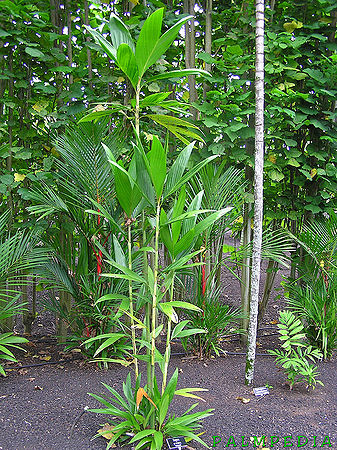
Big Island, Hawaii.

Close-up, Big Island, Hawaii.

Floribunda Palms, Hawaii, photo by BGL

Hawaii. Photo by Bill Austin

Marojejy Park, Madagascar, photo by Jeff Searle, Searle Brothers Nursery, FL.

Former Sullivan Garden, Hawaii, photo by Paul Craft
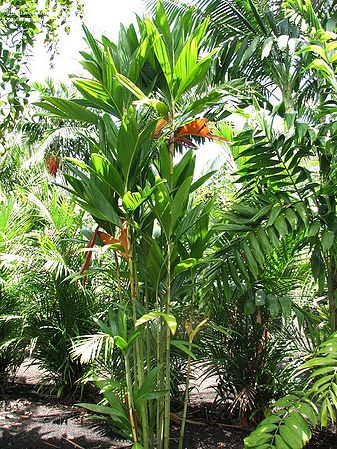
Hawaii. 15 ft. tall.

Madagascar. In habitat. Photo-Rare Palm Seeds.com

Madagascar. In habitat. Photo-Rare Palm Seeds.com

Madagascar. In habitat. Photo-Rare Palm Seeds.com
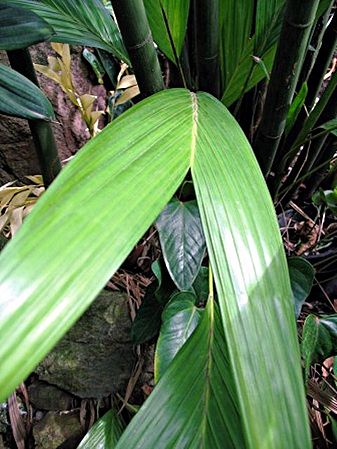
QLD. Australia. Utopia Palms & Cycads

QLD. Australia. Utopia Palms & Cycads

QLD. Australia. Utopia Palms & Cycads

Floribunda Palms, Hawaii.

Hawaiian Tropical Botanical Garden.
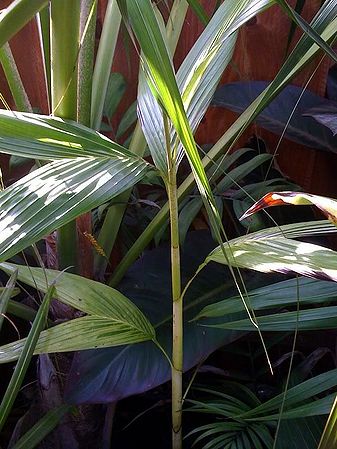
Encinitas, CA. Photo by Nick (ellidro)
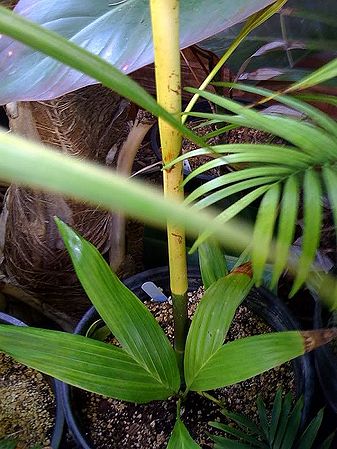
Encinitas, CA. Photo by Nick (ellidro)
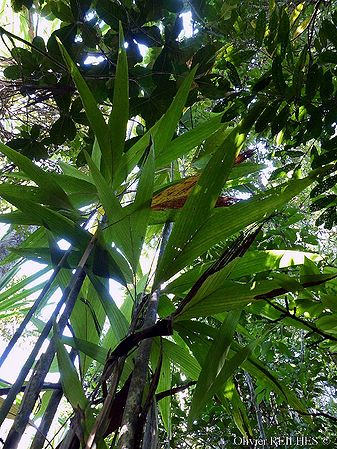
Tampolo - Masoala - Madagascar (2016) - East Coast of Madagascar. Photo by "Olivier Reilhes".

Tampolo - Masoala - Madagascar (2016) - East Coast of Madagascar. Photo by "Olivier Reilhes".
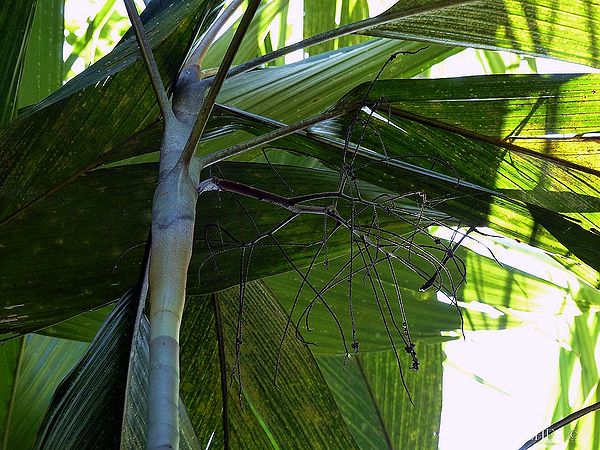
Tampolo - Masoala - Madagascar (2016) - East Coast of Madagascar. Photo by "Olivier Reilhes".
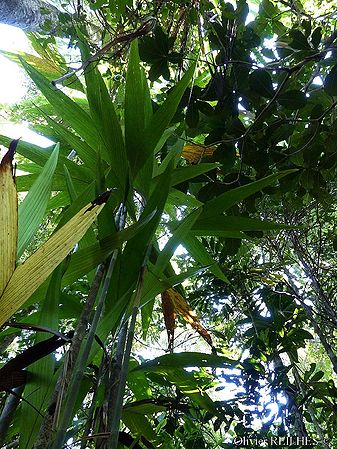
Tampolo - Masoala - Madagascar (2016) - East Coast of Madagascar. Photo by "Olivier Reilhes".

Tampolo - Masoala - Madagascar (2016) - East Coast of Madagascar. Photo by "Olivier Reilhes".
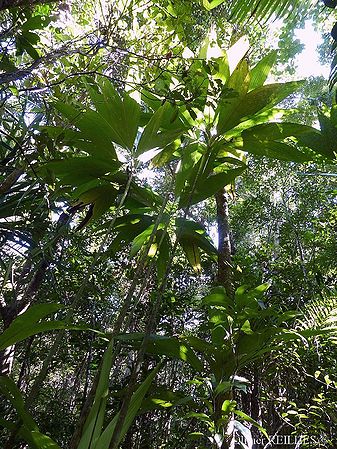
Tampolo - Masoala - Madagascar (2016) - East Coast of Madagascar. Photo by "Olivier Reilhes".

Tampolo - Masoala - Madagascar (2016) - East Coast of Madagascar. Photo by "Olivier Reilhes".

Tampolo - Masoala - Madagascar (2016) - East Coast of Madagascar. Photo by "Olivier Reilhes".


0.jpg)


External Links
References
Phonetic spelling of Latin names by edric.
Special thanks to Geoff Stein, (Palmbob) for his hundreds of photos.
Special thanks to Palmweb.org, Dr. John Dransfield, Dr. Bill Baker & team, for their volumes of information and photos.
Glossary of Palm Terms; Based on the glossary in Dransfield, J., N.W. Uhl, C.B. Asmussen-Lange, W.J. Baker, M.M. Harley & C.E. Lewis. 2008. Genera Palmarum - Evolution and Classification of the Palms. Royal Botanic Gardens, Kew. All images copyright of the artists and photographers (see images for credits).
Dransfield, J. & Beentje, H. 1995. The Palms of Madagascar. Royal Botanic Gardens, Kew and The International Palm Society.
Many Special Thanks to Ed Vaile for his long hours of tireless editing and numerous contributions.