Difference between revisions of "Iriartella setigera"
| (6 intermediate revisions by one user not shown) | |||
| Line 19: | Line 19: | ||
}} | }} | ||
==Habitat and Distribution== | ==Habitat and Distribution== | ||
| − | Brazil North, Colombia, Guyana, and Venezuela. Tropical jungle, near the blackwater streams of the Amazon Northwest, in southeastern Colombia and southern Venezuela. Not found in Central America. | + | Brazil North, Colombia, Guyana, and Venezuela. Tropical jungle, near the blackwater [[File:is009887677543.JPG|thumb|left|400px|All information copyright, Royal Botanic Gardens, Kew.]]streams of the Amazon Northwest, in southeastern Colombia and southern Venezuela. Not found in Central America. |
| − | + | ||
==Description== | ==Description== | ||
| − | A small understory palm with a solitary trunk but eventually clumping, 3-8 m tall and 2-4 cm in diameter, with a small spiny system of aerial roots. It has a sparse crown of up to 6 leaves, 1.2-1.5 m long, with 8-10 diamond shaped leaflets which have a velvety feel when touched. with a diameter of 1.5 to 4 cm. The inflorescence has up to 20 rachillae. The fruits are orange and darken as they mature, are 1.5 to 1 cm. | + | A small understory palm with a solitary trunk but eventually clumping, 3-8 m tall and 2-4 cm in diameter, with a small spiny system of aerial roots. It has a sparse crown of up to 6 leaves, 1.2-1.5 m long, with 8-10 diamond shaped leaflets which have a velvety feel when touched. with a diameter of 1.5 to 4 cm. The inflorescence has up to 20 rachillae. The fruits are orange and darken as they mature, are 1.5 to 1 cm. Editing by edric. |
==Culture== | ==Culture== | ||
Tropical conditions only; warm, sheltered and moist. Prefer sandy acidic soils. Seed is very slow and difficult to germinate. | Tropical conditions only; warm, sheltered and moist. Prefer sandy acidic soils. Seed is very slow and difficult to germinate. | ||
| Line 32: | Line 31: | ||
{{#Widget:AdResban}} | {{#Widget:AdResban}} | ||
<center><gallery caption="IMAGE GALLERY" perrow="4" widths="300px" heights="300px" mode="packed"> | <center><gallery caption="IMAGE GALLERY" perrow="4" widths="300px" heights="300px" mode="packed"> | ||
| − | |||
| − | |||
File:is0089762231.JPG|All information copyright, Royal Botanic Gardens, Kew. | File:is0089762231.JPG|All information copyright, Royal Botanic Gardens, Kew. | ||
File:is009887677543.JPG|All information copyright, Royal Botanic Gardens, Kew. | File:is009887677543.JPG|All information copyright, Royal Botanic Gardens, Kew. | ||
| Line 44: | Line 41: | ||
File:Iriartella_setigera04.jpg|Photo by George Yao. | File:Iriartella_setigera04.jpg|Photo by George Yao. | ||
File:2098220508_082dfe4b85_o.jpg|Understory of white sand forest, Allpahuayo, 150m, Loreto, Peru, 1 apr 07. Photo by Rob Westerduijn. | File:2098220508_082dfe4b85_o.jpg|Understory of white sand forest, Allpahuayo, 150m, Loreto, Peru, 1 apr 07. Photo by Rob Westerduijn. | ||
| − | + | File:AREC-iria-st-per-15351.jpg|Peru. | |
File:smallpalm01.jpg|Manaus, AM Brazil. Photo by Don Kittelson. | File:smallpalm01.jpg|Manaus, AM Brazil. Photo by Don Kittelson. | ||
File:Smallpalm4.jpg|Manaus, AM Brazil. Photo by Don Kittelson. | File:Smallpalm4.jpg|Manaus, AM Brazil. Photo by Don Kittelson. | ||
| Line 53: | Line 50: | ||
File:Local names.JPG|Local Names. | File:Local names.JPG|Local Names. | ||
File:siding.jpeg|siding. | File:siding.jpeg|siding. | ||
| − | File:is0098453123.JPG | + | File:is0098453123.JPG|Place Mats. |
| − | File:is0098965323.JPG | + | File:is0098965323.JPG|Place Mats. |
| − | + | File:present1.JPG | |
</gallery></center> | </gallery></center> | ||
==External Links== | ==External Links== | ||
| Line 71: | Line 68: | ||
{{SpeciesListBackLink}} | {{SpeciesListBackLink}} | ||
| − | [[Category: | + | [[Category:IRIARTELLA|setigera]] |
Latest revision as of 08:19, 29 January 2016
| Iriartella (ihr-ee-ahr-TEHL-lah) setigera (seh-tih-JEH-rah) | |||||||
|---|---|---|---|---|---|---|---|
 | |||||||
| Scientific Classification | |||||||
| |||||||
| Synonyms | |||||||
|
| |||||||
| Native Continent | |||||||
 | |||||||
| Morphology | |||||||
| |||||||
| Culture | |||||||
|
| |||||||
| Survivability index | |||||||
|
| |||||||
| Common names | |||||||
|
| |||||||
Contents
Habitat and Distribution
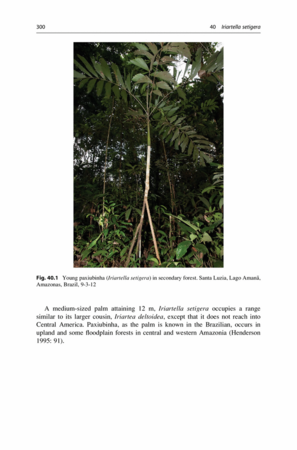
Brazil North, Colombia, Guyana, and Venezuela. Tropical jungle, near the blackwater
Description
A small understory palm with a solitary trunk but eventually clumping, 3-8 m tall and 2-4 cm in diameter, with a small spiny system of aerial roots. It has a sparse crown of up to 6 leaves, 1.2-1.5 m long, with 8-10 diamond shaped leaflets which have a velvety feel when touched. with a diameter of 1.5 to 4 cm. The inflorescence has up to 20 rachillae. The fruits are orange and darken as they mature, are 1.5 to 1 cm. Editing by edric.
Culture
Tropical conditions only; warm, sheltered and moist. Prefer sandy acidic soils. Seed is very slow and difficult to germinate.
Comments and Curiosities
Etymology: Iriartella: Generic name combining the genus name Iriartea (Very closely related.) with the diminutive suffix She = "small", meaning "little Iriartea". setigera : The specific epithet from the Latin meaning "bristle, stiff hairs."
Uses: Indigenous-The shaft of the fishing arrows is occasionally made from Iriartella setigera. Indians of the Vaupés region near the Brazilian border use of slender stems of Iriartella setigera and particularly Cuatrecasea spruceana for making their blowings canes or blowguns. The superbly accurate blowpipe, locally called serbatana, constructed from the trunk of the palm, Iriartella setigera. The macerated leaves are applied to the head to kill lice.
- IMAGE GALLERY

All information copyright, Royal Botanic Gardens, Kew.
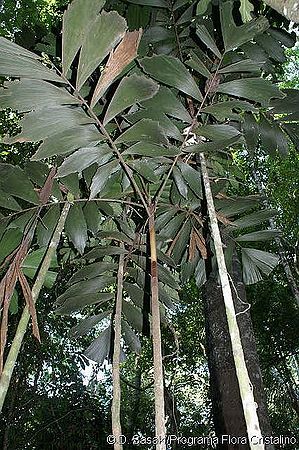
All information copyright, Royal Botanic Gardens, Kew.

All information copyright, Royal Botanic Gardens, Kew.

All information copyright, Royal Botanic Gardens, Kew.
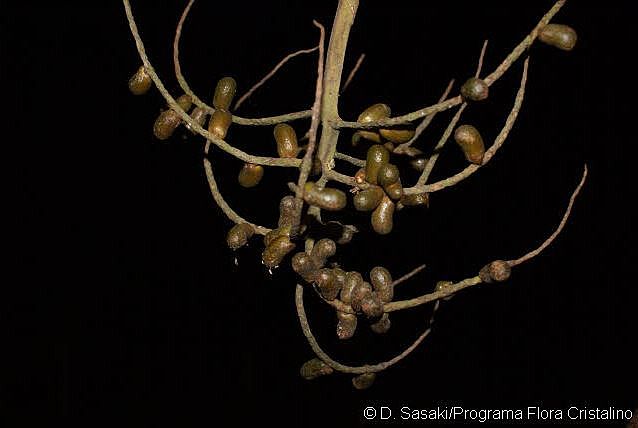
All information copyright, Royal Botanic Gardens, Kew.
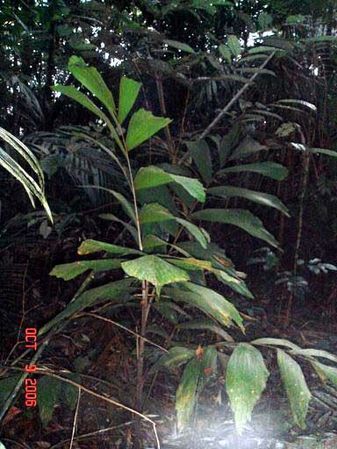
Photo by Mike Merritt.

Photo by George Yao.
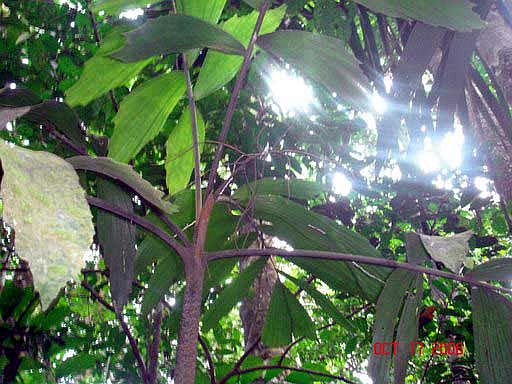
Photo by George Yao.

Photo by George Yao.

Understory of white sand forest, Allpahuayo, 150m, Loreto, Peru, 1 apr 07. Photo by Rob Westerduijn.

Peru.

Manaus, AM Brazil. Photo by Don Kittelson.

Manaus, AM Brazil. Photo by Don Kittelson.

Manaus, AM Brazil. Photo by Don Kittelson.



Local Names.

siding.

Place Mats.

Place Mats.


External Links
References
Phonetic spelling of Latin names by edric.
Special thanks to Geoff Stein, (Palmbob) for his hundreds of photos.
Special thanks to Palmweb.org, Dr. John Dransfield, Dr. Bill Baker & team, for their volumes of information and photos.
Glossary of Palm Terms; Based on the glossary in Dransfield, J., N.W. Uhl, C.B. Asmussen-Lange, W.J. Baker, M.M. Harley & C.E. Lewis. 2008. Genera Palmarum - Evolution and Classification of the Palms. Royal Botanic Gardens, Kew. All images copyright of the artists and photographers (see images for credits).
Many Special Thanks to Ed Vaile for his long hours of tireless editing and numerous contributions.