Pronunciation: sin-uh-CAN-thus fie-BRO-suss
Common Name: none
Synecanthus fibrosus is a rarely grown palm in California, but it can survive in the milder climate zones, and if protected from drying winds and cold, it can grow to maturity in a less than 10 years. It does not tolerate very cold temps, and does tend to look a bit tattered and less than ornamental if allowed to be battered by winds or hot sun. But it does look a bit like a larger, solitary Chamaedorea palm.
|
Appearance and Biology
- Habit: solitary with upright crown of 5-7 feather leaves
- Height: 8'-10' tall
- Trunk: 2" diameter; green; ringed; bamboo- like
- Crownshaft: none
- Spread: 3'
- Leaf Description: pinnate; sometimes irregularly spaced leaflets; leaflets with some linear striations; leaves upright, rarely falling below 45 degrees; leaflets arching and lanceolate; medium green; 5' long including petioles
- Petiole/Leaf bases: 2' long; rounded in cross-section; unspilt leaf bases
- Reproduction: monoecious
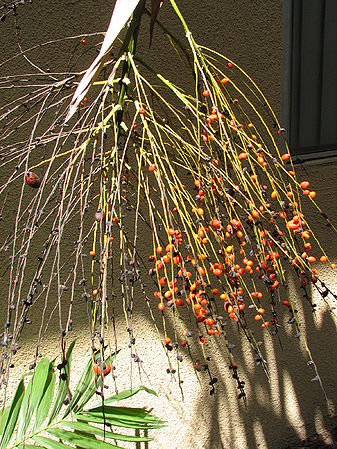
- Inflorescence: usually single, drooping or laterally oriented from trunk; thick peduncle about 1' long ending in many, simple branched tips; originated from below leaf bases
- Fruit: ovoid, red when ripe, about 1" long
|
Horticultural Characteristics
- Minimum Temp: 28F
- Drought Tolerance: poor
- Dry Heat Tolerance: poor to moderate
- Cool Tolerance: poor
- Wind Tolerance: poor
- Salt Tolerance: unknown
- Growth Rate: slow to moderate
- Soil Preference: rich and well draining
- Light Requirement: filtered to full sun in coastal locations
- Human Hazards: none known
- Disease or Horticultural Problems: brown tipping common due to low humidity and drying winds; some problems with nutrient deficiencies
- Transplants?: unknown
- Indoor?: fairly good indoor plant
- Availability: rare
|
Ventura, California in collection of Pauleen Sullivan
Hawaii, in Sullivan collection