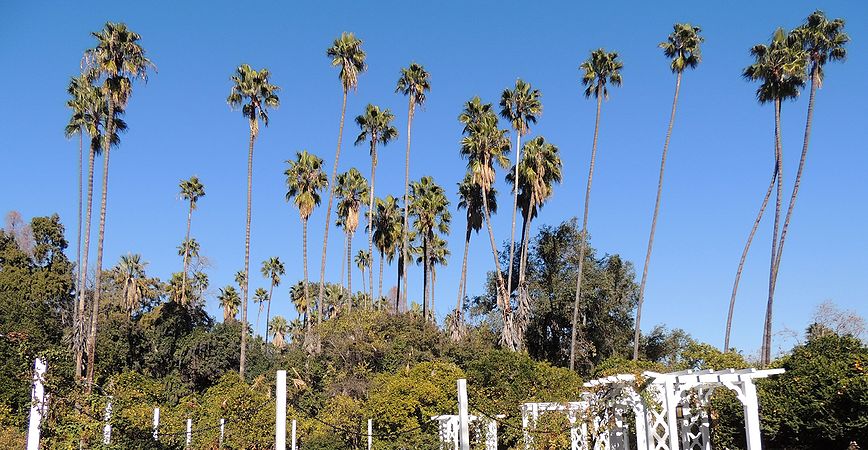
Pronunciation: wash-ing-TOE-nee-uh roe-BUST-uh
Common Name: Mexican Fan Palm, Feather Duster Palm
Washingtonia robusta is probably the most commonly grown palm in the US and one of the most recognizable palms in the world.
|
Appearance and Biology
- Habit: solitary
- Height: 100 feet
- Trunk: partial or complete retained dead leaf petticoat, though in cultivation usually pruned clean or closely thatched; 16"-24" thick, grey (reddish when recently pruned); often leaning toward the west when very tall
- Spread: 6'-8'
- Leaf Shape: palmate
- Petiole: long (about equal to rachis) and heavily armed with large, very sharp teeth
- Foliage: deep, somewhat shiny green, stiff as young palm, but leaflets developing characteristic droopiness with age; some cottony fibers
- Reproduction: monoecious and 'rampant'
- Inflorescence: long, arching, dark brown
- Fruit: spherical dark brown; 1cm
- Seed: 4-5mm spherical black
|
Horticultural Characteristics
- Minimum Temp: 20F, though moderate leaf burn at 25F
- Drought Tolerance: very high
- Dry Heat Tolerance: very high
- Wind Tolerance: very high
- Salt Tolerance: good
- Growth Rate: very fast (fastest palm in California and one of the fastest in the world)
- Soil Preference: extremely tolerant of a wide range of soil types
- Light Requirement: full sun, though can grow well in deep shade for years
- Human Hazards: falling leaves in winds dangerous to both pedestrians and cars; profuse seed production makes sidewalks slippery; petiolar teeth make pruning hazardous
- Disease or Horticultural Problems: few
- Indoor?: performs moderately well if bright light available, but a dangerous indoor palm
|
clear and trimmed to thatch looks
close up of thatched trunk trimming