Difference between revisions of "Sabal domingensis"
Geoff Stein - Author & Editor
| Line 39: | Line 39: | ||
<gallery> | <gallery> | ||
File:Sabal domingensis again 14 H.jpg|Huntington Gardens near Pasadena, California | File:Sabal domingensis again 14 H.jpg|Huntington Gardens near Pasadena, California | ||
| − | + | File:Sabal domingensis maybe bob.jpg|San Diego county, California | |
| − | + | File:Sabal domingensis Ha.JPG|San Diego county | |
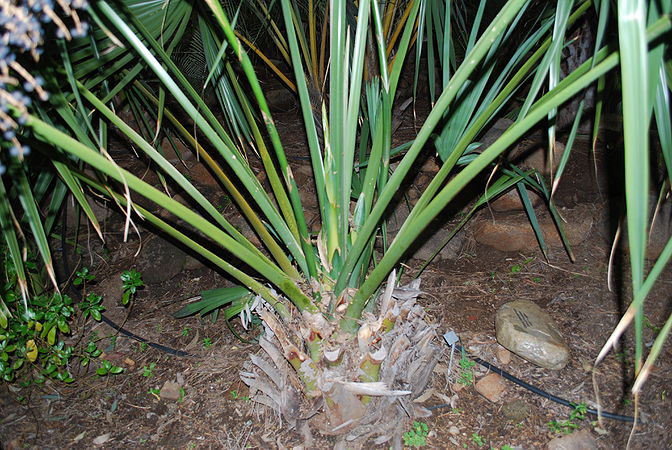
| − | + | File:Sabal domingensis base.jpg| | |
| − | + | File:Sabal domingensis clean trunk shot again H.jpg|trunk in Huntington Gardens | |
| − | + | File:Sabal domingensis infructesences.JPG| | |
| − | + | File:Sabal domingensis fruits.JPG| | |
</gallery> | </gallery> | ||
[[Category: Sabal]] | [[Category: Sabal]] | ||
Revision as of 12:33, 24 September 2015
Common Name: Hispaniola Palm
Sabal domingensis is one of the larger Sabals and a pretty nice palm for many areas of California. This species seems maybe a bit more resistant to potassium deficiency. Unfortunately is a slow growing palm, and takes many years to develop into a mature tree, somewhat reducing its usefulness as a landscape species. It also seems to be reluctant to attain the massive potential spread and size as it often reaches in Florida and other tropical climates.
|
Appearance and Biology
|
Horticultural Characteristics
|

Huntington Gardens near Pasadena, California

San Diego county, California

San Diego county
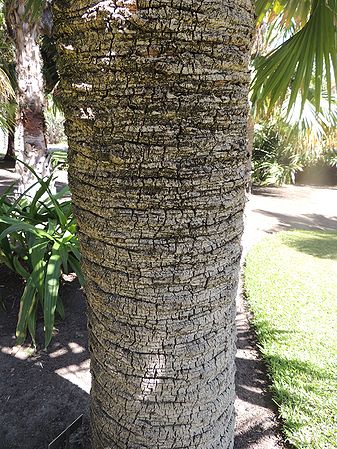
trunk in Huntington Gardens


