Difference between revisions of "Acanthophoenix crinita"
Geoff Stein - Author & Editor
| Line 50: | Line 50: | ||
*'''Indoor?''': very poor choice of indoor palm due to spines | *'''Indoor?''': very poor choice of indoor palm due to spines | ||
|} | |} | ||
| + | |||
| + | {{#Widget:Banner1}} | ||
| + | |||
<gallery> | <gallery> | ||
File:Acanthophoenix 1 levine.JPG|Vista, California | File:Acanthophoenix 1 levine.JPG|Vista, California | ||
Revision as of 21:03, 4 November 2014

| Pronunciation: uh-can-tuh-FEE-nix kri-NEE-tuh |
| Common Name: test test test |
| Synonym: test test test |
Acanthophoenix crinita is a thin-trunked, pinnate palm from Reunion Island, east of Madagascar. Though from a decidedly tropical climate, this palm has surprising cold tolerance and does surprisingly well in a Mediterranean climate, growing to maturity in several California locations. Though not as colorful as its cousin, Acanthophoenix rubra, it is far hardier and is a fascinating spiny palm for partially sunny areas of the warmer areas of southern California.
|
Appearance and Biology
|
Horticultural Characteristics
|
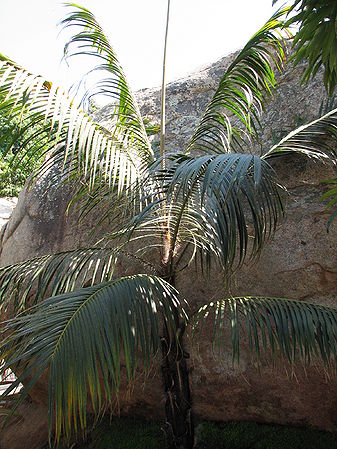
Vista, California

Huntington Beach, California
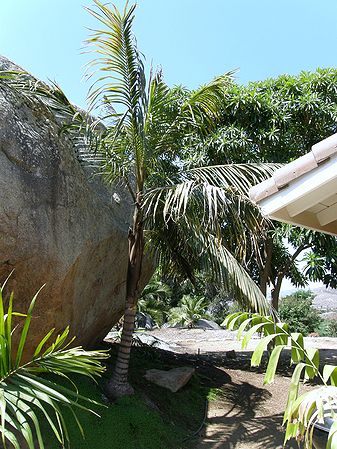
Vista, California
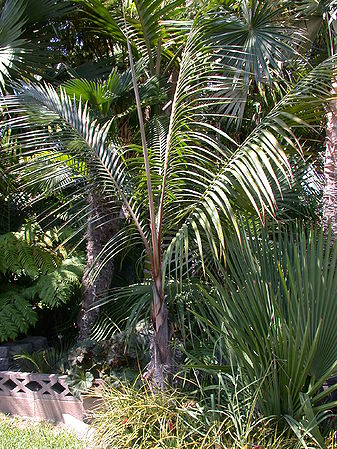
Orange County, California

ringed trunk
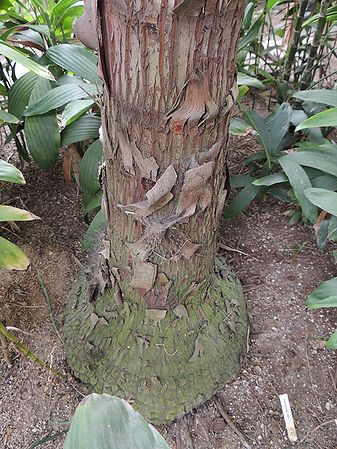
swollen base (foot)

spiny crownshaft

crownshaft shot of mature palm, Orange county, California

flower spathe

flower
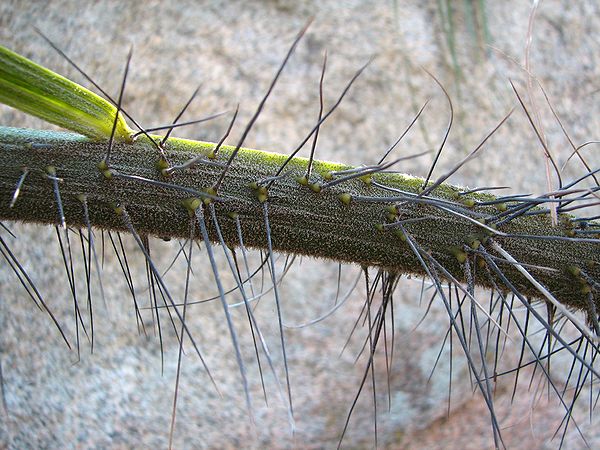
spiny petiole


