Difference between revisions of "Syagrus pseudococos"
Geoff Stein - Author & Editor
(Created page with "<center>'''Pronunciation''': sye-AG-russ SUE-doe-coe-cuss <br/> '''Common Name''': Coco Verde </center> '''''Syagrus pseudococos''''' CONTENT HERE {| colspan="2" style="back...") |
|||
| Line 3: | Line 3: | ||
'''Common Name''': Coco Verde | '''Common Name''': Coco Verde | ||
</center> | </center> | ||
| − | '''''Syagrus pseudococos''''' | + | '''''Syagrus pseudococos''''' is a marginal species that has been grown well by some in frost free zones, but most palms tend to konk out before they reach maturity. It is an attractive palm, but looks too much like a skinny Queen Palm to be heavily sought after by many palm enthusiasts. The fruits are relatively huge for a California grown palm, though rarely does viable fruiting occur in California. |
{| colspan="2" style="background: #FCFCFC; border: 1px solid black; vertical-align: top;" | | {| colspan="2" style="background: #FCFCFC; border: 1px solid black; vertical-align: top;" | | ||
| Line 9: | Line 9: | ||
<div style="background: #e5a178; border: 1px solid black; padding: 5px; margin: 3px; font-weight: bold; text-align: center; font-size: 120%;">Appearance and Biology</div> | <div style="background: #e5a178; border: 1px solid black; padding: 5px; margin: 3px; font-weight: bold; text-align: center; font-size: 120%;">Appearance and Biology</div> | ||
<div style="padding-left: 1em;"> | <div style="padding-left: 1em;"> | ||
| − | *'''Habit''': | + | *'''Habit''': solitary with a 8-12 plumose leaves |
| − | *'''Height''': | + | *'''Height''': 50' |
| − | *'''Trunk''': | + | *'''Trunk''': single; 10" in diameter; top green and prominently though irregularly ringed; lower trunk a very pale tan with barely noticeable rings |
| − | *'''Crownshaft''': | + | *'''Crownshaft''': none |
| − | *'''Spread''': | + | *'''Spread''': 12'-14' |
| − | *'''Leaf Description''': | + | *'''Leaf Description''': pinnate/plumose; leaflets narrow and arched; light green to medium green; 8'-10' long; arching |
| − | *'''Petiole/Leaf bases''': | + | *'''Petiole/Leaf bases''': 1'; unarmed; flat on top; whitish |
| − | *'''Reproduction''': | + | *'''Reproduction''': monoecious |
*'''Inflorescence''': | *'''Inflorescence''': | ||
| − | *'''Fruit''': | + | *'''Fruit''': large, yellow when ripe, nearly 3" long; ovoid |
| style="width: 50%; background: #f8e8df; border: 1px solid black; vertical-align: top;" | | | style="width: 50%; background: #f8e8df; border: 1px solid black; vertical-align: top;" | | ||
<div style="background: #e5a178; border: 1px solid black; padding: 5px; margin: 3px; font-weight: bold; text-align: center; font-size: 120%;">Horticultural Characteristics</div> | <div style="background: #e5a178; border: 1px solid black; padding: 5px; margin: 3px; font-weight: bold; text-align: center; font-size: 120%;">Horticultural Characteristics</div> | ||
<div style="padding-left: 1em;"> | <div style="padding-left: 1em;"> | ||
| − | *'''Minimum Temp''': | + | *'''Minimum Temp''': 32F |
| − | *'''Drought Tolerance''': | + | *'''Drought Tolerance''': moderate |
| − | *'''Dry Heat Tolerance''': | + | *'''Dry Heat Tolerance''': moderate |
| − | *'''Cool Tolerance''': | + | *'''Cool Tolerance''': poor |
| − | *'''Wind Tolerance''': | + | *'''Wind Tolerance''': moderate |
| − | *'''Salt Tolerance''': | + | *'''Salt Tolerance''': unknown |
| − | *'''Growth Rate''': | + | *'''Growth Rate''': slow to moderate |
| − | *'''Soil Preference''': | + | *'''Soil Preference''': well draining |
| − | *'''Light Requirement''': | + | *'''Light Requirement''': full sun |
| − | *'''Human Hazards''': | + | *'''Human Hazards''': none |
| − | *'''Disease or Horticultural Problems''': | + | *'''Disease or Horticultural Problems''': temperamental |
| − | *'''Transplants?''': | + | *'''Transplants?''': unknown |
| − | *'''Indoor?''': | + | *'''Indoor?''': unlikely would do well |
| − | *'''Availability''': | + | *'''Availability''': rare |
|} | |} | ||
<gallery> | <gallery> | ||
| − | + | File:Syagrus pseudococos fruits GL NOV.jpg|nicely grown Escondido, California palm, in garden of Gary Levine | |
| − | + | File:Syagrus pseudo Cal.jpg|growing in southern California | |
| + | File:Syagrus pseudococos shot from another angle GL 14.jpg|another shot of Levine's palm in Escondido | ||
| + | File:Syagrus vista ca.jpg|growing in San Diego county, California | ||
| + | File:Syagrus pseudococos (2).jpg| | ||
| + | File:Syagrus_pseudococosus_zooz.jpg|Hawaii | ||
| + | File:Syagrus pseudococos JM.jpg|collection of Jeff Marcus, Hawaii | ||
| + | File:Syagrus pseudococos P.jpg|growing in the Pauleen Sullivan collection, Hawaii | ||
| + | File:Syagrus pseudococos crown K.jpg|Huntington Beach palm, California | ||
| + | File:Syagrus pseudococos crown closer.jpg| | ||
| + | File:Syagrus pseudococos fruits GL NOV.jpg| | ||
| + | File:Syagrus pseudococus base K.jpg|base of California-grown palm | ||
</gallery> | </gallery> | ||
Revision as of 17:41, 24 September 2016
Common Name: Coco Verde
Syagrus pseudococos is a marginal species that has been grown well by some in frost free zones, but most palms tend to konk out before they reach maturity. It is an attractive palm, but looks too much like a skinny Queen Palm to be heavily sought after by many palm enthusiasts. The fruits are relatively huge for a California grown palm, though rarely does viable fruiting occur in California.
|
Appearance and Biology
|
Horticultural Characteristics
|

nicely grown Escondido, California palm, in garden of Gary Levine

growing in southern California

another shot of Levine's palm in Escondido

growing in San Diego county, California
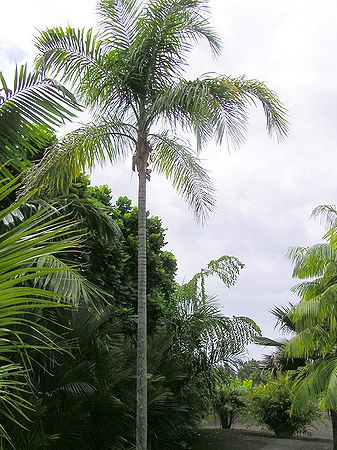

Hawaii
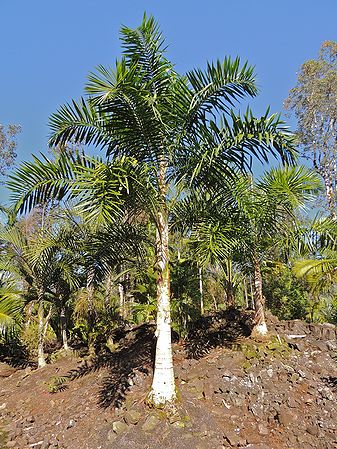
collection of Jeff Marcus, Hawaii

growing in the Pauleen Sullivan collection, Hawaii

Huntington Beach palm, California


base of California-grown palm


.jpg)


