Saribus rotundifolia
Geoff Stein - Author & Editor
Common Name: Footstool Palm; Roundleaf Fountain Palm
Saribus rotundifolia is really NOT a good palm for California and nearly impossible to keep alive over winter… but some have managed to keep one growing for 4-5 years at a time, so it is included here. Until recently, this was a member of the Livistona family, but now lives with a few other species including Saribus jeanneneyi, one of the rarest palms on earth. This is an extremely commonly grown palm in the tropics, partly due to its incredibly rapid growth rate (easily in the top 10 fastest growing palms on earth), highly ornamental foliage, trunk and seed, and its ease of care and transplantation. However, in California, it has proven to be extremely cold sensitive and needs a very well protected environment if one is to keep it alive for even one winter.
|
Appearance and Biology
|
Horticultural Characteristics
|

3rd year in ground, garden of Gary Levine, Escondido, California (no longer alive, though)

palm identified as such, Huntington Gardens, California

Singapore botanical gardens


zoo in Hilo, Hawaii
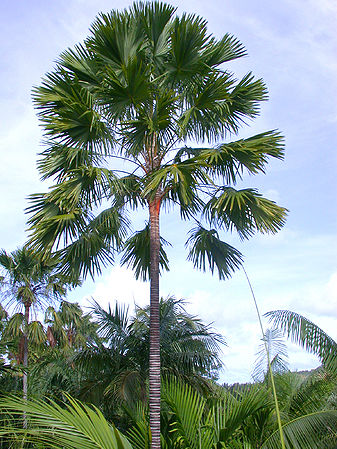
Nong Nooch Tropical gardens, Thailand

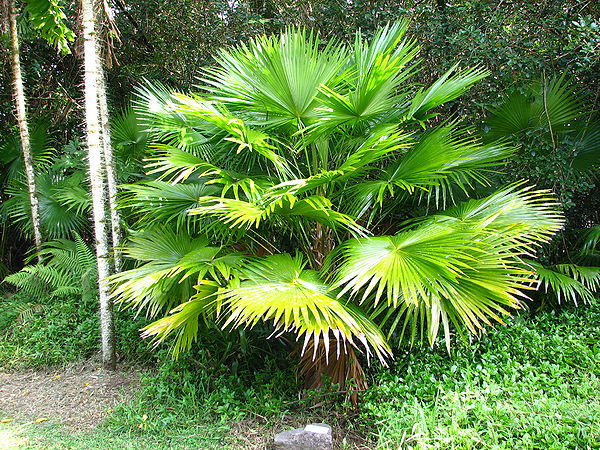
Hilo zoo

Hawaii

Sarawak

conservatory palm, Orlando, Florida

Hawaii University palm

Hawaii Univesity

Floribunda Palms, Hawaii

Hawaii

Huntington palm


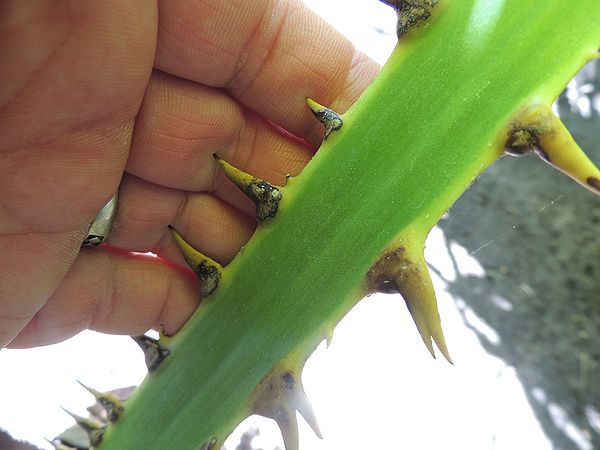


seed in Hawaiian palm


