Pronunciation: suh-BALL/SAY-bull doe-min-GEN-siss
Common Name: Hispaniola Palm
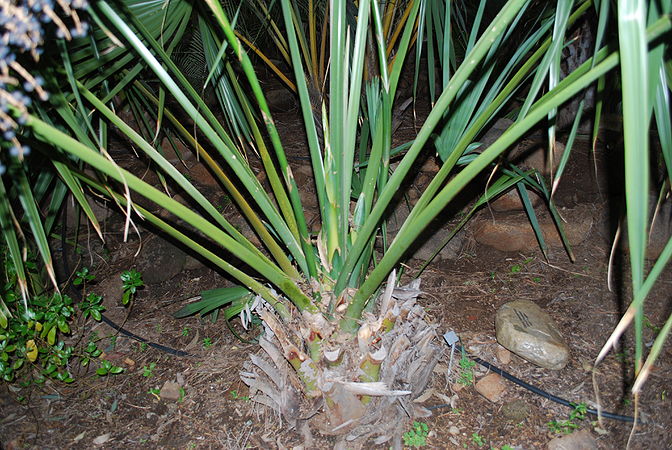
Sabal domingensis is one of the larger Sabals and a pretty nice palm for many areas of California. This species seems maybe a bit more resistant to potassium deficiency. Unfortunately is a slow growing palm, and takes many years to develop into a mature tree, somewhat reducing its usefulness as a landscape species. It also seems to be reluctant to attain the massive potential spread and size as it often reaches in Florida and other tropical climates.
|
Appearance and Biology
- Habit: solitary with a crown of 20-30 costapalmate leaves
- Height: 35' estimate
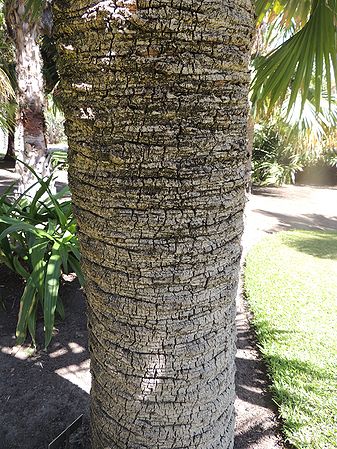
- Trunk: single; 18"-24" diameter; grey; subtly ringed, or, less commonly, covered with large, retained, split leaf bases
- Crownshaft: none
- Spread: 15'-18'
- Leaf Description: markedly costapalmate; 8' long (half petiole); dull green to blue-green; stiff leaves with minimal leaflet droop; leaf blades split to about half their length
- Petiole/Leaf bases: 4' long; sharp-edges; unarmed; large split leaf bases often retained on trunks for many years
- Reproduction: monoecious
- Inflorescence: 3' long; within leaves; highly branched; often flowering young (when plant sometimes has not formed a trunk yet)
- Fruit: spherical to 'pear-shaped'; 1/2" thick; blackish when ripe
|
Horticultural Characteristics
- Minimum Temp: 22F
- Drought Tolerance: good
- Dry Heat Tolerance: good
- Cool Tolerance: good
- Wind Tolerance: good
- Salt Tolerance: unknown
- Growth Rate: slow
- Soil Preference: adaptable
- Light Requirement: full sun
- Human Hazards: sharp leaf blades
- Disease or Horticultural Problems: potassium deficiency in California
- Transplants?: unknown
- Indoor?: poor choice due to high light needs
- Availability: rare
|
Huntington Gardens near Pasadena, California
San Diego county, California
trunk in Huntington Gardens