Pronunciation: rah-veh-NEE-uh/rah-VEN-ee-uh mah-duh-gas-car-ee-EN-siss
Common Name: none
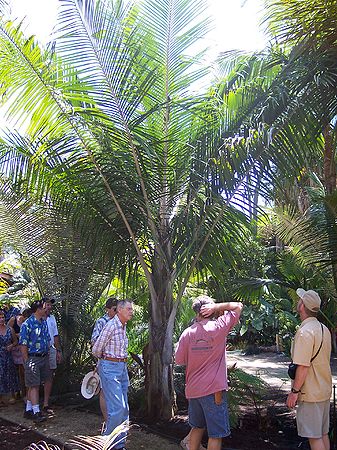
Ravenea madagascariensis has been grown by enthusiasts in California since the 1980s and perhaps before, though its popularity does not seem to have grown much lately. It is one of the easier Raveneas to grow and develops a trunk fairly quickly for a Ravenea. But it's overall look is somewhat 'ordinary' for a palm which may be why it's grown less often now than before.
Synonym: Ravenea madagascariensis var. monticola
|
Appearance and Biology
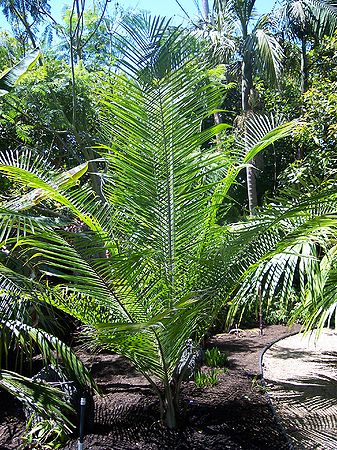
- Habit: solitary with a crown of 10-20 feather leaves
- Height: 25'
- Trunk: single; 7" diameter
- Crownshaft: none
- Spread: 12'
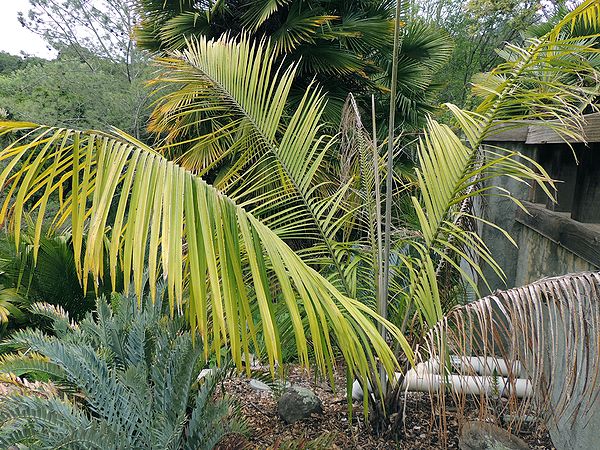
- Leaf Description: pinnate; flat; medium green; 8' long' leaflets long and sometimes drooping from their attachment on the rachis; plants in exposed windy locations tend to look ragged and sparsely leaved
- Petiole/Leaf bases: 8"-12" long; wide at un-split base; sometimes with white powdery tomentum on lower surfaces; channeled at base, quickly flattening toward rachis
- Reproduction: dioecious
- Inflorescence: within the leaves; 18"-24" long; upright; gold flowers
- Fruit: spherical; 1/2" diameter; orange when ripe
|
Horticultural Characteristics
- Minimum Temp: 25F
- Drought Tolerance: low to moderate
- Dry Heat Tolerance: moderate
- Cool Tolerance: moderate
- Wind Tolerance: low
- Salt Tolerance: unknown
- Growth Rate: slow to moderate with age
- Soil Preference: adaptable
- Light Requirement: partial to full sun
- Human Hazards: none
- Disease or Horticultural Problems: leaves often look ratty in exposed locations
- Transplants?: unknown
- Indoor?: unknown
- Availability: rare
|
San Diego county, California
Los Angeles, in the Hooper garden
Ralph Velez palm, Orange county, California
UC Berkeley Palm, northern California
Orange county, California