Raphia farinifera
Geoff Stein - Author & Editor
Common Name: Madagascan Raphia Palm; East African Wine Palm
Raphia farinfera was assumed for many years to be too tropical for California, but that has not been found to be the case… though to date (2015) no mature palms exist in California yet (it is a very marginal palm). Though it is not really a 'good' palm for California, it can grow here and many have tried this potentially huge palm out in their gardens. So far, it's huge size potential does not seem to be a reality in California. In tropics, this palm has leaves that grow up to 60' long (longest of all palms). It has surprising cold hardiness, but disappointing cool hardiness… survives frosts better than expected, but tends to decline overtime anyway. Source of Raphia in Africa (leaf fiber, used to create structures, clothing etc.).
|
Appearance and Biology
|
Horticultural Characteristics
|

San Diego county, California

San Diego county, California
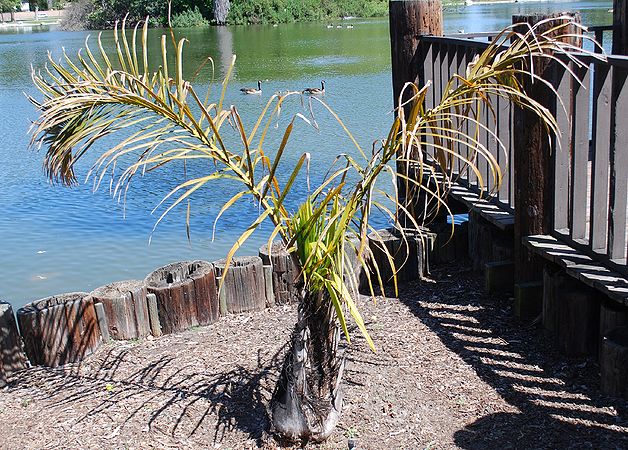
Orange county, California, been in ground 4 years

Ho'Olamuhia Gardens, Oahu, Hawaii
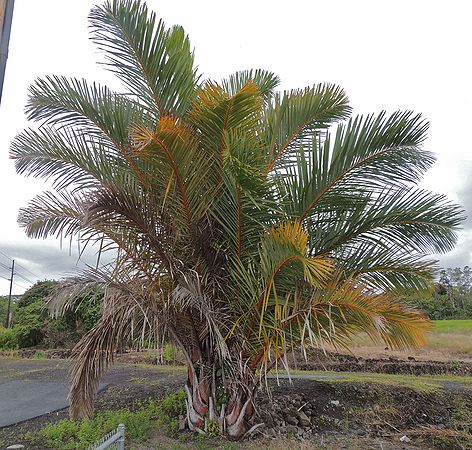
Hawaii University gardens, Hawaii

Hawaii University

Lundkvist estate, Hawaii

Nong Nooch Tropical gardens, Thailand

Nong Nooch

University of Hawaii

Hawaii


Hawaii

Hawaiian seed


