Pinanga philippinensis
Geoff Stein - Author & Editor
Common Name: Elmer's Palm
Pinanga philippinensis is probably the most ornamental of the palms that can be grown well in California. It is a suckering species with yellow to purple crownshafts and neat, smaller crowns of recurved, pinnate leaves. Most palms in California stay fairly compact and tidy, unlike in the tropics where they get much taller and lankier, and, frankly, less ornamental. Most Californias know this species by its synonym, Pinanga elmeri.
Synonym: Pinanga elmeri
|
Appearance and Biology
|
Horticultural Characteristics
|

garden of Ralph Velez, Orange county, California

Velez collection

Pauleen Sullivan estate, Ventura, California, single stem form

Sherman Oaks, California
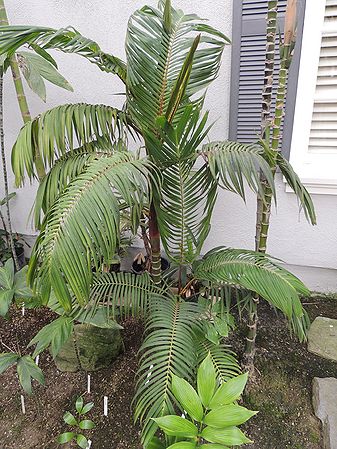
Huntington Beach, California
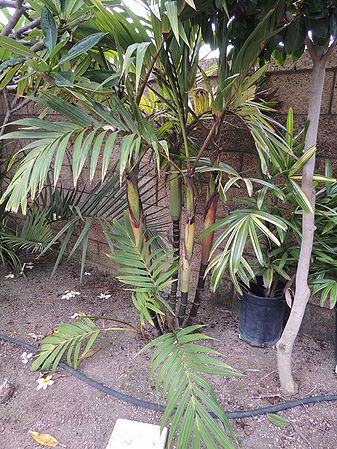
Huntington Beach
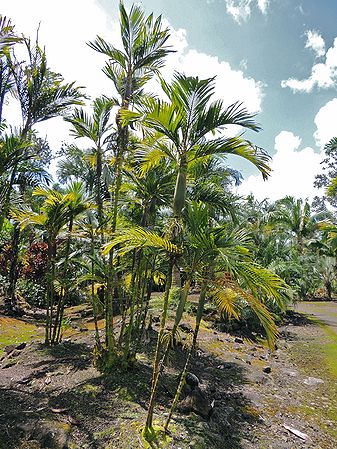
Floribunda Palms, Hawaii


Pauleen Sullivan estate, Hawaii
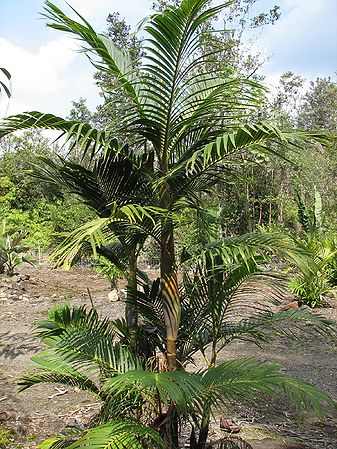
Floribunda Palms
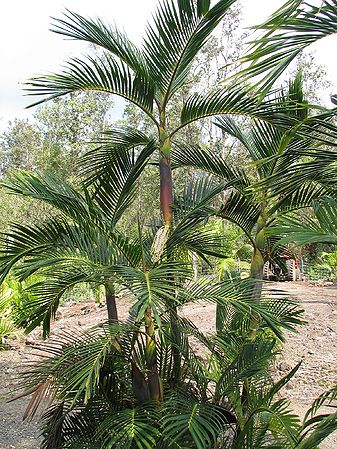
Floribunda Palms


Sullivan collection, Hawaii

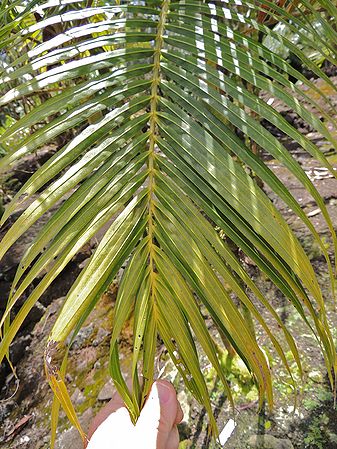
Floribunda Palms
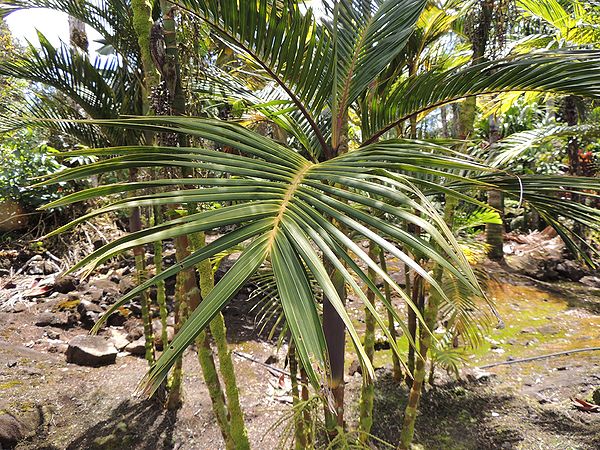
Marcus garden, Hawaii

Huntington Beach

Hawaii, Sullivan collection


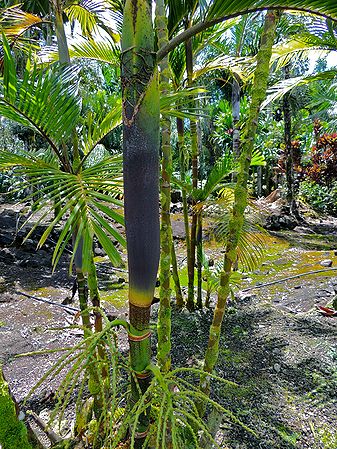
Floribunda palms

Floribunda palms
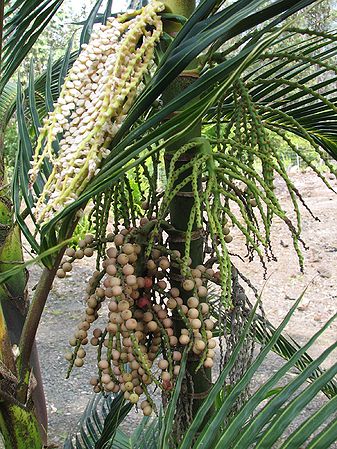
Floribunda Palms


