Phoenix reclinata
Geoff Stein - Author & Editor
Common Name: Senegal Date Palm; Wild Date Palm
Phoenix reclinata is one of the more common palms grown in California, due in part to it's being fairly available, but also because large, mature specimens are excellent landscape palms, actually worth enough money to be sold and transplanted (a rarity in the palm world in this state). However, as with most Phoenix, hybrids abound and this species can be seen as a very variable palm because of that. Some have stated that a pure Phoenix reclinata, as is found in its native Africa, is actually an extremely rare palm in California and that most of what are identified as such, actually have some other species complicating their genetics and appearance. Below's descriptions and photos will be of palms that are MOSTLY Phoenix reclinata in that case.
|
Appearance and Biology
|
Horticultural Characteristics
|
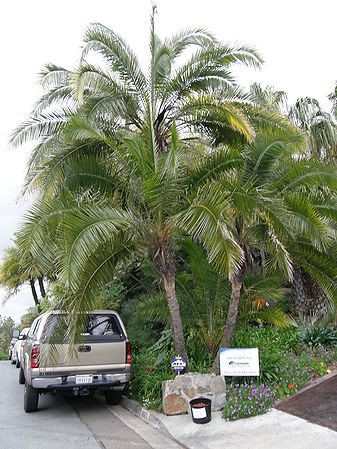
San Diego county, California

San Diego county

Huntington gardens near Pasadena, California


Disneyland, California


Orange County, California

Sherman Gardens, Orange county, California

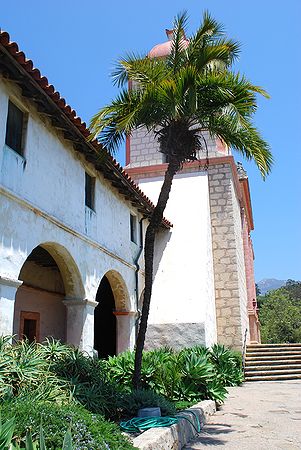
San Barbara, California


Los Angeles arboretum, Arcadia, California

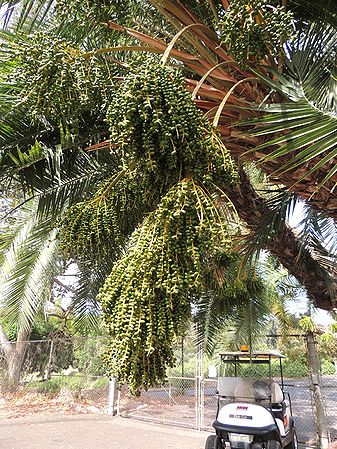
unripe fruits


