Dypsis paludosa
Geoff Stein - Author & Editor
Common Name: none
Dypsis paludosa is a slender, clustering (though solitary forms exist in cultivation), attractive palm that has been shown to grow well in several California gardens, even growing to adulthood fairly rapidly. Dypsis 'florencei' is a cultivational name for the form of Dypsis paludosa with more red in the leaf bases, but is not considered a separate species. Both unsplit and split leaf forms exist, though the unsplit leaf forms seem to be far more popular. Though probably best grown as an understory palms, they have been found to take a surprising amount of direct sunlight in milder climates.
|
Appearance and Biology
|
Horticultural Characteristics
|
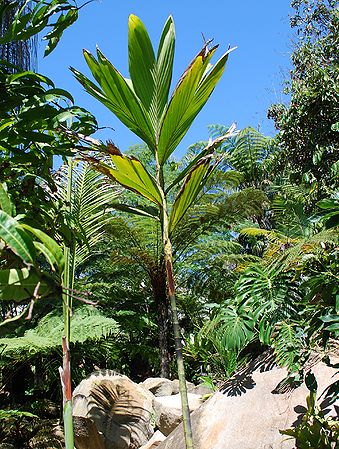
San Diego county, unsplit leaf form taking a good deal of direct sun, California

Los Angeles

young palm, Long Beach, California

Hawaii, Austin estate

Bill Austin garden, Hawaii
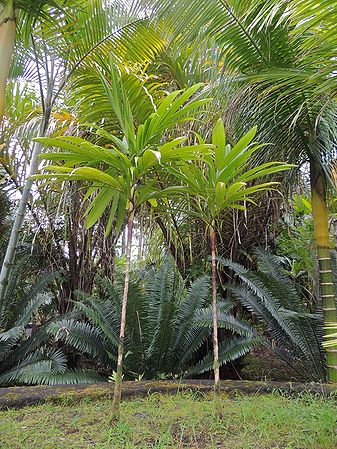
Lundkvist estate, Hawaii


Floribunda Palms, Hawaii

Floribunda Palms


Floribunda Palms and Exotics, Hawaii


crownshaft in California


