| Pronunciation: uh-can-tuh-FEE-nix kri-NEE-tuh
|
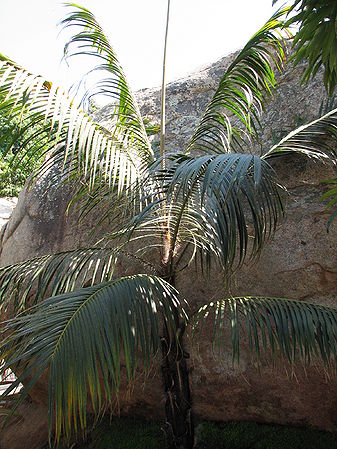
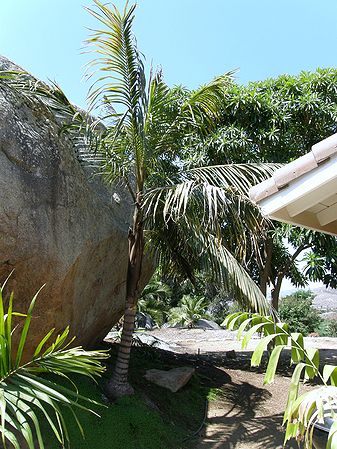
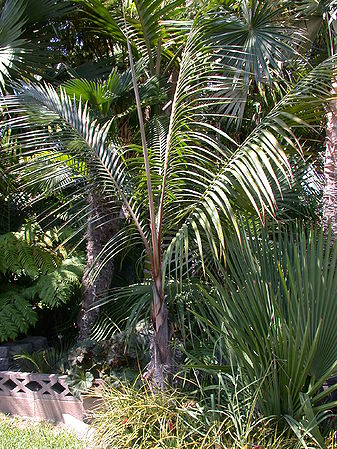
Acanthophoenix crinita is a thin-trunked, pinnate palm from Reunion Island, east of Madagascar. Though from a decidedly tropical climate, this palm has surprising cold tolerance and does surprisingly well in a Mediterranean climate, growing to maturity in several California locations. Though not as colorful as its cousin, Acanthophoenix rubra, it is far hardier and is a fascinating spiny palm for partially sunny areas of the warmer areas of southern California.
|
Appearance and Biology
- Habit: solitary with a crown of 6-10 feather leaves
- Height: 15-20 feet
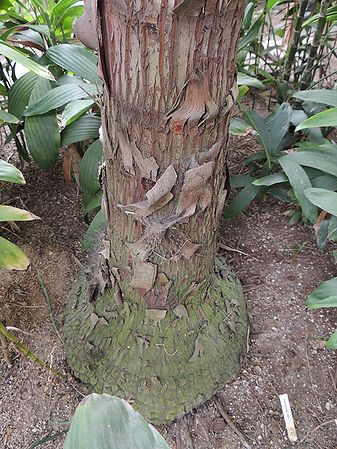
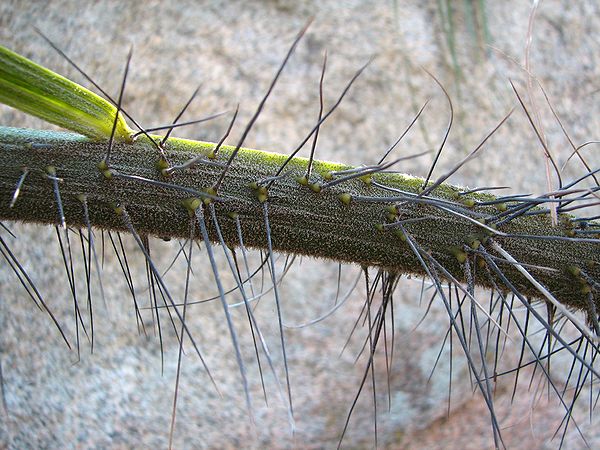
- Trunk: clean; light tan to white, prominently ringed with long black spines when younger, disappearing with age; 'foot' at base; 4"-6" thick
- Crownshaft: brown and intensely spiny in younger palms (no old palms in southern California, yet)' about same width as trunk
- Spread: 8'-10'
- Leaf Shape: 6 feet long, flat with closely spaced leaflets
- Petiole: short and spiny when young
- Foliage: medium bright green and somewhat spiny in younger plants
- Reproduction: monoecious
- Inflorescence: white to pinkish-orange flowers
- Fruit: 6mm and black when mature
- Seed: 4mm spherical
|
Horticultural Characteristics
- Minimum Temp: 28F
- Drought Tolerance: poor
- Dry Heat Tolerance: moderate if protected from sun
- Cool Tolerance: moderate
- Wind Tolerance: mod to poor
- Salt Tolerance: unknown
- Growth Rate: slow but picks up a bit with age
- Soil Preference: rich and well draining, but somewhat tolerant of clay soils
- Light Requirement: filtered light when young to half day sun as adult (even inland)
- Human Hazards: very spiny palm until mature (some spines seem to remain)
- Disease or Horticultural Problems: unknown
- Indoor?: very poor choice of indoor palm due to spines
|