Sabal domingensis
| Sabal (SAH-bahl) domingensis (doh-mihn-JEN-sis) | |||||||
|---|---|---|---|---|---|---|---|
 Guantanamo province, Cuba. Photo by Jason Schoneman. | |||||||
| Scientific Classification | |||||||
| |||||||
| Synonyms | |||||||
|
| |||||||
| Native Continent | |||||||
 | |||||||
| Morphology | |||||||
| |||||||
| Culture | |||||||
|
| |||||||
| Survivability index | |||||||
|
| |||||||
| Common names | |||||||
|
| |||||||
Contents
Habitat and Distribution
Sabal domingensis is found from northwest Haiti to the central Dominican Republic,
Description
Sabal domingensis is a bigger burlier version of Florida's native cabbage palmetto (Sabal palmetto) to which it bears an otherwise close resemblance. The Hispaniola palm, as it is commonly called, has a single trunk that grows straight and erect to a height of 60 ft (18 m) and possibly taller. The trunk is massive, about 2 ft (60 cm) in diameter and usually with the upper several feet covered with interlaced leaf bases, left behind when the petioles break and the leaves fall. These eventually detach to reveal leaf scar rings upon the smooth light brown trunk. The crown is larger than that of S. palmetto and more open due to the larger leaves. The petioles (leaf stems) are about 5 - 6 ft (150 - 185 cm) and the leaves themselves are about 4 ft (125 cm) long. (floradata.com) Editing by edric.
The costapalmate leaves are dull green and cut with deep incisions about halfway to the center dividing the leaf in two. The tip of each segment is split in two, each becoming threadlike at the end. These droop toward the ground providing a graceful charm to an otherwise hefty recurving appearance. Hispaniola palm leaves also have fibers hanging from the sinuses (indentations) that tend to persist throughout the life of the leaf, although with time they tend to twist and turn into a tangled ball. The flower stalks are about 3 ft (91 cm) long and appear in spring and are held within the crown of leaves. Each stalk divides into numerous branches that hold the small, 0.25 in (8 cm) creamy white flowers. It is common for young palms to flower - even before they form a visible trunk. The black seeds are spherical, often flattened on the end and 0.5 - 0.75 in (15 - 23 cm) in diameter. (floradata.com)
Sabal domingensis is a fan palm, and costapalmate, with solitary, very stout stems, which grows up to 16 metres (53 ft.) tall and 60 centimetres (24 in.) in diameter. Plants have 20–30 leaves, each with about 90 leaflets. The inflorescences, which are branched, arching and at least as long as the leaves, bear pear-shaped, black fruit. The fruit are 1–1.4 centimetres (0.4–0.6 in.) in diameter; fruit size and shape are the main characteristics by which this species differs from Sabal causiarum. Editing by edric.
Culture
Sabal domingensis, grows well in hot dry inland areas, as well as tropical climates. It can reach a height of 60 feet, so give it plenty of room, although it is slow growing and does not seem to mind cool winter temperatures.
Hispaniola palm is easy to grow on most soils except those that are continually soggy. It has a preference for light sandy soils. Prone to Potassium deficiency in SoCal. Fertilize twice yearly in spring and summer for faster growth. Light: Thrives in bright, sunny, exposed areas. Moisture: Drought tolerant. Hardiness: USDA Zones, 9 - 10. May also be hardy in some parts of Zone 8. many young palms have weathered 20º F. (-6.6º C.) with only minor leaf damage - and seem to be mostly resistant to the fungus diseases that strike after a hard freeze. Propagation: This palm is easy to propagate from seed. Germination time is 2 to 6 months.
Comments and Curiosities
This is a tillering palm, it exhibits saxophone style root growth (it has a heel), keep top third of heel above soil elevation!
Uses: The leaves are used for thatch and to weave a variety of items including hats, baskets and mats.
Andrew Henderson and colleagues noted that Sabal maritima, S. causiarum and S. domingensis form a species complex that may constitute a single species. The species are readily distinguished on the basis of fruit size and shape. Sabal domingensis has pyriform fruit, 11.5-14.1 (12.7 ± 0.7) mm in diameter and 11.0-14.4 (13.1 ± 1.0) mm high. Sabal causiarum has spherical or occasionally oblate-pyriform fruit, 7.1-10.8 (9.8 ± 0.5) mm in diameter and 7.5-10.4 (9.4 ± 0.7). Sabal maritima has oblate-pyriform to oblate-spherical fruit, 8.5-14.2 mm in diameter, 8.4 - 1 2.6 mm high. A similar size difference is found in the seeds: 8.0-10.4 mm in diameter, 5.1-7.1 mm high for S. domingensis versus 5.9-7.8 mm in diameter, 4.3-5.7 mm high for S. causiarum and 6.5-9.7mm in diameter, 4.5-6.2mm high, with a smooth (rarely some-what beaked) funicular remnant.
Another difference is that the petioles of S. maritima are densely covered with light-colored scales and appearing whitish or tan with a small, triangular to square-shape ligule at petiole base. S. maritima also has a rachillae with very crowded flowers, whereas the flowers are not crowded much in S. causiarum. Donald Hodel also mentions that Sabal causiarum can be distinguished from S. domingensis and S. causiarum by the presence of conspicuous, large, tan, flap-like ligules at petiole base. This characteristic is not mentioned in Scott Zona’s 1990 monograph of Sabal.
- IMAGE GALLERY

Fairchild Tropical Botanical Garden, Coral Gables, FL. Photo by Paul Craft.

Fairchild Tropical Botanical Garden, Coral Gables, FL. Photo by Paul Craft.

Fairchild Tropical Botanical Garden, Coral Gables, FL. Photo by Paul Craft.

Dominican Republic. Photo by Paul Craft.

Fairchild Tropical Botanical Garden, Coral Gables, FL. Photo by Paul Craft.

Dominican Republic Photo by Paul Craft.

Fairchild Tropical Botanical Garden, Coral Gables, FL. Photo by Paul Craft.

Fairchild Tropical Botanical Garden, Coral Gables, FL. Photo by Paul Craft.

Fairchild Tropical Botanical Garden, Coral Gables, FL. Photo by Paul Craft.

Sabal domingensis

SoCal, with Potassium deficiency.


Hispaniola palmetto, Palma Cana (Sabal domingensis) and Mango tree in a dry savannah near Varadero, Cuba. Photo By lezumbalaberenjena

Botanic Garden in Valencia, Spain.

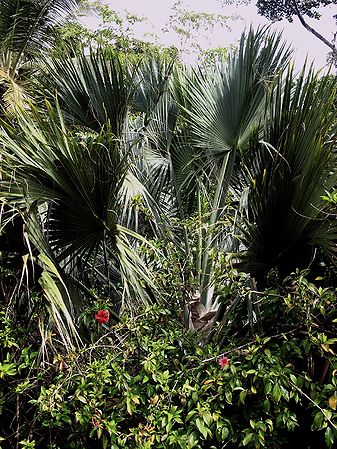


Photo by Kyle Wicomb.


Dominican Republic. Photo by Dr. John Dransfield, Royal Botanic Gardens, Kew/Palmweb.


Photo by Mike Smith.


Cape Coral,FL. Photo by pg6922.

Cape Coral,FL. Photo by pg6922.

Photo: plantant.com

Sabal Domingensis In Central Alabama Zone 8a.

Photo: palmerasyjardines.com

Photo: palmerasyjardines.com

Photo: palmerasyjardines.com

Photo: palmerasyjardines.com

Photo: palmerasyjardines.com

Photo: palmerasyjardines.com

Botanical Garden Meise, National Botanic Garden of Belgium.

Botanical Garden, La Conception, Malaga, Spain.

Miami, FL. Photo by virtualpalm

Miami, FL. Photo by virtualpalm

Miami, FL. Photo by virtualpalm

Miami, FL. Photo by virtualpalm

Sabal domingensis in habitat. Facing the Caribbean Sea. Republica Dominicana. Photo by Jose A. Grassia.

Sabal domingensis in habitat. Facing the Caribbean Sea. Republica Dominicana. Photo by Jose A. Grassia.

Sabal domingensis in habitat. Facing the Caribbean Sea. Republica Dominicana. Photo by Jose A. Grassia.

Sabal domingensis in habitat. Facing the Caribbean Sea. Republica Dominicana. Photo by Jose A. Grassia.

Sabal domingensis in habitat. Facing the Caribbean Sea. Republica Dominicana. Photo by Jose A. Grassia.

Sabal domingensis in habitat. Facing the Caribbean Sea. Republica Dominicana. Photo by Jose A. Grassia.

Sabal domingensis in habitat. Facing the Caribbean Sea. Republica Dominicana. Photo by Jose A. Grassia.

Sabal domingensis in habitat. Facing the Caribbean Sea. Republica Dominicana. Photo by Jose A. Grassia.

Sabal domingensis in habitat. Facing the Caribbean Sea. Republica Dominicana. Photo by Jose A. Grassia.

Sabal domingensis in habitat. Facing the Caribbean Sea. Republica Dominicana. Photo by Jose A. Grassia.

Sabal domingensis in habitat. Facing the Caribbean Sea. Republica Dominicana. Pablo y Jose as scale. Photo by Jose A. Grassia.

Guantanamo province, Cuba. Photo by Jason Schoneman.

Guantanamo province, Cuba. Photo by Jason Schoneman.

Fieldwork by Montgomery’s Palm Biologist.

Fieldwork by Montgomery’s Palm Biologist.

Fieldwork by Montgomery’s Palm Biologist.

Image Text: palmerasyjardines.com

Image Text: floridata.com

Image Text: floridata.com

Image Text: floridata.com

Image Text: floridata.com

Image Text: thewisegardener.com


External Links
- Glossary of Palm Terms
- MODERN BOTANICAL LATIN
- "Just To Be Clear"
- http://www.palmdoctor.com/Palm_0f_The_Month/Sabal_domingensis.htm
- http://www.floridata.com/ref/s/saba_dom.cfm
- http://southeastgarden.com/cuba.html
- Sabal domingensis in Cuba, Dr. Scott Zona
- THE SAXOPHONE STYLE ROOT GROWTH (HEEL)
References
Phonetic spelling of Latin names by edric.
Special thanks to Geoff Stein, (Palmbob) for his hundreds of photos.
Special thanks to Palmweb.org, Dr. John Dransfield, Dr. Bill Baker & team, for their volumes of information and photos.
Glossary of Palm Terms; Based on the glossary in Dransfield, J., N.W. Uhl, C.B. Asmussen-Lange, W.J. Baker, M.M. Harley & C.E. Lewis. 2008. Genera Palmarum - Evolution and Classification of the Palms. Royal Botanic Gardens, Kew. All images copyright of the artists and photographers (see images for credits).
Many Special Thanks to Ed Vaile for his long hours of tireless editing and numerous contributions.